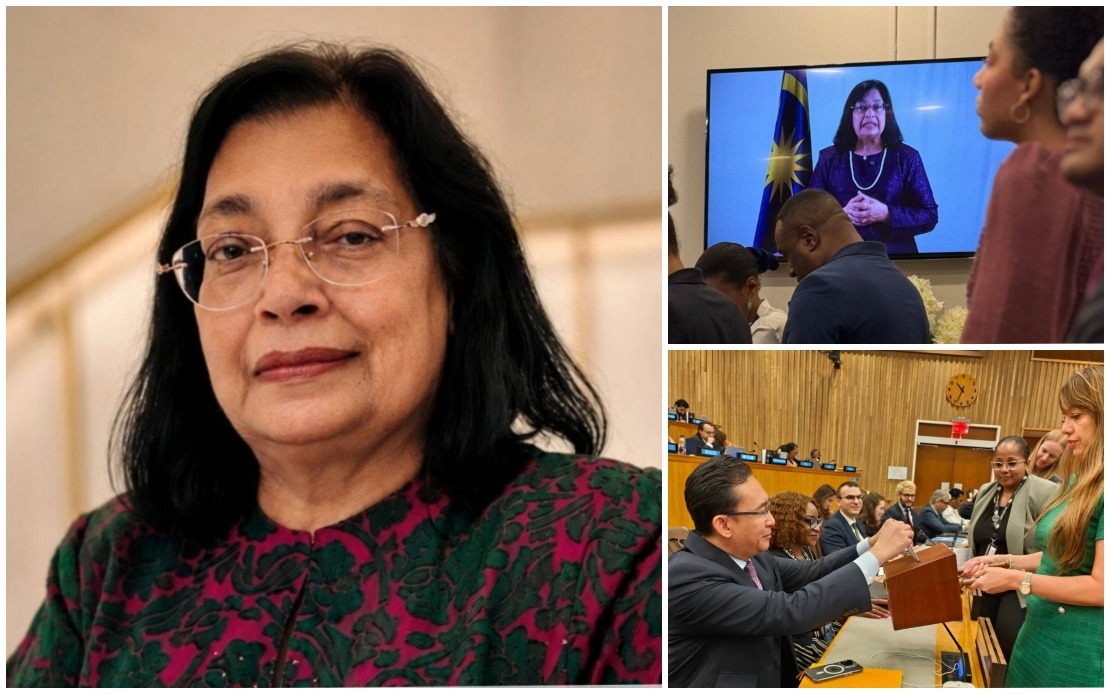
Datuk Yasmeen Muhamad Shariff has secured her position on the United Nations Committee on the Rights of the Child for the forthcoming 2027–2031 term following elections held at UN Headquarters in New York this week. The Malaysian candidate emerged as the top vote-getter in a competitive ballot where 189 States Parties participated, garnering 136 votes during the 21st Meeting of States Parties to the Convention on the Rights of the Child.
The election result carries particular significance as it represents Yasmeen's return to the committee after a decade away. She previously served as a member during the 2013–2017 term, meaning her re-election demonstrates sustained international recognition of her professional standing and commitment to child protection work. The strong mandate she received—capturing the highest vote count among all candidates—suggests that countries across different regions view her expertise as valuable to the committee's ongoing operations.
In her capacity as a committee member, Yasmeen will operate as an independent expert rather than as Malaysia's government representative. This distinction is important within the UN's accountability framework, as it allows her to exercise objective judgement on child welfare matters without formal national instruction. The committee itself carries significant responsibilities in the international child protection architecture, tasked with monitoring how States Parties implement the Convention on the Rights of the Child and maintaining constructive engagement with governments on compliance issues.
The committee's work extends across multiple dimensions of child welfare, encompassing everything from education and healthcare access to protection from exploitation and abuse. As a member, Yasmeen will contribute to developing the committee's general comments—authoritative interpretations of the convention that guide countries in applying its provisions—and participate in reviews of national reports submitted by signatory states. Her involvement in these processes can directly influence how child rights protections evolve globally over the coming years.
Malaysia's Foreign Ministry framed the election result as validation of the country's broader commitment to advancing children's rights through domestic policy reform and programmatic action. The ministry highlighted that Malaysia has pursued this agenda through inclusive policy development, legislative changes, and initiatives designed to enable every child to fulfil their potential. By positioning Yasmeen's success within this national context, officials suggested that her appointment reflects not merely personal achievement but rather international confidence in Malaysia's entire approach to child protection.
For Malaysia specifically, having representation on such a prominent UN committee carries diplomatic value beyond child welfare advocacy. Committee membership provides access to high-level international forums where policy conversations occur, enables Malaysia to shape the interpretation and implementation of global child rights norms, and enhances the country's profile within multilateral institutions. The re-election particularly strengthens Malaysia's position, as it demonstrates that other countries continue to trust Malaysian expertise and judgment on sensitive international matters affecting children.
The role of committees like this has grown increasingly important as child protection challenges become more complex and transnational. Issues including online exploitation, child trafficking, child labour in global supply chains, and the impact of climate change on children's welfare require coordinated international responses and expert guidance. Yasmeen's appointment positions her to contribute to discussions on these emerging issues while maintaining focus on traditional concerns such as access to basic services, non-discrimination, and family integrity.
The Foreign Ministry acknowledged the Ministry of Women, Family and Community Development for its collaborative role in supporting Malaysia's candidacy. This institutional partnership underscores how UN committee representation depends not only on individual expertise but also on solid domestic coordination and government backing. Malaysia's success in securing this position reflects organisational effort in building consensus among other UN members and presenting a compelling case for Yasmeen's selection.
The timing of this election, with the term commencing in 2027, allows Malaysia time to ensure robust coordination between UN-based operations and domestic child welfare agencies. This coordination becomes particularly valuable when the committee issues recommendations or engages with Malaysia during its own periodic review process. Countries whose experts sit on UN committees can leverage these positions to better understand international best practices and ensure that global standards are appropriately adapted to local contexts.
Looking forward, Yasmeen's presence on the committee during a period of evolving child welfare challenges will likely prove consequential. The post-pandemic period has highlighted vulnerabilities in child protection systems globally, from educational disruption to mental health crises among young people. Her participation in the committee's response to these issues, and in shaping how the Convention on the Rights of the Child is interpreted to address contemporary concerns, represents a meaningful contribution to Malaysia's international engagement on social policy matters.
The election result also reflects broader dynamics within the UN's electoral processes, where countries with consistent diplomatic engagement and credible expertise tend to secure committee positions. Malaysia's success in securing Yasmeen's re-election validates the country's investment in international child rights advocacy and positions it favourably for future candidacies to other UN bodies and specialised agencies.
Beyond ceremonial recognition, Yasmeen's appointment carries practical implications for how Malaysia's child welfare policies are received and assessed within international forums. When Malaysia undergoes its next periodic review by the Committee on the Rights of the Child, having one of its own citizens serving on the committee—even in an independent capacity—provides valuable insight into committee procedures and expectations. This knowledge can enhance Malaysia's preparation and engagement with the review process, ultimately strengthening accountability for child protection commitments.