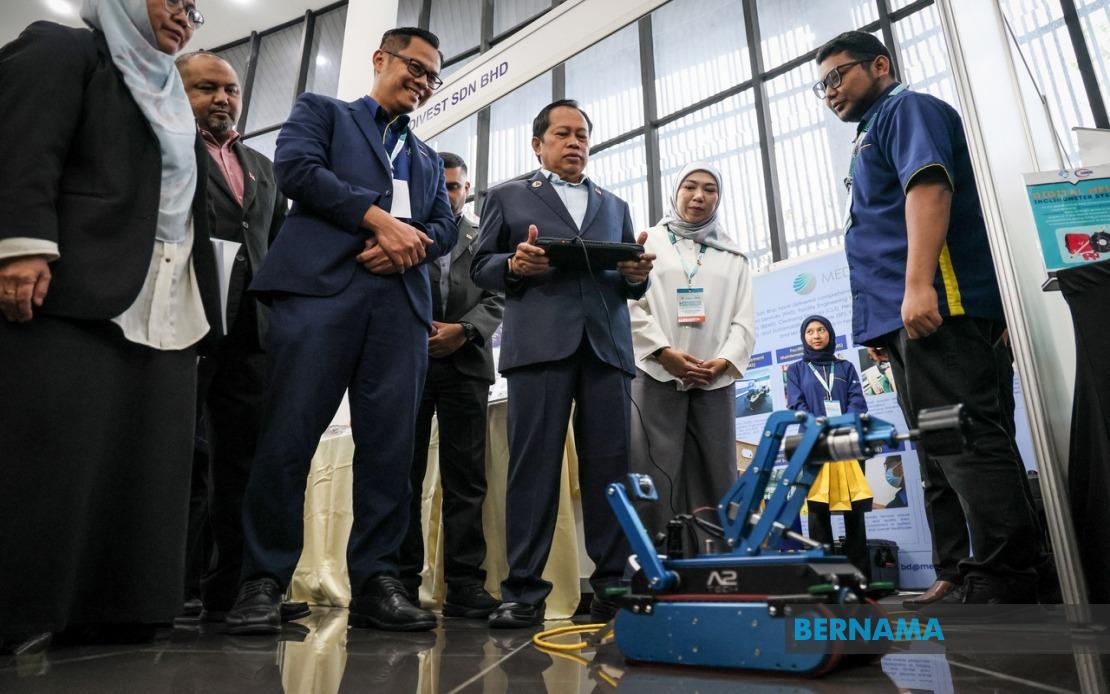
Malaysia's construction sector is being challenged to redirect its expertise towards facility management and maintenance, a subsector experiencing explosive growth yet struggling to attract sufficient contractor participation. Speaking at the Contractors Convention 2026: NexGen Builders in Butterworth, Deputy Works Minister Datuk Seri Dr Ahmad Maslan highlighted the striking imbalance between market demand and supplier capacity, citing data showing RM39.59 billion worth of facility management and maintenance projects declared between 2023 and 2025.
The disparity is particularly pronounced when examining the ratio of available work to registered expertise. Construction Industry Development Board records document 1,541 FM and maintenance projects launched over the three-year period, yet only 468 contractors maintain the necessary F01 and F02 specialisation credentials required to bid for such assignments. This suggests that the average contractor registered in this field could theoretically handle multiple major contracts, indicating either capacity constraints, profit margin concerns, or simply insufficient awareness among construction firms of the financial opportunity available.
Dr Ahmad's remarks reflect a strategic shift in how Malaysia's construction sector frames its future growth. Traditionally, the industry has concentrated investment and expertise on new building, infrastructure construction, and project development—the visible, marquee phase of asset creation. Once completion occurs and the ribbon-cutting ceremony concludes, maintenance and upkeep have received proportionally less attention and fewer resources, despite their critical importance to asset longevity and performance. This pattern has left substantial untapped revenues on the table, as facility management services command considerable fees throughout a structure's operational lifetime.
The underlying challenge stems partly from industry perception and partly from structural factors. Many contractors view facility management as peripheral to their core business rather than as a complementary revenue stream with built-in stability. Unlike construction contracts, which are project-based and time-limited, facility management arrangements typically involve ongoing relationships with asset owners spanning years or decades. This stability can translate into more predictable cash flow, yet requires different operational frameworks, staffing models, and expertise profiles than traditional construction work.
To address these gaps, the Works Ministry launched CIS 33:2026—Facility Management Good Practice Guide, a comprehensive framework developed by the Construction Industry Development Board to standardise practices across Malaysia's construction ecosystem. This guidance document serves as a common reference point for asset owners, facilities managers, contractors, and other industry stakeholders seeking to elevate the quality and consistency of facility management operations nationwide. By establishing systematic, sustainable, and standardised protocols, the guide aims to professionalise what has historically been an undervalued service category.
For contractors considering entry into this expanding market, the strategic rationale is compelling. The RM39.59 billion market size across three years translates to approximately RM13.2 billion annually—substantial enough to justify investment in workforce training, certification, and operational infrastructure. A contractor transitioning from construction to facility management would not necessarily abandon existing capabilities; rather, they would develop complementary service offerings that allow them to capture value across the entire asset lifecycle, from initial construction through decades of operational management.
The Malaysian context adds particular urgency to this sector development. As the nation's infrastructure base matures—with highways, buildings, and public facilities constructed over the past two decades now entering their peak maintenance periods—demand for quality facility management services will only accelerate. Failing to cultivate sufficient capacity in this domain risks either importing foreign expertise at higher cost or allowing asset degradation through underinvestment in maintenance. Both outcomes prove economically inefficient and undermine long-term competitiveness.
Regional considerations further underscore the opportunity. Throughout Southeast Asia, similar infrastructure maturation cycles are occurring across Indonesia, Thailand, and Vietnam. Malaysian contractors who build recognised expertise in facility management position themselves not only for domestic growth but also for cross-border expansion, exporting knowledge and services to neighbouring markets experiencing identical challenges. This export potential adds another dimension to the sector's attractiveness beyond domestic market size.
The Works Ministry's emphasis on shifting contractor mindset reflects sophisticated economic policy thinking. Rather than simply announcing new regulations or allocating government budgets, Dr Ahmad positioned facility management as an entrepreneurial opportunity—a market waiting to be captured by enterprising construction firms willing to develop new capabilities. This approach leverages market forces rather than relying solely on policy mandates to drive sectoral transformation.
For contractors currently operating in traditional construction, the pathway to entry involves obtaining F01 and F02 certification, acquiring training in preventive maintenance protocols, and potentially recruiting or retraining personnel with different skill sets than those required on active construction sites. The CIS 33:2026 framework provides the technical roadmap for this transition, while the demonstrated market size offers financial justification for the investment required.
The broader implication extends beyond individual contractor decisions. Sectoral development in facility management contributes to economy-wide asset management efficiency. Public buildings, roads, and bridges that receive systematic, professional maintenance operate longer, perform better, and ultimately deliver greater value to citizens and businesses relying on them. By catalysing contractor participation in this field, the Works Ministry is essentially investing in the quality and longevity of Malaysia's public and private asset base.
Looking forward, success will depend on whether the Ministry's messaging reaches target audiences effectively and whether contractors perceive the regulatory and financial environment as sufficiently attractive to justify entry. As more firms obtain FM certification and begin accumulating experience and track records in this sector, competitive dynamics should improve, pricing should stabilise, and professionalism should deepen—creating virtuous cycles that benefit asset owners, contractors, and ultimately the Malaysian economy.

