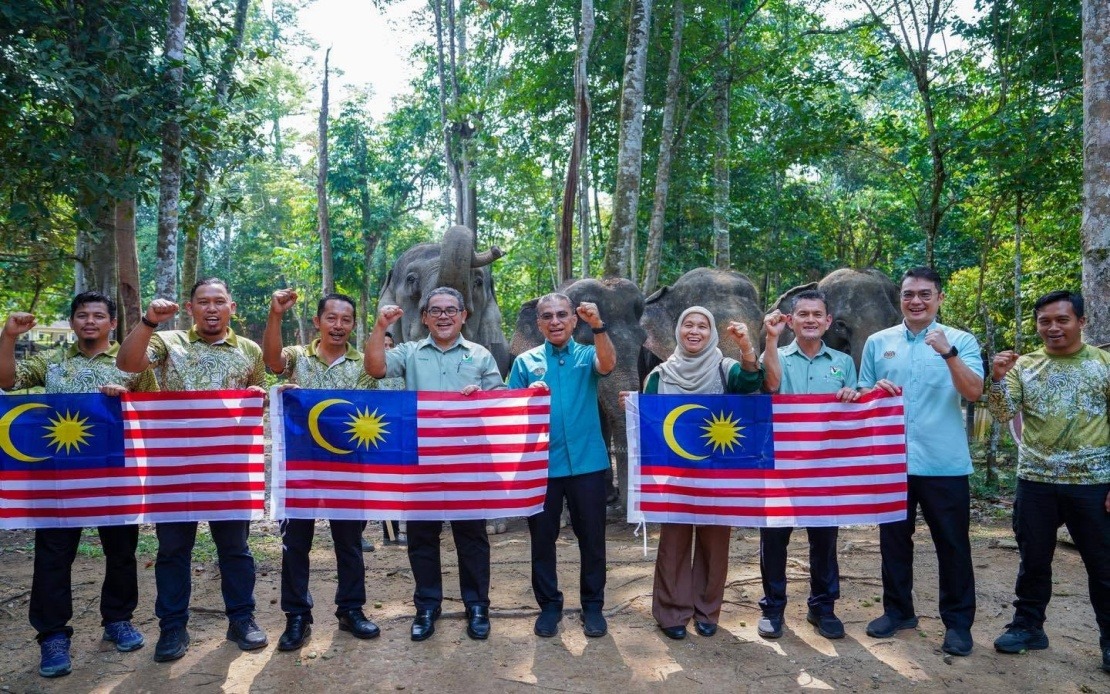
The Ministry of Natural Resources and Environmental Sustainability has pledged to devise innovative strategies aimed at minimising confrontations between humans and wildlife, a problem that has grown more acute across the country. Speaking in Tangkak on August 28, Deputy Minister Syed Ibrahim Syed Noh indicated that the ministry, operating through its Department of Wildlife and National Parks (Perhilitan), recognises the gravity of the situation and has prioritised finding workable solutions. The escalating frequency of such incidents underscores a pressing challenge that demands urgent attention from policymakers and conservation experts alike.
The proliferation of human-wildlife conflicts represents one of the most intractable problems facing Malaysia's conservation efforts. As human populations expand into forest fringes and development accelerates across rural areas, the natural habitat of large mammals—particularly Asian elephants—continues to shrink. Deputy Minister Syed Ibrahim acknowledged that Perhilitan bears a considerable burden in managing these conflicts whilst simultaneously striving to preserve wild populations in their original ecosystems. The tension between development imperatives and conservation objectives has become increasingly difficult to reconcile, particularly in states like Kelantan, Perak, and Pahang where elephant populations remain significant.
The ministry's approach prioritises understanding rather than aggressive intervention. Officials have stressed that rather than viewing wildlife management through a purely enforcement lens, the focus should rest on comprehending animal behaviour and ecological requirements. By maintaining continuous surveillance of elephant movements and habitat use, Perhilitan can respond more strategically to potential conflicts before they escalate into dangerous situations. This philosophy reflects growing international recognition that coercive measures often prove counterproductive, driving animals to become more unpredictable and defensive.
A recent case exemplifies both the challenges and possibilities inherent in current management practices. Sulong Chalil, an adult male elephant that was relocated to a forested area in Gerik, Perak, subsequently travelled hundreds of kilometres on an injured leg to return to its original habitat in Gua Musang, Kelantan. This remarkable journey highlights the profound attachment elephants maintain to their home ranges and the futility of forced relocations without addressing underlying ecological factors. Rather than confining the animal or preventing its movement, Perhilitan monitored its progress while allowing it to navigate naturally, ultimately ensuring its safe return to familiar territory. The case demonstrates that elephant management requires patience, ecological literacy, and respect for animal agency.
The root causes of escalating human-wildlife encounters lie in broader environmental transformation. Syed Ibrahim pointed out that land conversion for residential developments, agricultural expansion, and infrastructure projects has fundamentally altered ecosystems across Malaysia. Elephants and other large mammals face progressively restricted territorial ranges, forcing them into closer proximity with human settlements. This compression of habitat inevitably generates conflict, as animals searching for food and water resources inevitably encounter agricultural plots, villages, and plantation areas. Without addressing these underlying land-use pressures, even sophisticated management techniques will struggle to prevent incidents.
The collaborative approach underway involves multiple stakeholders beyond Perhilitan itself. Government agencies, research institutions, local communities, and conservation organisations are jointly examining innovative solutions tailored to Malaysia's specific ecological and demographic contexts. These may include the establishment of wildlife corridors connecting fragmented forest reserves, implementation of early-warning systems utilising technology to detect approaching animals, and community education programmes fostering coexistence strategies. Such integrated approaches recognise that wildlife management cannot occur in isolation but requires coordination across sectors and jurisdictions.
Behavioural biology presents crucial insights often overlooked in conventional management frameworks. Elephants possess sophisticated cognitive abilities, strong social bonds, and complex memory systems that influence their movements and habitat preferences. Attempting to confine these intelligent animals through barriers or forced relocation frequently triggers stress-related behaviours and unpredictable responses. The decision to allow Sulong Chalil to roam whilst maintaining observation reflected this understanding—recognition that elephants cannot be compelled to remain in unsuitable habitats and that coercion typically produces worse outcomes than patient monitoring combined with gradual habitat management.
For Malaysia's broader development agenda, resolving human-wildlife conflicts carries implications beyond conservation. Repeated incidents damage public perception of wildlife and generate political pressure for culling programmes or habitat destruction. Conversely, successfully managed coexistence enhances Malaysia's international reputation as a responsible steward of Southeast Asia's most significant biodiversity resources. This reputational dimension carries economic consequences, affecting tourism revenues, investment flows, and the country's standing in global conservation discussions. Demonstrating that development and wildlife protection can proceed simultaneously requires concrete successes that resonates with both rural communities directly affected and urban constituencies concerned about environmental preservation.
The challenge of scaling solutions across Malaysia's diverse ecosystems and administrative jurisdictions remains formidable. Peninsular Malaysia's remaining elephant populations inhabit areas spanning multiple states, creating coordination difficulties and inconsistent policy implementation. Furthermore, rural communities bearing disproportionate costs of wildlife conflicts—crop damage, livestock losses, occasional human casualties—require tangible benefits and support to embrace coexistence frameworks. Without addressing these community-level concerns through compensation schemes, alternative livelihood development, and genuine participation in decision-making, even scientifically sound strategies risk resistance and non-compliance.
Looking forward, the success of Malaysia's human-wildlife conflict reduction efforts will depend on sustained political commitment and adequate resource allocation. The current phase of studying and formulating solutions must transition into implementation, monitoring, and adaptive management as results accumulate. International partnerships with research institutions and conservation bodies can accelerate knowledge transfer whilst providing technical expertise. Simultaneously, integrating traditional ecological knowledge held by indigenous communities who have coexisted with elephants and other megafauna for generations could enrich contemporary management approaches.
Deputy Minister Syed Ibrahim's public commitment to addressing these challenges signals genuine ministerial attention, yet translating statements into effective outcomes requires institutional capacity, inter-agency coordination, and realistic timelines. The trajectory of human-wildlife conflicts will ultimately depend on whether Malaysia can reconcile competing demands for land, acknowledge the rights of non-human species to habitat security, and implement management practices grounded in scientific understanding rather than reactive panic. The case of Sulong Chalil and countless unnamed elephants and other wildlife demonstrates both the stakes involved and the possibility of approaches prioritising preservation and coexistence over confrontation.

