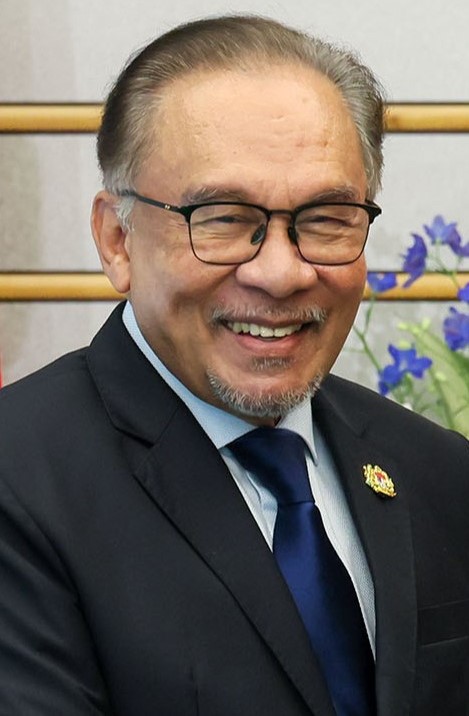
Union representation across Malaysia's workforce remains strikingly modest, with Human Resources Minister Datuk Seri R. Ramanan disclosing that approximately six per cent of workers currently hold membership in labour organisations. The figure, presented at the Peninsular Malaysia Workers' Union Affairs Programme (PHEKS) 2026 grant presentation ceremony in Kuala Lumpur, underscores a persistent engagement gap that has implications for both worker protection and industrial stability across the nation's diverse economy.
The minister's observation points to a critical awareness deficit among the broader working population. Rather than attributing low membership to structural barriers or deliberate avoidance, Ramanan suggests that many workers simply lack comprehensive understanding of what unions offer beyond crisis intervention. This framing shifts focus from union visibility to the substance of member value proposition—a distinction that carries weight in an increasingly competitive labour market where workers must evaluate their organisational commitments carefully.
Despite the modest current penetration, Ramanan expressed confidence in expansion possibilities, signalling the government's commitment to broadening union participation. His commentary carries particular relevance for Malaysia's push toward becoming a high-income nation, where the relationship between organised labour and economic development requires rebalancing. The assertion that unions are "strategic partners" in achieving fair and inclusive growth repositions them beyond adversarial positions, framing organised labour as integral to the nation's development framework rather than peripheral to it.
A fundamental conceptual shift underscores Ramanan's message: unions should function proactively rather than reactively. Rather than waiting for workplace crises to motivate workers into joining, unions ideally prevent problems before they materialise. This preventative approach aligns with modern human resource management philosophy and reflects recognition that workplace conflicts impose costs on productivity, employer-employee relations, and economic competitiveness. For Malaysian employers facing talent retention challenges and rising competition for skilled workers, union collaboration on prevention offers tangible operational benefits.
The government has committed substantial resources to strengthening union capacity and reach. A RM6.1 million allocation for PHEKS 2026 reflects deliberate policy investment in worker organisation infrastructure. The funding allocation deserves closer examination for what it reveals about governmental priorities. Of the total, RM3.5 million targets internal union strengthening through training, education, research, digitalisation, and governance programmes. This investment in union institutional capacity suggests recognition that organisational effectiveness directly influences member engagement and perceived value.
The remaining RM2.6 million directed toward outreach and corporate social responsibility initiatives indicates strategic repositioning of unions within broader community contexts. By linking union activities to CSR frameworks, the government appears to be modernising union relevance for a population increasingly concerned with social impact alongside workplace conditions. This approach potentially broadens union appeal beyond traditional membership demographics, connecting younger workers and those in emerging sectors to organised labour benefits.
Technological transformation presents both challenge and opportunity within this landscape. Ramanan's emphasis on artificial intelligence adaptation and workforce upskilling reflects acute awareness that Malaysia's industrial relations framework must evolve alongside workplace technology. The Jelajah AI MyMahir initiative, supported by RM110 million in skills upgrading allocation, demonstrates government commitment to ensuring technological transition does not marginalise workers or undermine employment quality. Union participation becomes particularly valuable during technological disruption, offering collective voice for workers navigating automation's employment effects.
Current union membership statistics provide baseline context for evaluating growth potential. As of December 31, 2025, Malaysia registered 786 formal workers' unions representing over 1.06 million members collectively. This structure—multiple unions across distinct sectors and regions—reflects Malaysia's complex economy spanning manufacturing, services, agriculture, and emerging technology sectors. The distributed union landscape creates both fragmentation challenges and specialisation opportunities, allowing sector-specific unions to develop deep expertise relevant to their particular industries.
The six per cent participation rate invites comparison within Southeast Asia and globally. Many developed economies maintain union participation between fifteen and forty per cent, while neighbouring developing nations show comparable or lower penetration. Malaysia's figure suggests significant room for expansion without requiring revolutionary change to labour relations frameworks. Strategic growth could yield benefits to worker protections, employer-employee communication, and industrial stability without fundamentally disrupting the nation's reputation for relative labour peace—a competitive advantage many foreign investors consider.
For Malaysian workers across sectors, this moment presents inflection point conditions. Economic transitions, technological disruption, and evolving workforce composition create precisely the conditions where organised labour historically gains traction. The government's explicit emphasis on union awareness-building suggests openness to broader participation. However, meaningful growth requires unions themselves to demonstrate contemporary relevance beyond traditional grievance handling, positioning themselves as professional development partners, skill advancement facilitators, and strategic workplace participants.
The minister's condition regarding future grant allocation—that effective fund utilisation and governance quality will determine funding expansion—introduces accountability mechanisms important for sustainable union development. This performance-based approach aligns with broader government digitalisation and transparency initiatives while challenging unions to prove value delivery rather than simply claiming legitimacy through history or tradition. Such demands could catalyse organisational modernisation within the union movement.
Looking forward, the coming years will determine whether the current six per cent participation stabilises or yields to expansion efforts. Malaysia's continued development trajectory, demographic shifts toward younger and more educated workforces, and sector-specific labour challenges all influence union appeal. The government's investment, combined with Ramanan's clear articulation of unions' preventative and partnership roles, establishes conditions for potential growth. Success ultimately depends on whether individual unions translate government support into compelling member value propositions that resonate with workers navigating Malaysia's increasingly complex employment landscape.