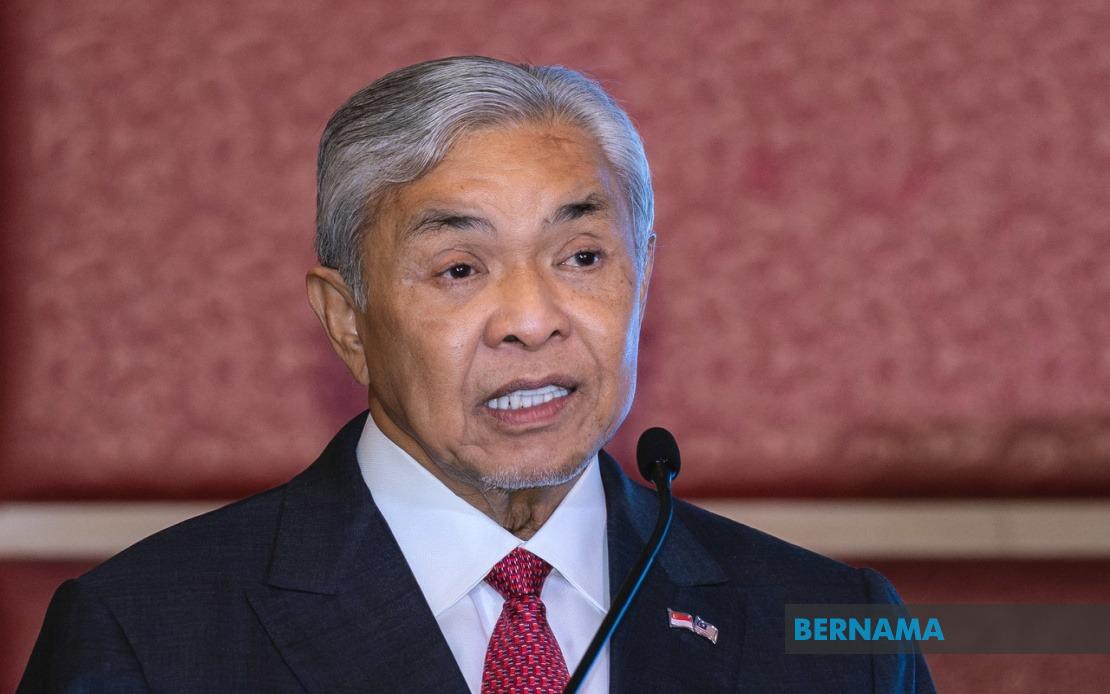
Malaysia's approach to technical education is undergoing a significant transformation, with Deputy Prime Minister Datuk Seri Dr Ahmad Zahid Hamidi unveiling a strategy designed to virtually eliminate unemployment among TVET graduates. Speaking at an event in Kuala Lumpur on July 13, Ahmad Zahid, who also serves as Rural and Regional Development Minister and chairs the National TVET Council, detailed how the government is working to ensure that students receive concrete job offers before they finish their courses. This forward-looking model represents a departure from traditional education pathways where graduates often face uncertainty about employment prospects upon completing their qualifications.
The cornerstone of this initiative involves establishing robust partnerships between TVET institutions and employers well before courses commence. According to Ahmad Zahid, the government proactively engages with companies and industry representatives to shape curriculum offerings that directly align with real-world job market demands. This collaborative framework creates a feedback loop where educational institutions remain responsive to evolving industry needs rather than operating in isolation. By consulting with employers about their workforce requirements, TVET providers can design programmes that teach precisely the skills workers need, effectively narrowing the gap between classroom learning and workplace application.
The results of this approach are striking by conventional standards. Ahmad Zahid claimed that the graduate employability rate stands at 100 per cent, a statistic he attributes directly to securing job commitments before students complete their studies. This achievement addresses several persistent challenges that have historically plagued technical education graduates in Malaysia and across the region. The traditional problem of course mismatch—where graduates possess qualifications misaligned with available positions—becomes largely irrelevant when employers have guided curriculum development. Simultaneously, anxieties about minimum wage expectations and the absence of viable employment opportunities evaporate when job offers materialize during the final stages of training.
The government is also prioritising High TVET courses as part of its broader commitment to skills development. These advanced programmes are specifically designed to equip graduates with competencies that exceed basic industry standards, potentially positioning them for supervisory, technical specialist, or other elevated roles within their sectors. By offering these higher-level qualifications, Malaysia's TVET system aims to develop a workforce capable not just of meeting current demands but of driving innovation and productivity improvements across manufacturing, services, and emerging technology sectors.
The implications of this model extend beyond individual graduate outcomes. For Malaysia's economy, ensuring that TVET graduates seamlessly transition into employment means that businesses can rapidly access trained personnel without lengthy recruitment cycles or expensive in-house training programmes. This efficiency gain translates into lower operational costs for companies and faster production capacity for industries facing skill shortages. Particularly for small and medium-sized enterprises that often lack dedicated human resources departments, having graduates pre-matched to positions reduces administrative burden and recruitment uncertainty.
Regionally, Malaysia's TVET framework offers a potential blueprint for other Southeast Asian nations grappling with youth unemployment and skills gaps. Countries like Thailand, Vietnam, and Indonesia face similar challenges of aligning education with labour market realities. Should Malaysia's model prove sustainable and scalable, it could demonstrate that close government-industry cooperation, rather than purely demand-driven or education-led approaches, offers a superior pathway to full employment for technical graduates.
On the international stage, Malaysia is actively promoting its TVET excellence through participation in global competitions. The TVET@KKDW contingent, comprising nine participants drawn from MARA TVET, Universiti Kuala Lumpur, and GIATMARA, is preparing to compete at WorldSkills Shanghai 2026, scheduled for September 22 to 27. These students will showcase their capabilities across nine skill categories spanning diverse fields including Fashion Technology, Cyber Security, and Electronics. Ahmad Zahid expressed confidence in the contingent's potential to achieve notable results, emphasizing the importance of mental resilience and emotional strength as competitors face off against representatives from numerous countries.
With approximately two months remaining before the Shanghai competition, Ahmad Zahid urged participants to intensify their skill development, strengthen their discipline, and maintain unwavering focus during preparation. The success of Malaysia's representatives on this global platform would serve as powerful validation of the TVET system's effectiveness and could enhance the nation's reputation as a source of skilled technical professionals. Such achievements also inspire younger students considering TVET pathways, demonstrating that these routes offer genuine pathways to international recognition and career advancement.
The government's commitment to TVET aligns with broader economic priorities aimed at reducing dependence on low-skill, low-wage employment. By creating a system where graduates are assured employment before completing their studies, Malaysia addresses both immediate labour shortages and longer-term skill development challenges. This proactive approach recognizes that technical education is not merely a safety net for students unable to access university but rather a legitimate, rewarding alternative pathway that benefits individuals, employers, and the national economy simultaneously.

