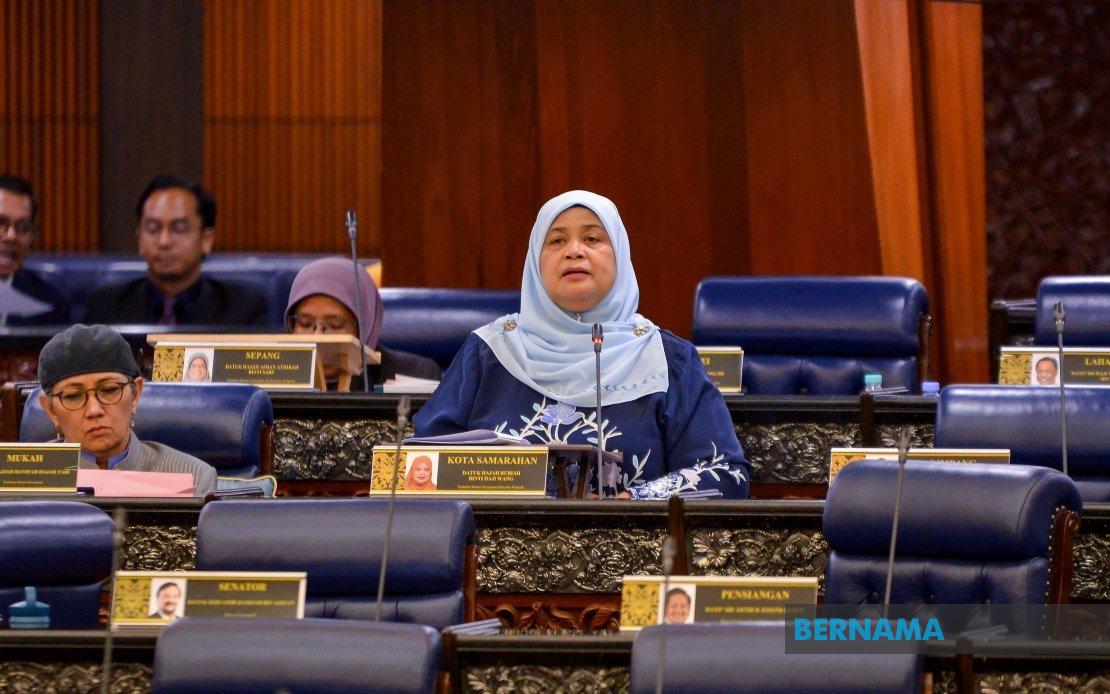
Malaysia's push to elevate its Technical and Vocational Education and Training sector has entered a critical phase with the introduction of TVET 2.0, a comprehensive accreditation transformation designed to bridge the persistent gap between classroom learning and workplace demands. Deputy Minister of Rural and Regional Development Datuk Rubiah Wang told Parliament on July 14 that the government is implementing a strategic overhaul centred on direct recognition from major industry stakeholders, fundamentally reshaping how vocational institutions validate their curricula and certify graduate competency.
The core challenge facing Malaysia's vocational education system has long been skills misalignment—graduates completing their training only to find their qualifications do not match employer expectations or evolving market requirements. By embedding industry recognition into the accreditation process itself, the Ministry of Rural and Regional Development is attempting to create a feedback loop where real-world labour market needs directly inform what is taught and how it is assessed. This represents a departure from a purely academic validation model towards one where employers become active architects of curriculum standards, ensuring that trainees acquire competencies employers actually seek.
Rubiah framed the TVET 2.0 initiative within a broader vision of developing not just skilled workers but entrepreneurs and economic drivers. The strategy extends beyond urban manufacturing hubs to address rural development, positioning TVET graduates as potential job creators capable of stimulating economic activity in regional areas. This addresses a longstanding development challenge in Malaysia: how to retain talent and drive prosperity in non-metropolitan regions where economic opportunities have historically lagged behind Kuala Lumpur and other major cities.
A distinctive component of the revised framework is the integration of spiritual and character development with technical skills training, exemplified by the TVET Tahfiz programme. This initiative aims to produce a generation of graduates who combine Islamic education with advanced technical competencies, recognising that Malaysia's vocational workforce benefits from holistic development. The inclusion of digital literacy and technological prowess alongside religious education reflects the government's attempt to prepare graduates for meaningful participation in both the moral and economic dimensions of contemporary society.
The ministry is strategically positioning specialised institutions to lead in emerging technological domains. TVETMARA Petaling Jaya has been designated as a centre for Internet of Things expertise, while TVETMARA Besut focuses on cloud computing infrastructure, and TVETMARA Pasir MAS develops Building Information Modelling capabilities. This specialisation approach acknowledges that excellence in advanced fields requires concentrated resources, expert faculty recruitment, and sustained investment rather than diluted efforts across numerous sites. By creating centres of excellence, Malaysia mirrors international best practice in vocational education where institutions develop distinctive competitive advantages.
Artificial intelligence, cybersecurity, automation, and robotics feature prominently in the ministry's technology roadmap for TVET institutions. These domains represent the frontier of industrial demand and represent where labour shortages are most acute both regionally and globally. By embedding training in these areas across the TVET network, the government is attempting to preemptively address skills bottlenecks that could otherwise constrain Malaysia's industrial competitiveness and digital transformation agenda.
The German-Malaysian Institute exemplifies international partnership models within the TVET ecosystem. By focusing on transfer of German industrial technology and advanced manufacturing aligned with Industry 4.0 principles, the partnership leverages external expertise and proven methodologies while maintaining Malaysian institutional oversight. Germany's globally renowned vocational education system provides a valuable reference point, and the institutional collaboration facilitates knowledge exchange that elevates domestic standards.
At the higher education level, Universiti Kuala Lumpur serves as a bridge institution offering bachelor-level TVET programmes including the Bachelor of Artificial Intelligence Technology. This vertical integration—where the vocational pathway extends into degree-level study—creates clearer progression pathways for ambitious trainees and acknowledges that some vocational practitioners aspire toward and benefit from advanced qualification. The existence of recognised progression routes enhances the attractiveness of initial vocational enrolment, addressing perception challenges that have sometimes relegated TVET to a second-tier career option.
For Malaysian policymakers, the TVET 2.0 transformation carries significant implications for broader skills development strategy and economic productivity. The vocational sector trains substantial cohorts annually and serves as a primary avenue through which lower-income Malaysians access economic mobility. Strengthening this pathway through industry-aligned accreditation and technological advancement directly supports inclusive growth objectives and helps address structural unemployment among youth populations.
The regional context matters significantly. Southeast Asia faces acute skills shortages as rapid industrialisation and digital transformation outpace education system adaptation. Countries across ASEAN are competing to attract investment in technology-intensive sectors; Malaysia's ability to produce graduates certified by industry and equipped with future-ready capabilities represents a competitive advantage in regional talent competition. Investors considering factory locations or technology hubs increasingly consider local workforce skill availability and quality as primary site selection criteria.
The emphasis on rural economic development through TVET also addresses an often-overlooked dimension of Malaysia's productivity challenge. Rural regions possess younger populations and lower employment opportunities; repositioning TVET graduates as potential entrepreneurs and business founders rather than merely wage-workers could catalyse distributed economic growth. Success in this domain requires not just technical training but also entrepreneurship education and access to financing—elements that will ultimately determine whether TVET 2.0 achieves its ambitious regional development ambitions.
Implementing these reforms at scale presents considerable execution challenges. Recruiting and retaining faculty qualified to teach emerging technologies, maintaining curriculum relevance as technologies evolve rapidly, securing industry partnerships that deliver substantive input rather than nominal endorsement, and funding physical infrastructure for advanced laboratory facilities all demand sustained commitment and resources. Malaysia's track record of TVET policy implementation will significantly influence whether TVET 2.0 remains aspirational or translates into tangible improvements in graduate outcomes and employer satisfaction.

