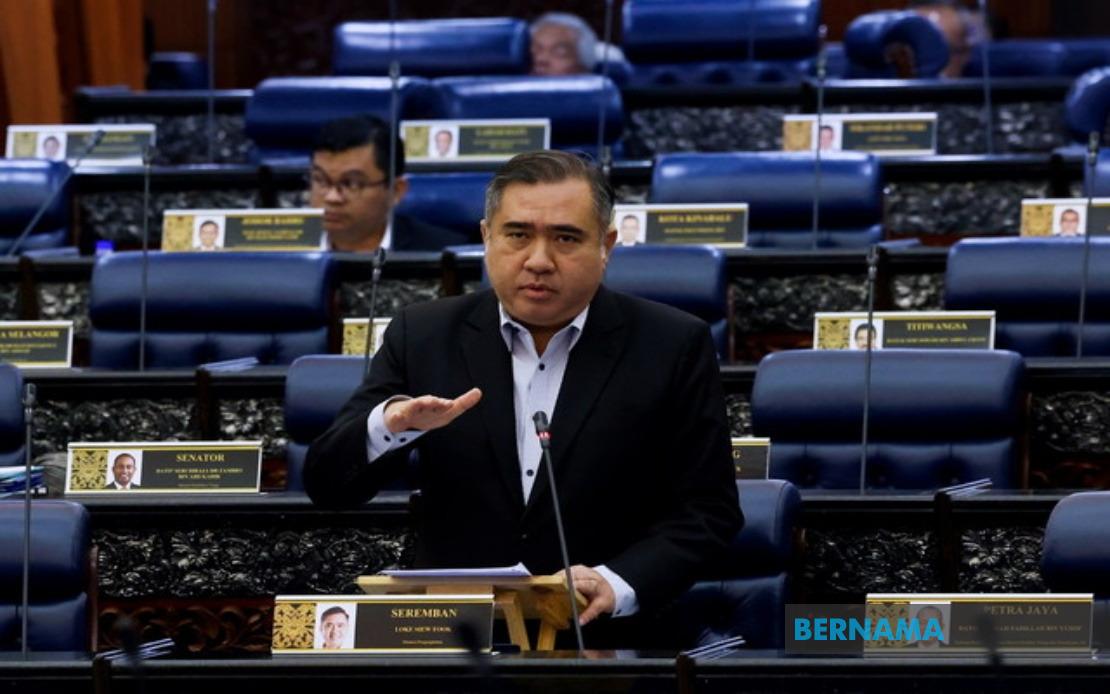
Malaysia's Transport Ministry has announced plans to reshape the country's approach to road accident liability by introducing a formal compensation framework that would give courts explicit authority to impose financial penalties on convicted drivers. The proposal, unveiled in Parliament on July 14, seeks amendments to the Road Transport Act 1987 that would establish systematic procedures for determining and awarding compensation to victims of fatal and serious road accidents, representing a significant shift from the ministry's purely enforcement-focused approach of recent years.
Under the framework envisioned by Transport Minister Anthony Loke, courts would gain discretionary power to order offenders convicted of serious traffic offences to provide compensation to accident victims or their surviving family members. The determination of compensation amounts would consider multiple factors, including the severity of sustained injuries or fatalities, documented losses incurred by victims, and the convicted offender's demonstrated financial capacity to make payments. This multifaceted assessment approach acknowledges the varied circumstances surrounding each incident and seeks to tailor remedies accordingly rather than applying standardised penalties.
The minister's statement reflects government positioning that drivers who cause deaths through reckless behaviour represent a qualitatively different category of offender than those committing routine traffic violations. The administration intends that such individuals will encounter prosecution escalated to serious criminal levels rather than being processed as standard traffic infringers. This rhetorical repositioning carries practical consequences, signalling both to the judiciary and to the public that fatal accidents caused by dangerous driving warrant legal consequences of proportional magnitude.
Critical to the ministry's broader anti-racing agenda is the Road Transport (Amendment) Bill 2026, which Parliament has already approved. This legislation establishes a novel Section 42A specifically criminalising illegal racing as a discrete offence rather than prosecuting racers only after accidents materialise. First-time offenders now face fines ranging from RM2,000 to RM10,000 alongside potential imprisonment extending to two years. Repeat offenders encounter substantially more severe provisions, including fines of RM5,000 to RM20,000 and up to five years' imprisonment, creating a significant escalation in penalties based on recidivism.
A crucial enforcement innovation embedded in the amendment permits authorities to prosecute illegal racing participants before any accident occurs. Previously, intervention was necessarily reactive—authorities could only impose penalties after collisions had already happened, meaning street racing activities proceeded largely unchecked unless they resulted in crashes. The legislative modification fundamentally alters this dynamic, enabling proactive policing that disrupts illegal racing networks as soon as evidence of participation emerges, regardless of whether accidents have transpired.
The ministry's enforcement intensity has measurably increased across Malaysian jurisdictions. Recent operations in Johor exemplify this intensity, resulting in sixteen arrests and confiscation of 260 motorcycles connected to illegal racing involvement. These operations represent coordinated efforts to dismantle racing networks through systematic identification, apprehension, and asset seizure. The high motorcycle count seizure demonstrates the scale of illegal racing activity in urban and suburban areas, particularly among younger riders who view street racing as recreational activity despite its lethal consequences.
The June 1 incident on Jalan Renggam-Simpang Renggam in Johor, which resulted in five fatalities, has prompted elevated prosecutorial attention. The Attorney-General's Chambers has directed that investigations proceed under Section 302 of the Penal Code, which addresses culpable homicide, rather than under standard traffic legislation. This prosecutorial elevation signals that responsible authorities are treating severe racing-related collisions as serious criminal matters with consequences extending beyond administrative penalties.
Loke's parliamentary remarks emphasised that sustainable traffic safety requires transformation extending beyond enforcement mechanisms and legislative frameworks. The minister recognised that legal penalties alone cannot eliminate road fatalities when annual deaths exceed 6,000 individuals. Behavioural modification at the societal level and sustained public education initiatives must accompany punitive measures to generate the cultural shift necessary for reducing accident rates. This acknowledgement reveals government understanding that isolated legislative solutions cannot address systemic driving culture problems.
The minister explicitly appealed for depoliticisation of road safety discourse, requesting that all political parties prioritise public welfare above partisan advantage. Loke's statement suggests concern that opposition politicians might exploit road safety discussions for political positioning rather than constructive engagement with the substantive policy challenges. This appeal for cross-party cooperation reflects recognition that road safety transcends normal electoral politics and demands sustained, non-partisan commitment from government institutions, community organisations, and the citizenry.
For Malaysian road users and their families, the compensation mechanism represents potential financial relief following catastrophic accidents. Families losing breadwinners in fatal collisions would gain clearer pathways to securing court-ordered payments from convicted offenders, though actual recovery would depend on offenders' financial circumstances. The framework acknowledges that criminal punishment alone cannot restore deceased victims or compensate survivors for lost income, medical expenses, and psychological trauma accompanying fatal accidents.
The broader implications for Southeast Asian traffic policy merit consideration. Malaysia's integrated approach combining enhanced criminal penalties, proactive enforcement, and compensation mechanisms offers a model potentially applicable to regional peers facing similar illegal racing and traffic safety challenges. Neighbouring countries confronting comparable street racing epidemics might adapt aspects of Malaysia's legislative and enforcement strategies to their own contexts.
Implementation success will ultimately depend on judicial consistency in applying compensation provisions and enforcement agencies' sustained capacity to detect illegal racing activities. The legislative framework creates authority for courts and law enforcement, but translating statutory provisions into effective practice requires adequate training, resources, and political will extending beyond any single ministry. Realising the government's road safety objectives demands sustained institutional commitment and public behavioural change occurring simultaneously across multiple societal levels.

