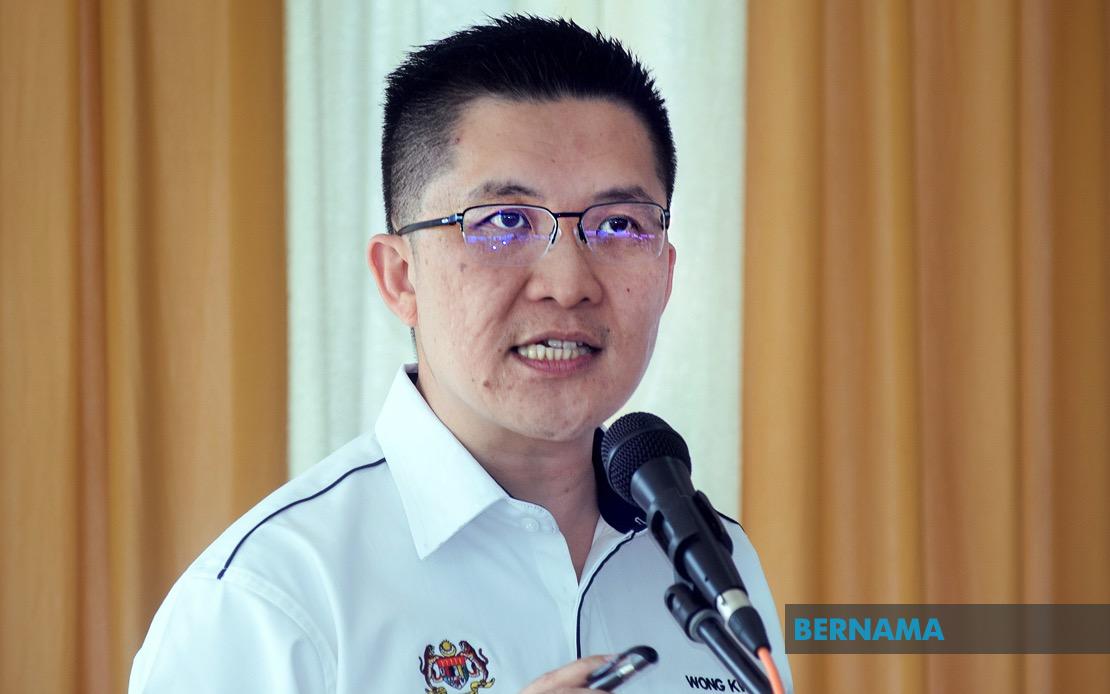
Malaysia's Tamil-language education system continues to expand, with 528 Tamil national-type schools (SJKT) currently operational across the country and accommodating a combined enrolment of 78,501 pupils as of late May this year. Deputy Education Minister Wong Kah Woh disclosed these figures during parliamentary proceedings, responding to questions about the state of minority language education in Malaysian schools. The comprehensive response underscores the government's ongoing commitment to preserving Tamil-medium instruction at a time when such schools face demographic pressures and shifting educational patterns.
The trajectory of Tamil-language examination entries reveals a gradual decline over recent years, though the government insists this reflects natural educational trends rather than systemic policy shifts. In the 2023 Sijil Pelajaran Malaysia (SPM) examination, 8,023 candidates registered for Tamil language assessments. This figure declined to 7,925 the following year, 7,693 in 2025, and 7,494 registered candidates in the current examination cycle. Despite the downward pattern, education officials characterise Tamil language studies as a permanent fixture within Malaysia's examination framework, with assurances that the subject will remain available alongside other language options through the Examinations Syndicate.
A significant institutional commitment undergirds this promise. The Ministry of Education has embedded Tamil language preservation into its long-term planning, integrating it into the 2027 School Curriculum rollout and prioritising quality improvements in teaching methodology and literary instruction. Officials emphasise that pupils enrolled in schools lacking Tamil-language streams remain eligible to sit the SPM examination in Tamil, provided they meet standard registration protocols. This flexibility ensures that language choice remains decoupled from school assignment, theoretically expanding access beyond dedicated SJKT institutions. The ministry's multi-pronged strategy addresses not only curricular matters but also the practical infrastructure and human resource dimensions essential for sustainable minority-language education.
Johor state exemplifies both the scale and the complexity of Tamil education management in Malaysia. The southern state houses 71 SJKTs with a total student population of 12,906, representing a significant concentration within the national system. Within Johor Bahru district specifically, 15 schools serve 7,840 pupils, with four institutions commanding particularly large enrolments: SJKT Taman Tun Aminah leads with 1,529 students, followed by SJKT Ladang Rini with 1,055, SJKT Jalan Yahya Awal with 890, and SJKT Masai accommodating 768 pupils. These aggregate figures mask considerable variation in school sizes and operational challenges, with Johor Bahru simultaneously hosting two severely under-enrolled institutions, SJKT Ladang Sungai Plentong and SJKT Ladang Mados, each serving fewer than 30 students.
The infrastructure investment programme reflects the ministry's determination to expand capacity within expanding population centres. Two Johor institutions benefit from major construction initiatives: SJKT Ladang Rini and SJKT Kulai Besar have each received RM4.3 million allocations for new building construction, with projections that these facilities will accommodate an additional 200 to 300 pupils upon completion. Such targeted investments attempt to balance growth in high-demand areas with the practical limitations of existing physical plant. The allocation strategy addresses demographic realities in Johor's expanding urban corridors, where Tamil-speaking communities continue to grow, while simultaneously tackling chronic underutilisation in other locations.
Addressing the structural problem of under-enrolled schools has emerged as a central policy priority. As of May 31, 2026, 135 SJKT institutions nationwide have implemented multi-grade class arrangements, combining students across different academic levels within single instructional settings. This pedagogical restructuring allows schools to maintain operations despite falling rolls, though it introduces instructional complexity that requires specialised teacher training. Complementing this approach, 36 SJKTs have received approval for relocation to areas with stronger demographic demand, reflecting a deliberate strategy of right-sizing the school network rather than simply closing institutions. The ministry frames this approach as responsive to local needs rather than top-down rationalisation, preserving community assets while adapting to demographic realities.
Teacher recruitment and retention emerged as another dimension of ministry intervention. The SJKT system currently requires 1,334 Tamil language specialisation teachers, yet the actual staffing level has reached 1,733, representing an apparent surplus of approximately 399 educators. In secondary schools offering Tamil language instruction, the requirement stands at 584 teachers, with 648 currently employed. These figures suggest that teacher availability does not constitute the primary constraint on Tamil education delivery, though distribution across geographical regions may create localised shortages despite aggregate sufficiency. The over-staffing relative to requirements may reflect deliberate investments in teacher quality and availability, reducing pupil-teacher ratios and supporting enhanced instructional capacity.
A secondary but significant dimension of the parliamentary exchange addressed transparency in examination grading, a concern that occasionally surfaces within minority-language communities regarding potential systemic disadvantages. Wong unequivocally rejected any suggestion that examination results operate under quota systems or predetermined grade distribution targets. Instead, he characterised the grading methodology as evidence-based, derived from systematic evaluation by panels comprising subject matter experts, curriculum specialists, and educational measurement professionals. These assessors examine individual candidates' actual performance against established curriculum standards and assessment benchmarks before determining grade boundaries, a process Wong highlighted as consistent with international examination practices employed in developed educational systems.
The variability of grade boundaries across examination cycles reflects genuine differences in candidate cohort performance and examination instrument characteristics, rather than systematic manipulation, according to this account. This position addresses concerns that minority-language students might face disadvantageous grading standards, providing procedural legitimacy to the examination system. The emphasis on international alignment attempts to position Malaysian examination practices within a global context of rigorous assessment standards, countering any perception that Tamil-medium students receive inferior or more stringent evaluation.
The broader context for these statistics and policies reflects Malaysia's constitutional commitment to minority-language education and the political salience of Tamil-speaking communities, particularly in states like Johor and Selangor. The Tamil education system represents one dimension of Malaysia's multilingual heritage, functioning alongside Chinese-medium schools and English-language instruction. However, Tamil schools face distinctive demographic and resource pressures, as urbanisation and intergenerational language shift alter patterns of enrolment. The government's investments in infrastructure and teacher development signal ongoing political commitment, yet the declining SPM registration figures suggest underlying challenges that structural interventions alone may not fully address. For Malaysian policymakers and Tamil-speaking communities, sustaining this education system requires balancing cultural preservation imperatives against the practical realities of educational financing and demographic change.