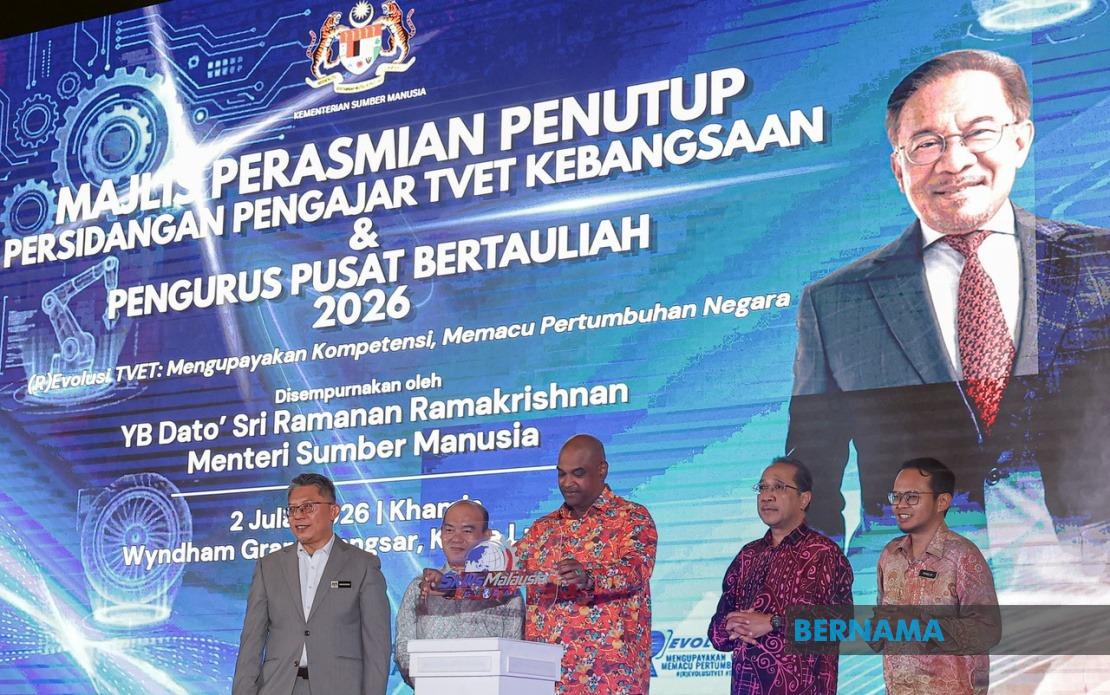
The Ministry of Human Resources is pushing ahead with an ambitious proposal that could fundamentally reshape how Malaysia finances vocational training, seeking to convert a substantial portion of the Skills Development Fund Corporation's financing structure from loans into grants. Minister Datuk Seri R. Ramanan has indicated that this initiative will be formally presented to the Cabinet for deliberation, marking a significant shift in how the government approaches financial support for technical education.
The proposal targets the RM100 million currently distributed through PTPK's loan scheme, which has long been a cornerstone of Malaysia's effort to bolster technical and vocational education and training capacity. However, Ramanan's intervention reflects growing recognition within the ministry that the current loan-based model creates genuine hardship for participants. The economic logic is straightforward: many TVET students must abandon their jobs to pursue technical qualifications, immediately destroying their primary income source during the critical period when they most need financial stability.
This dual squeeze—lost wages coupled with loan repayment obligations—has become a documented barrier to skills development participation. By converting loans into grants, the ministry aims to remove a significant disincentive that may be deterring talented individuals from pursuing vocational pathways that could otherwise lead to higher incomes and more stable career trajectories. The financial burden of debt repayment while students are retraining represents a structural inefficiency in Malaysia's skills ecosystem, one that disproportionately affects lower and middle-income households who cannot absorb training costs through family savings.
Ramanan unveiled this proposal while officiating the National TVET Instructors and 2026 Accredited Centre Managers Conference in Kuala Lumpur, signalling that the ministry views vocational education reform as central to Malaysia's broader economic ambitions. He positioned TVET not merely as an educational option but as a transformative force capable of solving the persistent skills mismatch that has plagued Malaysian industries for decades. This framing is crucial for understanding why grant conversion matters beyond immediate financial relief: the ministry is betting that removing financial barriers will unlock a larger pool of talent that has previously avoided vocational tracks.
The broader context for this initiative sits within Malaysia's MADANI human capital development strategy, which explicitly designates TVET as a foundational pillar. Rather than treating vocational education as a secondary pathway for students unable to access universities, the government is repositioning it as essential infrastructure for economic transformation. This philosophical shift creates pressure to remove obstacles that prevent participation, making the grant conversion proposal both philosophically coherent and pragmatically necessary within this new framework.
Ramanan articulated an ambitious economic vision underpinning these reforms, explicitly linking TVET expansion to Malaysia's aspiration to become a Regional Innovation Hub capable of attracting high-value foreign investment. The ministry has set a concrete income target: achieving a Gross National Income per capita of approximately RM77,200 annually. Reaching this threshold requires not marginal improvements in workforce skills but systemic transformation in how Malaysians access and pursue career development. Vocational education sits at the heart of this calculation, as technical skills drive productivity gains and create pathways to middle-class incomes that currently depend heavily on university credentials.
Simultaneously, the ministry launched an Internationalisation Action Plan spanning 2026 to 2030, designed to position Malaysia's vocational system within global standards frameworks. This plan rests on six strategic pillars, including elevation of the Centre for Instructor and Advanced Skill Training to world-class status and comprehensive alignment of the National Occupational Skills Standards with international benchmarks. The integration of Environmental, Social and Governance principles alongside Sustainable Development Goals reflects how Malaysia is attempting to position its skills development within contemporary global expectations around sustainability and inclusive growth.
A particularly significant dimension of this internationalisation effort involves securing foreign professional recognition for the Malaysian Skills Certificate. Currently, SKM credentials carry limited currency beyond Malaysia's borders, creating a ceiling on their value for worker mobility and international career opportunities. By aligning domestic standards with globally recognised frameworks, the ministry effectively broadens the economic returns that individuals can derive from TVET participation. This global recognition dimension adds another compelling argument for grant conversion: if vocational qualifications genuinely open international opportunities, the public returns on investment justify public funding through grants rather than private loans.
The proposal also reflects implicit acknowledgment that loan-based models systematically disadvantage individuals from modest economic backgrounds, potentially perpetuating inequality within Malaysia's skills development system. Individuals wealthy enough to fund training through family resources face no debt burden and can compete more effectively for employment, while poorer participants navigate both training and debt simultaneously. Converting to grants democratises access by removing this class-based friction, ensuring that capability and commitment rather than family wealth determine who can afford skills upgrading.
From a Southeast Asian perspective, Malaysia's loan-to-grant conversion proposal carries regional significance as other nations grapple with similar vocational development challenges. Thailand, Indonesia, and the Philippines all struggle with skills mismatches and insufficient vocational participation rates. Malaysia's willingness to invest public resources directly through grants rather than requiring individual debt may establish a regional model that other governments consider adopting, particularly as competition for regional innovation hub status intensifies.
The Cabinet's response to this proposal will signal how seriously the government intends to treat its human capital development commitments. While the financial cost is real—converting RM100 million in loans to grants represents foregone revenue recovery and requires increased budget allocation—the potential returns justify the expense if TVET participation rates and completion rates rise accordingly. The ministry's framing suggests confidence that removing financial barriers will generate sufficient additional participation to produce positive net fiscal outcomes over time.
Implementation challenges remain substantial, particularly regarding criteria for determining grant eligibility and preventing potential misuse of expanded subsidies. However, Ramanan's explicit commitment to pursuing Cabinet consideration indicates that the ministry views these administrative challenges as surmountable obstacles rather than fundamental barriers. The proposal now enters the formal decision-making process, where competing budget priorities and broader fiscal considerations will ultimately determine whether Malaysia proceeds with this significant reorientation of its vocational education financing approach.

