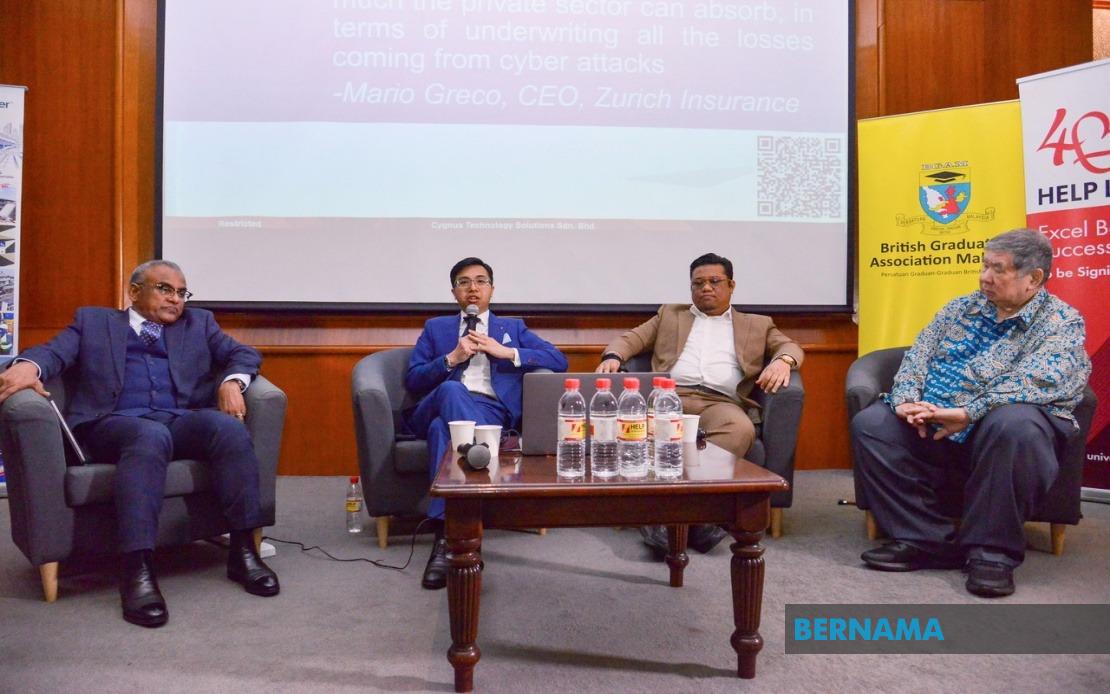
Malaysia faces an escalating scam crisis that has evolved far beyond isolated criminal incidents into a coordinated assault on the nation's digital economy and public trust. Last year, the country recorded over 66,000 online scam cases resulting in approximately RM2.97 billion in losses—a staggering figure that underscores how comprehensively organised crime has infiltrated digital platforms. Speaking at the BGAM Lecture Series on Scam Awareness 2.0 at HELP University, Datuk Kamarudin Md Ali, an exco member of the Malaysia Crime Prevention Foundation and president of the British Graduates Association Malaysia, characterised the current situation not as a collection of disparate crimes but as a serious national challenge that threatens individuals, families and businesses across all socioeconomic strata.
The sophistication of modern scam operations marks a dramatic departure from traditional fraud methods. Contemporary criminal syndicates leverage artificial intelligence, social engineering techniques and a deep understanding of human psychology to deceive victims with unprecedented effectiveness. Prof Datuk Seri Dr Akhbar Satar, director of the HELP University Institute of Criminology and Criminal Justice, distilled this reality into a stark observation: scammers do not primarily attack computer systems but rather exploit the vulnerabilities of human cognition. As he remarked, the distinction between corruption and scams dissolves at a singular point—when personal integrity collapses. This insight reframes the scam problem from a purely technical challenge into a profound question about the values that underpin society and individual decision-making.
The regional context makes Malaysia's vulnerability even more acute. Former Bukit Aman Commercial Crime Investigation Department director Datuk Seri Ramli Mohamed Yoosuf revealed that Southeast Asia has become the global epicentre of commercial crime, with projected regional scam losses for 2025 estimated between USD88 billion and USD114 billion. Within the region, organised scam compounds concentrated in Myanmar, Cambodia, Laos and the Philippines generate an estimated USD40 billion annually. These operations represent a fundamental shift in transnational organised crime, drawing trafficked labour from more than 80 countries and weaponising technologies such as AI-generated deepfakes and cryptocurrency laundering mechanisms that render traditional law enforcement responses inadequate.
The sophistication of these criminal enterprises creates a asymmetric challenge for authorities. AI-generated deepfakes enable scammers to impersonate trusted figures—government officials, family members, financial advisors—with convincing realism that bypasses the natural scepticism most people deploy against obvious fraud attempts. When a victim sees what appears to be video evidence of someone they trust requesting money or sharing sensitive information, the psychological barriers that normally protect against deception crumble. Cryptocurrency laundering simultaneously obscures the money trail, making asset recovery nearly impossible and frustrating law enforcement's ability to dismantle criminal networks by seizing proceeds.
Malaysia has implemented legislative and institutional responses designed to confront this multifaceted threat. The Cybersecurity Act 2024 provides legal frameworks for addressing digital crimes, while enhanced alignment with Financial Action Task Force standards strengthens the nation's capacity to track and prevent illicit financial flows. Notably, the establishment of the National Scam Response Centre represents a structural acknowledgment that tackling syndicates requires coordinated inter-agency effort rather than siloed responses. Yet Datuk Seri Ramli's assessment that scam networks continue to evolve rapidly suggests that regulatory adaptation, however necessary, remains insufficient without complementary public education and community-level vigilance.
Tan Sri Dr Syed Hamid Albar, the Asia e University chancellor and former Home Minister who officiated the lecture series, articulated a strategic vision that extends beyond enforcement. His insight that scams now threaten not merely individual finances but public trust, social wellbeing and confidence in the nation's digital ecosystem identifies the true scale of the damage. When citizens lose faith in digital transactions, online banking and e-commerce platforms, the entire economy suffers. Businesses hesitate to invest in digital infrastructure; smaller enterprises struggle to reach customers online; and the nation's competitive position in the digital economy deteriorates. From this perspective, the RM2.97 billion in direct losses represents only the visible portion of an iceberg whose submerged bulk comprises eroded trust and suppressed economic activity.
The antidote, according to speakers at the forum, resides in education and collective responsibility. Syed Hamid emphasised that an informed society proves far more resilient than one dependent solely on law enforcement interventions that necessarily occur after crimes have already succeeded. Universities assume particular importance in this ecosystem, serving not merely as institutions of technical training but as spaces where digital literacy, critical thinking and ethical reasoning are cultivated. Prof Akhbar Satar stressed that graduates must graduate not only with technical competence but with the conceptual frameworks and moral awareness necessary to identify and resist manipulation.
The multi-stakeholder approach reflected in the lecture series—which drew government leaders, law enforcement specialists, cybersecurity professionals, academics and community representatives—acknowledges that scam prevention cannot be delegated to any single institution. Financial institutions must implement robust verification protocols while educating customers about emerging threat vectors. Technology providers face pressure to incorporate fraud-detection systems that balance security with usability. Media organisations bear responsibility for promoting digital literacy and exposing common scam tactics. Educational institutions must integrate cybersecurity awareness into curricula. Government agencies require adequate resourcing and inter-departmental coordination. And individual citizens must cultivate the habits of scepticism, verification and caution that transform them into active participants in crime prevention rather than passive victims.
The practical challenge intensifies when considering the speed at which criminal methodologies evolve. Syndicates operating from compounds across Southeast Asia employ sophisticated testing protocols, rapidly pivoting tactics when particular approaches yield diminishing returns. A scam technique that succeeds against 5 percent of targets today may prove worthless within weeks as awareness spreads. This dynamic underscores why the one-time awareness campaigns of previous years prove insufficient. The forum moderated by Malaysian Press Institute president Datuk Yong Soo Heong and featuring panellists from the MCPF and Malaysia Anti-Scam Community Organisation recognised this reality, addressing emerging trends, commercial crime investigation methodologies, digital trust frameworks and practical defence measures tailored to both individuals and organisations.
For Malaysian readers, the implications extend beyond abstract concern for national statistics. The prevalence of scams directly affects the trustworthiness of digital platforms that increasingly dominate daily transactions. Every fraudulent investment scheme that lures victims through social media represents a breach in the digital commons—a poisoning of the environment in which legitimate commerce occurs. The concentration of scam compounds in neighbouring countries adds a geographic dimension to Malaysian vulnerability, as criminals need only cross borders to exploit Malaysian targets while remaining physically beyond the jurisdiction of Malaysian law enforcement. This reality necessitates not only stronger domestic responses but also enhanced regional cooperation that remains institutionally underdeveloped.
Looking forward, the sustainability of Malaysia's response depends on maintaining momentum beyond individual awareness campaigns. The National Scam Response Centre requires sustained funding and staffing. Inter-agency coordination mechanisms must evolve as criminal tactics evolve. Educational curricula must be regularly updated to reflect emerging threats. Financial institutions must invest continually in infrastructure capable of detecting novel fraud patterns. Media organisations must dedicate resources to ongoing investigative journalism that exposes scam operations. These commitments demand political will and budgetary allocation at a time when fiscal resources face competing pressures. Yet the alternative—treating scams as inevitable costs of digital life rather than challenges to be systematically overcome—effectively surrenders the nation's digital future to organised crime.
The framing of scam prevention as a collective responsibility rather than a specialized function of law enforcement represents an important conceptual shift. Datuk Kamarudin's assertion that every informed citizen becomes another line of defence against scammers redefines the public's role from passive victim or unconcerned observer into active guardian of the digital ecosystem. This approach acknowledges that no amount of police resources or technological investment can match the protective power of a society where critical thinking, healthy scepticism and awareness of manipulation techniques are culturally embedded. Building such a society requires sustained, coordinated effort across government, business, media, education and civil society—precisely the multi-stakeholder approach the BGAM lecture series exemplified.

