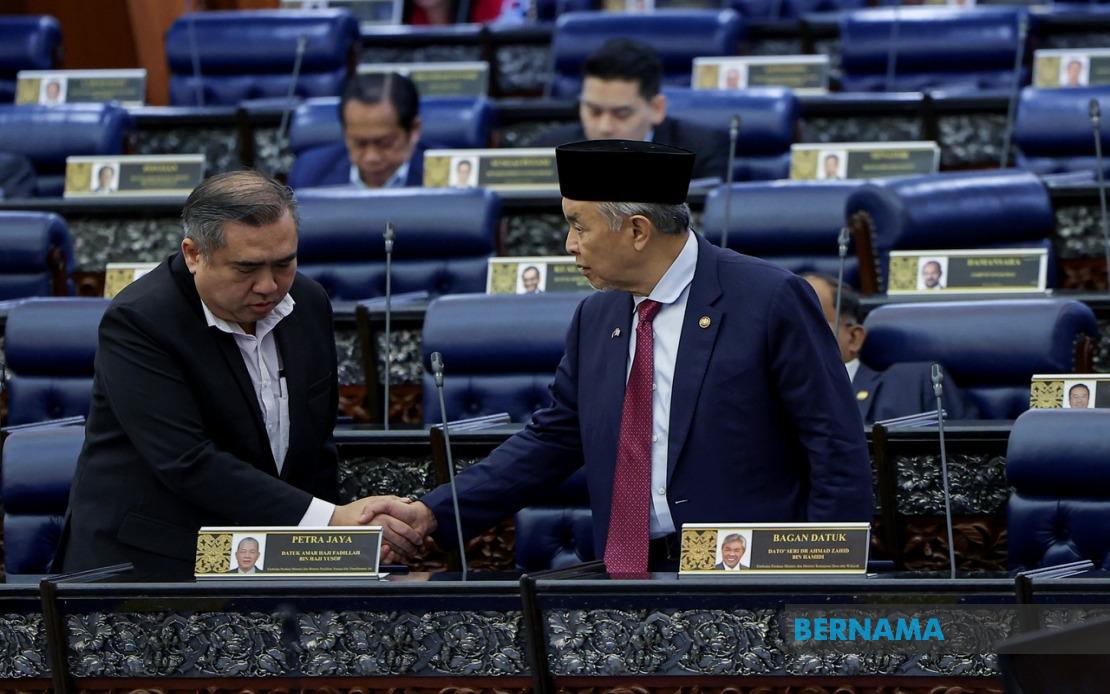
Malaysia's Parliament has begun consideration of the Road Transport (Amendment) Bill 2026, which would substantially escalate penalties for a broad spectrum of traffic offences and grant expanded enforcement authority to law enforcement agencies. Transport Minister Anthony Loke tabled the legislation for first reading in the Dewan Rakyat on June 22, with the second reading scheduled for the current parliamentary session. The amendments represent a government attempt to tighten road safety standards and increase compliance through stricter financial and custodial consequences.
The proposed modifications fundamentally restructure the penalty framework that has governed Malaysian roads for years. Standard traffic violations would see fines rise substantially, with minimum penalties jumping from RM300 to RM500 for numerous infractions. This escalation applies to offences ranging from failing to display a vehicle registration number to driving without a valid licence, exceeding speed limits, breaching vehicle construction and equipment standards, ignoring traffic control signals, and participating in illegal street racing activities. For Malaysian motorists accustomed to existing penalty levels, the increases signal a markedly tougher enforcement environment.
Driving with a suspended licence emerges as a focal point of the government's crackdown, reflecting growing concern about repeat offenders who pose particular dangers on public roads. Current legislation permits maximum imprisonment of one year or a fine reaching RM5,000, but the amended Bill would impose penalties of up to three years' imprisonment or fines between RM3,000 and RM10,000. This sixfold increase in the upper fine threshold and tripling of the maximum jail sentence demonstrates Parliament's determination to deter drivers who continue operating vehicles despite official suspension of their licences, a behaviour that represents both deliberate defiance of regulation and heightened collision risk.
Street racing and speed-testing on public thoroughfares, persistent problems in Malaysian urban centres, would face unprecedented legal consequences under the new framework. First-time offenders could receive fines from RM2,000 to RM10,000, imprisonment up to two years, or both, whereas repeat offenders would face minimum five years' imprisonment alongside fines ranging from RM5,000 to RM20,000. These provisions acknowledge the genuine public safety threat posed by organised illegal racing activities that have claimed lives and caused serious injuries across the country. The introduction of explicit street racing offences closes gaps in existing legislation that enforcement agencies have struggled to navigate.
False statements related to road transport matters would also incur substantially harsher treatment under Clause 28 and related sub-clauses. Penalties for fraudulent declarations and misleading statements now reach RM200,000 in fines or imprisonment for up to ten years, a dramatic increase that targets licence fraud, fraudulent vehicle registration, and other deceptive practices that undermine the integrity of the transport system. Such enhancement recognises how falsified documentation undermines enforcement efforts and enables unsafe operators to remain on roads.
The Bill grants traffic enforcement agencies notably expanded operational capabilities, empowering both police officers and road transport officers to exercise greater control over traffic management and redirection authority. These enhanced powers enable more responsive traffic control during congestion, accidents, and public events, though they also represent an elevation of enforcement discretion that advocates for administrative fairness will monitor closely. The government argues such flexibility improves road safety coordination and reduces bottlenecks that contribute to accidents.
Additional amendments address vehicle-related infractions and administrative procedures. Maximum compound amounts for compoundable offences would increase from RM300 to RM500 under Clause 37, allowing authorities to resolve minor matters without lengthy court proceedings while generating stronger financial incentives for compliance. Clause 22 transfers power to prescribe fees for foreign motor vehicle entry permits to the Transport Minister, streamlining administrative processes for cross-border vehicles increasingly common in Southeast Asian tourism and commerce. This delegation acknowledges the minister's capacity to adjust fees responsively without requiring fresh legislation.
The legislation introduces specific provisions addressing the growing phenomenon of micromobility devices, which have proliferated on Malaysian streets in recent years. Formal procedures for detention and disposal of such vehicles—notably e-scooters and similar devices—would be established, recognising that existing statutes predate these technologies. By embedding micromobility regulation within transport law, the government establishes a coherent enforcement framework rather than treating these devices as regulatory orphans.
A particularly significant dimension involves establishing obstruction and assault of enforcement officers as arrestable offences, without requiring the customary arrest warrant or officer consent. This provision protects traffic personnel and road transport inspectors from violence and intimidation, incidents that have increased as enforcement activity intensifies. The arrestable classification streamlines police response to such incidents and signals serious government commitment to officer safety.
The proposed amendments carry implications extending beyond traffic compliance into broader governance and public safety frameworks. For Malaysian motorists, the changes demand heightened awareness of legal consequences and suggest the government's willingness to employ financial penalties as a primary policy instrument. For enforcement agencies, expanded powers and clearer offence definitions reduce interpretation ambiguity while increasing accountability requirements. For regional observers, Malaysia's legislative approach offers a case study in how developing nations attempt to improve road safety through penalty escalation combined with enforcement empowerment, a strategy whose effectiveness remains subject to implementation quality and judicial consistency.
The Bill's passage would position Malaysia among nations employing increasingly stringent road safety regimes, reflecting global trends toward stricter traffic law enforcement. Success ultimately depends not merely on legislative provisions but on consistent enforcement, public education regarding penalties, and institutional capacity to process violations equitably. The second reading will provide Parliament an opportunity to debate implementation challenges, administrative feasibility, and whether penalty increases alone sufficiently address underlying driver behaviour patterns that generate Malaysia's persistently elevated road fatality statistics.