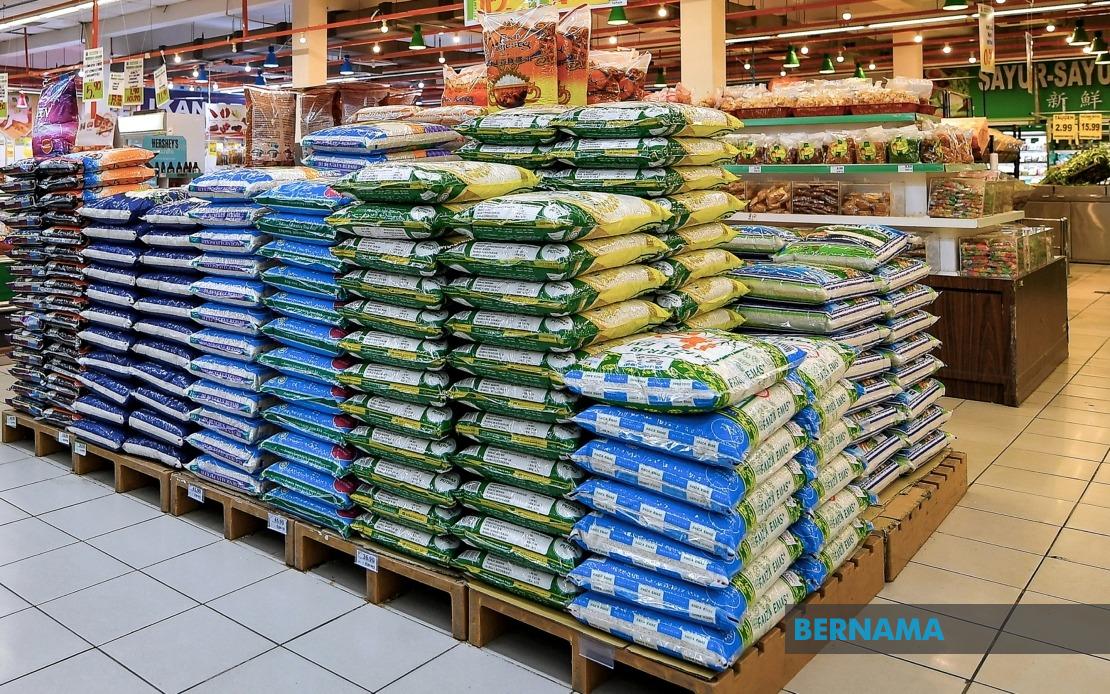
Malaysia's food security outlook appears robust, with government officials confirming that domestic rice reserves are sufficient to sustain the nation for half a year despite ongoing global supply chain disruptions. Economy Minister Akmal Nasrullah Mohd Nasir delivered the reassurance during a briefing in Kuala Lumpur on July 13, highlighting that buffer stock levels provide adequate cushioning against potential international market volatility that has affected numerous countries.
The minister's statement came during a comprehensive review of national food supplies and pricing at a National Economic Action Council meeting chaired by Prime Minister Datuk Seri Anwar Ibrahim at the Parliament building. This high-level discussion underscores government concern about protecting ordinary Malaysians from the ripple effects of global instability, particularly as geopolitical tensions and climate disruptions continue reshaping agricultural production worldwide.
Perhaps most significantly for household budgets, Akmal Nasrullah announced that Local White Rice prices will remain frozen at current levels, with the government committing to absorb any cost pressures rather than passing them to consumers. This pricing assurance represents a deliberate policy choice to shield the purchasing power of Malaysian families, particularly lower and middle-income households for whom rice constitutes a critical dietary staple. The decision reflects awareness that sudden food price surges can quickly erode consumer confidence and strain household finances.
Understanding the precarious position of Malaysia's farming sector, the government simultaneously released RM45.98 million to support 118,908 paddy farmers across Peninsular Malaysia through the Paddy Farmers Plowing Incentive programme. This direct cash injection acknowledges the mounting pressures that cultivators face, particularly from volatile weather patterns associated with climate change and persistently elevated production costs that have compressed farm profitability in recent seasons.
The dual-track approach—ensuring consumer price stability while injecting capital into agricultural production—reflects a delicate balancing act common in Southeast Asian policymaking. By supporting farmers' operational capacity, the government aims to sustain domestic production levels that feed into the buffer stock system, creating a virtuous cycle where adequate reserves meet consumer affordability goals. Without farmer support, production could falter, potentially depleting reserves faster and creating future supply pressures.
Malaysia's food security framework carries particular significance within the broader Southeast Asian context, where several nations depend partly on regional rice exports and where supply disruptions elsewhere inevitably create speculation and price volatility. Thailand, Vietnam, and Cambodia collectively account for substantial global rice exports, meaning any disruption in those markets directly influences regional pricing and availability. By maintaining robust domestic reserves, Malaysia insulates itself from sudden import shocks that have historically devastated economies dependent on global commodity markets.
The six-month reserve calculation represents a substantial policy commitment, as maintaining such stockpiles requires significant storage infrastructure, regular rotation to prevent degradation, and continuous monitoring systems. Government agencies must balance the cost of warehousing against supply security objectives, a calculation that becomes more complex as global inflation pressures mounting storage and maintenance expenses. The decision to maintain this level reflects a prioritisation of food security over short-term budgetary considerations.
Climate change emerges as a persistent challenge underlying these policy discussions. Malaysia's tropical climate exposes paddy farming to unpredictable monsoon patterns, drought conditions, and flooding that can devastate seasonal harvests. The Paddy Farmers Plowing Incentive programme directly addresses climate-related farming stress, helping producers maintain operational capacity even when environmental conditions create uncertainty. Such support mechanisms become increasingly critical as climate volatility intensifies across Southeast Asia.
Global supply chain uncertainties that prompted this government briefing extend beyond agriculture into manufacturing and services sectors. The simultaneous attention to food supplies signals broader governmental anxiety about inflation and supply disruption risks. By visibly addressing food security, policymakers communicate to the public and financial markets that core essential needs remain protected, an important psychological and economic signal during periods of international instability.
The pricing commitment on Local White Rice also carries subtle implications for Malaysia's rice milling and distribution industries. By preventing retail price increases, the government effectively constrains profit margins throughout the supply chain unless offsetting support mechanisms emerge. This creates incentive structures where millers, traders, and retailers may lobby for behind-the-scenes subsidies or cost-sharing arrangements, shifting burden distribution within the food system rather than eliminating it entirely.
Looking ahead, Malaysia's food security posture depends on sustaining production through continued farmer support while managing global market dynamics that remain unpredictable. The six-month buffer provides meaningful security but remains finite. Policymakers must balance immediate consumer protection with longer-term agricultural sustainability, ensuring that price controls and farmer incentives align with production capacity. The government's visible engagement with food security issues demonstrates awareness of this sector's centrality to social stability and economic confidence, positioning Malaysia favourably compared to regional neighbours facing greater supply vulnerabilities.

