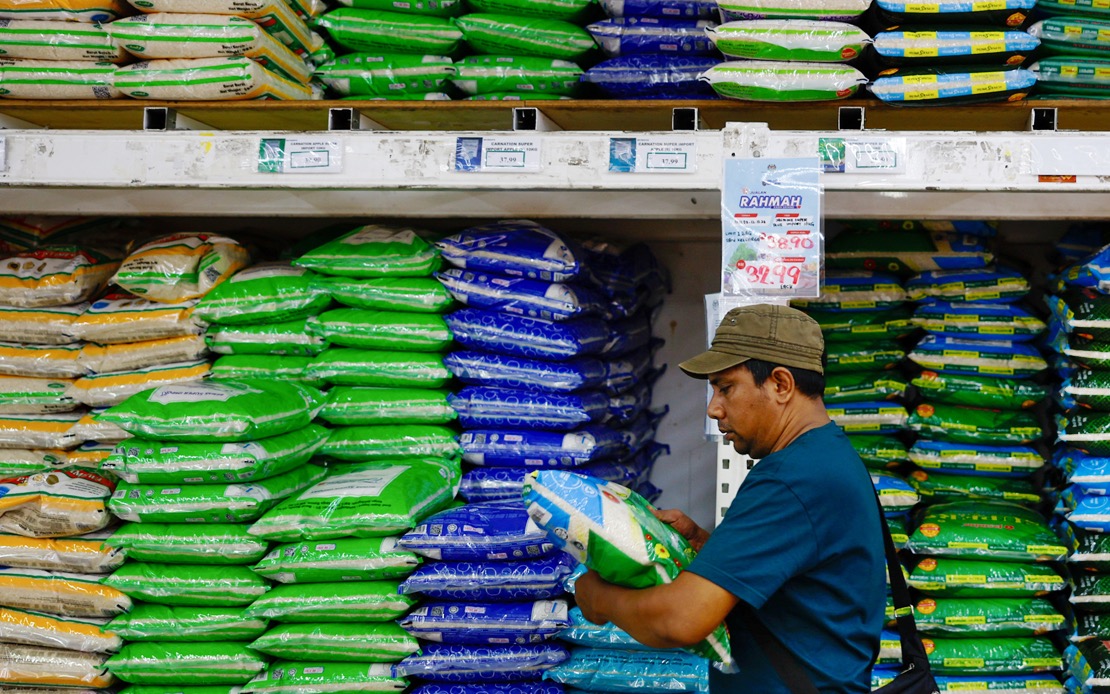
Malaysia's food security apparatus remains well-positioned to weather potential supply shocks emanating from geopolitical instability in West Asia, with the country maintaining substantial rice reserves that can sustain domestic consumption for a minimum of six months. Deputy Agriculture and Food Security Minister Datuk Chan Foong Hin disclosed to the Dewan Negara that national physical rice stocks stand at 1.237 million tonnes, comprising 200,000 tonnes held under the strategic national rice buffer managed by Padiberas Nasional Berhad (BERNAS) and 1.037 million tonnes from commercial inventory channels. This dual-layer stockpiling mechanism underscores Malaysia's deliberate approach to insulating households from volatile international commodity markets, particularly as uncertainties persist in major grain-producing regions.
The strategic reserves take on heightened significance given Malaysia's historical vulnerability to external supply disruptions. The country relies heavily on imports to bridge the gap between domestic production and consumption needs, making it susceptible to price fluctuations and availability shocks when major suppliers face logistical or geopolitical complications. By maintaining both government-controlled buffer stocks and leveraging commercial warehouse holdings, authorities have constructed a resilience framework that addresses both emergency scenarios and gradual market volatility. This layered approach allows policymakers to manage immediate crises through the BERNAS buffer while preserving commercial supplies to avoid sudden market shortages that could trigger panic buying and hoarding.
Government intervention extends beyond stockpiling to encompass price stabilization mechanisms that shield Malaysian consumers from international price volatility. The Ministry of Agriculture and Food Security employs subsidy programmes targeting local white rice, effectively decoupling domestic prices from global market swings. This intervention proves particularly valuable during periods when international commodity prices surge, as rice remains an essential staple consumed daily across Malaysian households regardless of income level. The subsidy framework serves as both a social safety net and an economic stabilizer, preventing the ripple effects of global commodity inflation from cascading through the broader economy.
Beyond immediate defensive measures, Malaysia is pursuing an ambitious medium-term strategy to elevate domestic rice production and reduce import dependency. The government has established a target of achieving 80 per cent self-sufficiency ratio for rice by 2030, a substantial increase from current levels. This goal responds to persistent downward pressure on local production stemming from structural challenges including declining agricultural participation among younger generations, climate variability exacerbated by phenomena like El Niño, and competition for arable land from urbanization and alternative land uses. Achieving this target would fundamentally alter Malaysia's position within regional rice markets and substantially enhance national food security resilience.
The Ministry's strategy for boosting production centers on technological modernization within the farming sector. Expanding cultivation of drought-resistant rice varieties—specifically MR 380, MR 381, and MR 382—represents a scientific approach to mitigating weather-related production volatility. These cultivars can maintain reasonable yields even during periods of moisture stress, addressing a critical vulnerability highlighted by recurring dry seasons and irregular rainfall patterns. Complementing varietal innovation, the Ministry is promoting advanced agronomic practices including Alternate Wetting and Drying methodology and System of Rice Intensification approaches, both of which optimize water utilization efficiency and can elevate per-hectare yields compared with conventional cultivation methods.
Infrastructure enhancement forms another pillar of the production expansion programme. A five-season rice cultivation initiative spanning two years in areas under the Muda Agricultural Development Authority (MADA) aims to intensify land utilization by extending the growing season calendar. Simultaneously, the Ministry is upgrading irrigation systems that supply these productive regions, ensuring reliable water availability independent of natural precipitation patterns. Modern irrigation networks enable farmers to pursue multiple cropping cycles annually, directly multiplying productive output from the same land area. For regions like MADA, which historically serve as rice production heartland, such infrastructure modernization carries outsized significance for national supply targets.
Cost pressures confronting padi farmers represent a persistent constraint on production expansion, prompting the government to implement targeted financial relief measures. Recognizing that elevated input costs directly undermine farmer profitability and discourage investment in enhanced cultivation practices, authorities have introduced a temporary exemption from the Sales and Service Tax for agricultural fertilizers including rock phosphate and magnesium sulphate. This exemption, spanning from January 2026 through December 2027, directly reduces farmer expenses during a critical period when production expansion efforts require maximum engagement. The measure acknowledges that without cost relief, even technologically superior production methods may remain economically unviable for smallholder farmers operating on tight margins.
The Ministry has simultaneously increased direct financial incentives for padi cultivation. The ploughing incentive for the 2026 planting season has nearly doubled, rising from RM160 to RM300 per hectare, representing a RM40 million additional budgetary commitment expected to benefit approximately 200,000 farming households. This enhancement directly addresses the opportunity cost of rice farming relative to alternative land uses and demonstrates government commitment to making padi cultivation economically competitive. For smallholder farmers concentrated in Peninsula Malaysia's rice-growing regions, such per-hectare payments constitute meaningful income supplements that can influence planting decisions and investment in improved practices.
The confluence of these measures—emergency reserves, price stabilization, production modernization, and farmer support—reflects a comprehensive approach to food security that addresses both immediate vulnerabilities and long-term systemic constraints. Malaysia's particular geographic position and trade orientation make it especially attentive to supply disruptions originating from distant regions, particularly major grain-producing areas vulnerable to political instability or conflict. The West Asian tensions referenced by Deputy Minister Chan underscore how regional geopolitical events can reverberate through global commodity supply chains, affecting countries that import substantial rice quantities. By maintaining substantial reserves while simultaneously investing in domestic production capacity, Malaysia reduces exposure to such external shocks.
The rice self-sufficiency initiative carries broader implications for Southeast Asian food security architecture. As a region substantially dependent on rice imports from just a handful of major suppliers—particularly Thailand, Vietnam, and India—Southeast Asian nations collectively face concentration risk within global rice markets. Malaysia's determination to elevate domestic production and reduce import reliance could catalyze similar initiatives across the region, collectively reducing the supply concentration that characterizes contemporary rice markets. Enhanced regional self-sufficiency would dampen price volatility and reduce the leverage of major supplier nations during trade disputes or supply disruptions.
Implementing these interrelated initiatives requires sustained fiscal commitment and effective coordination across multiple government agencies. The Ministry's ability to deliver on production targets depends on achieving genuine farmer participation in adopting new varieties and methods, requiring effective extension services and demonstration programmes. Infrastructure upgrades, particularly irrigation modernization in MADA and other traditional rice zones, entail substantial capital expenditure and require careful project management to achieve timely completion. Maintaining adequate reserves while simultaneously investing in production expansion places competing demands on agricultural budgets, necessitating careful prioritization and efficient resource allocation.
For Malaysian consumers, these policies translate into continued price stability and availability of affordable rice, a dietary staple consumed across all income levels and cultural communities. The combination of strategic reserves, price subsidies, and production expansion efforts creates multiple layers of protection against supply shocks and price volatility. This multifaceted approach reflects sophisticated understanding that food security encompasses not merely physical availability but also affordability and accessibility. As global commodity markets become increasingly volatile and geopolitical risks accumulate, Malaysia's deliberate investment in rice sector resilience positions the country to navigate foreseeable challenges while gradually reducing structural dependencies that constrain long-term food security.

