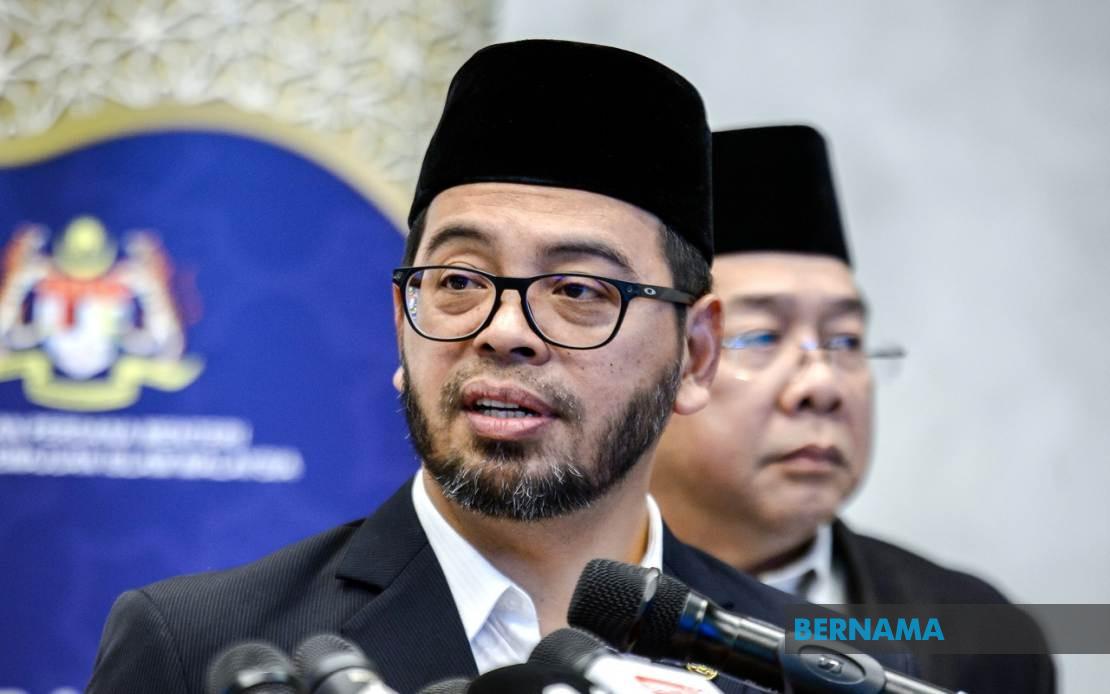
Malaysia's government has issued a forceful rebuke following the detention of Sheikh Muhammad Hussein, the Grand Mufti of Jerusalem and custodian of the Al-Aqsa Mosque, after Friday prayers at the holy site. Minister in the Prime Minister's Department (Religious Affairs) Senator Dr Zulkifli Hasan released a statement expressing grave concern over the incident, which he characterized as an affront to religious freedom and the sanctity of one of Islam's most revered places of worship. Although the religious leader was released after his detention, the episode has prompted Kuala Lumpur to take a definitive diplomatic stance on the matter.
The incident represents what Malaysian officials view as a troubling violation of fundamental principles governing religious practice and sanctuary. Dr Zulkifli emphasized that detaining a senior cleric while performing his religious obligations at the Al-Aqsa Mosque undermines both individual rights of worship and the institutional protection that international law ought to afford to sacred spaces. His statement reflects Malaysia's longstanding position that religious leaders must be able to conduct their duties unimpeded, particularly within premises designated as holy sites deserving of special protection under international conventions.
In response, the Prime Minister's Department has explicitly called upon major international institutions to take decisive measures. The appeal specifically targets the United Nations and the Organisation of Islamic Cooperation, two bodies with considerable influence over Middle Eastern affairs and human rights enforcement. Malaysia argues that these organizations have a responsibility to ensure that worship rights are safeguarded, that those leading religious communities receive appropriate security and respect, and that the status of the Al-Aqsa Mosque is properly upheld in accordance with existing international legal frameworks. This multilateral approach reflects Kuala Lumpur's strategy of leveraging diplomatic channels rather than relying solely on bilateral engagement.
Malaysia reaffirmed its unwavering support for the Palestinian people, with the minister pledging continued backing for initiatives aimed at achieving equitable resolution and protecting Palestinian interests. The government vowed to sustain engagement with efforts directed toward establishing just peace in the region, while simultaneously condemning what it describes as systemic oppression. This statement underscores Malaysia's consistent alignment with Palestinian causes, a position that carries significant weight among the nation's Muslim-majority population and resonates throughout the broader Southeast Asian Islamic community.
Beyond the immediate Jerusalem situation, Dr Zulkifli used the opportunity to commemorate a grimmer chapter of recent history—the 31st anniversary of the Srebrenica massacre, one of the most devastating atrocities targeting Muslims in modern times. In July 1995, Bosnian Serb forces perpetrated mass executions against more than 8,000 Bosniak Muslim men and boys in the eastern Bosnian enclave, despite international designation of the area as a protected safe zone. The tragedy exposed the limitations of UN protective mandates and remains a touchstone for discussions about minority vulnerability during armed conflicts.
More than three decades after the killings, recovery and identification efforts continue as families search for closure and proper burial rites for their loved ones. The fact that over 1,000 victims remain unaccounted for underscores the scale of the tragedy and the ongoing trauma for surviving communities. Malaysia has chosen to mark this anniversary as a moment for collective remembrance and moral reckoning, positioning the Srebrenica massacre as a cautionary tale about the consequences of inaction and indifference toward vulnerable populations.
Malaysia's connection to Bosnia runs deeper than symbolic solidarity. The country played an instrumental role during the 1990s through the advocacy of former Prime Minister Tun Dr Mahathir Mohamad and the ongoing commitment of current Prime Minister Datuk Seri Anwar Ibrahim. Additionally, the Muslim Youth Movement of Malaysia (ABIM) undertook pioneering humanitarian work to support affected Bosnian communities during the conflict and its aftermath. These early Malaysian interventions helped establish a pattern of engagement that continues to define the nation's approach to supporting persecuted Muslim populations internationally.
On the military front, Malaysia's contribution was substantial and sustained. Between 1993 and 1998, the Malaysian Armed Forces deployed 10,514 officers and personnel to serve under United Nations peacekeeping mandates in Bosnia and Herzegovina. Operating through the Malaysian Battalion (MALBAT) and later the Implementation Force (IFOR), these soldiers risked their lives to help stabilize the region and protect vulnerable civilians during one of Europe's most turbulent periods. This deployment reflected Malaysia's belief that military resources should be mobilized not merely for territorial defense but also for humanitarian protection and peacekeeping responsibilities.
Beyond military contributions, Malaysia extended educational pathways to Bosnian refugees, with the International Islamic University Malaysia (IIUM) offering scholarships and academic opportunities to those displaced by the conflict. This educational dimension of Malaysia's response ensured that even after immediate dangers subsided, Bosnia's younger generation could access quality learning environments and build professional futures. Such initiatives demonstrate how countries can contribute meaningfully to post-conflict recovery beyond immediate military or financial aid.
Dr Zulkifli urged younger Malaysians to draw moral lessons from Srebrenica, framing the tragedy as a powerful instruction manual for rejecting hatred, sectarian division, and oppression in all its manifestations. By connecting the historical massacre to contemporary concerns, he positioned the anniversary as more than mere commemoration—it becomes a call for vigilance and principled action. The minister articulated a vision wherein Malaysia's youth recognize their generation's responsibility to prevent similar atrocities through advocacy, awareness, and unwavering commitment to human dignity and justice.
The statement concluded with spiritual invocations for the departed and expressions of hope for their families. Dr Zulkifli offered prayers for the highest spiritual rewards for Srebrenica's martyrs and sought divine strength for survivors enduring decades of grief. His invocation "Allahimanet Bosna" (May Allah protect Bosnia) extended Malaysia's protective concern beyond the immediate crisis period, suggesting an enduring spiritual bond with the Bosnian Muslim community. This combination of diplomatic action, historical remembrance, and spiritual solidarity illustrates how Malaysia approaches its role as a voice for Muslim interests and human rights protections on the global stage.

