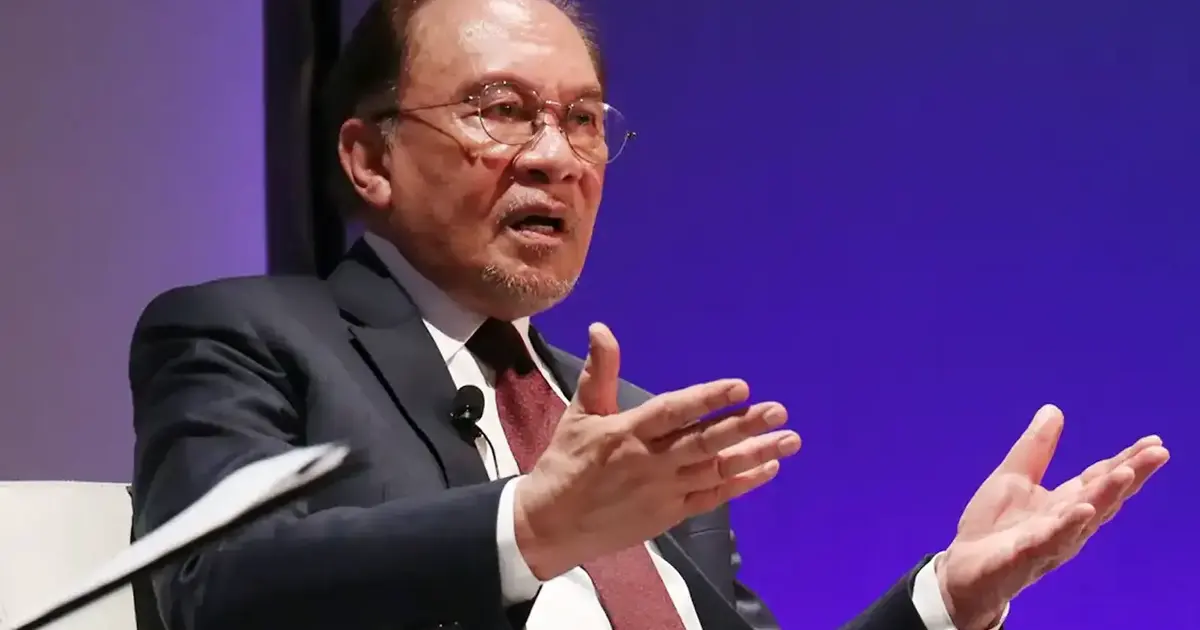
Prime Minister Anwar Ibrahim has pointed to Malaysia's second-quarter economic performance as validation that the country's underlying economy remains fundamentally sound, attributing the growth to a sustained programme of structural reforms implemented over the past three years. His comments come as policymakers across Southeast Asia grapple with fluctuating global demand and regional economic uncertainty, making Malaysia's growth trajectory a significant indicator for investors and trading partners watching the region's largest economies.
The government's assertion that recent economic gains reflect deeper policy improvements rather than temporary cyclical strength carries particular weight given the scrutiny Malaysia faces from credit rating agencies and foreign investors. Anwar's emphasis on the durability of the nation's economic base suggests confidence that growth can be maintained even as external headwinds—including global supply chain volatility and potential shifts in major trading partners' policies—continue to create uncertainty across Southeast Asia.
The three-year reform programme referenced by the Prime Minister encompasses efforts to enhance fiscal discipline, improve transparency in government spending, and create a more competitive business environment. These initiatives form part of a broader modernisation agenda intended to address longstanding structural weaknesses that have periodically constrained Malaysia's economic performance. By framing Q2 growth within this context, Anwar seeks to distinguish between unsustainable gains driven by temporary factors and genuine improvements in the economy's productive capacity.
For Malaysia's policymaking establishment, demonstrating consistent economic expansion carries implications beyond mere growth figures. The country remains a significant foreign direct investment destination, and sustained growth narratives help anchor investor confidence as global capital allocates across emerging markets. A resilient economic story also provides political cover for potentially unpopular fiscal measures that may be necessary to consolidate Malaysia's debt position and maintain fiscal credibility.
The timing of these remarks reflects awareness within government circles that regional economic conditions remain delicately balanced. Thailand, Indonesia, and the Philippines have all experienced slower-than-expected growth in recent quarters, creating a broader regional slowdown that could eventually affect Malaysia through trade and financial channels. Malaysia's relative outperformance, if sustained, could position the country as an increasingly attractive alternative for regional investment flows seeking stability.
Anwar's confidence in the economy's fundamentals also responds to domestic political considerations. Economic performance represents one of the most tangible measures by which Malaysian voters assess government competence, particularly given the cost-of-living concerns that have dominated public discourse. Growth figures, when communicated effectively, can help offset criticism regarding inflation pressures and employment quality—issues that consistently rank among Malaysians' primary economic anxieties.
The government's reform narrative hinges on the assumption that policy changes implemented over three years have sufficiently altered Malaysia's structural trajectory. Improvements to the regulatory environment for businesses, efforts to combat corruption that undermine investor confidence, and attempts to diversify away from commodity dependence all contribute to this framing. However, observers note that translating policy improvements into sustained higher growth remains an ongoing challenge for middle-income economies across Southeast Asia seeking to avoid the middle-income trap.
For Malaysian businesses and workers, the implications of sustained economic resilience extend beyond headline growth figures. Stronger growth typically correlates with improved labour market conditions, rising wages, and enhanced business confidence in expansion plans. Small and medium enterprises, which form the backbone of Malaysia's employment base, benefit particularly from stable macroeconomic conditions that allow for longer-term planning and investment decisions.
Regional competitors have noted Malaysia's policy focus with interest. Indonesia's larger economy and Philippines' demographic advantage create different growth dynamics, yet all three countries pursue structural reform agendas intended to boost long-term competitiveness. Malaysia's success in demonstrating that such reforms yield tangible growth benefits could influence policymaking approaches across Southeast Asia, particularly regarding the balance between fiscal consolidation and growth-supporting expenditure.
International perspectives on Malaysia's economic trajectory remain mixed but increasingly constructive. The narrative that fundamental improvements underpin recent growth, if sustained by actual data, could support Malaysia's standing among foreign institutional investors seeking exposure to Southeast Asian growth with manageable political risk. Conversely, any deceleration in coming quarters would invite scrutiny regarding whether the three-year reform programme has genuinely transformed underlying growth dynamics or merely benefited from temporary supportive conditions.
Looking ahead, the critical test for Anwar's resilience narrative involves maintaining growth momentum through external challenges while continuing structural reforms. Malaysia's effectiveness in navigating global trade uncertainties, managing fiscal sustainability, and investing in human capital and technology will ultimately determine whether current growth represents a durable new trajectory or a cyclical upswing. The government's public confidence in economic fundamentals, evident in the Prime Minister's recent statements, will require sustained backing from consistent quarterly data to retain credibility with both domestic constituents and international observers watching Malaysia's economic evolution.

