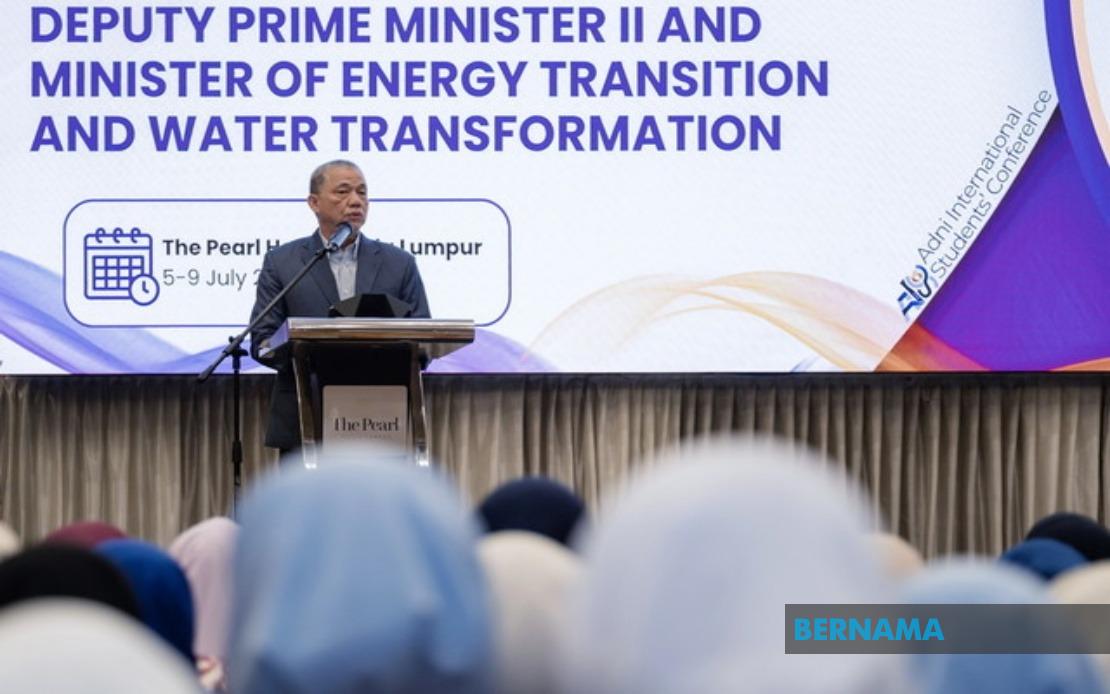
Malaysia cannot rely solely on economic prowess or technological innovation to secure its future, Deputy Prime Minister Datuk Seri Fadillah Yusof cautioned at a major international students' gathering in Kuala Lumpur on July 6. Speaking at the opening of the ADNI International Students' Conference (AISC) 2026, Fadillah underscored that the nation must prioritize the development of individuals equipped with intellectual rigor, strong communication abilities and the capacity to navigate rapid change in an increasingly interconnected global landscape.
The Deputy Prime Minister's remarks come at a critical juncture for Southeast Asia, where competition for talent and innovation is intensifying across the region. While Malaysia has invested substantially in digital infrastructure and attracting foreign investment, the quality of its workforce remains the ultimate determinant of competitiveness. Fadillah's emphasis reflects a growing recognition among policymakers that technological gains and capital accumulation alone cannot sustain long-term economic vitality without a corresponding commitment to developing the intellectual and ethical foundations of the population.
Addressing the assembled delegates—approximately 150 students from Malaysia, Thailand, the Philippines and Indonesia—Fadillah articulated a vision of comprehensive national development that extends beyond conventional economic metrics. He identified four major challenges confronting the next generation: climate change, evolving health crises, the complexities of digital transformation and entrenched social inequality. These issues, he argued, resist compartmentalized solutions and instead demand coordinated responses drawing expertise and commitment from governmental bodies, universities, businesses, non-governmental organizations and young people themselves. This framework suggests a shift in how Malaysia conceptualizes problem-solving, moving away from siloed departmental approaches toward integrated multi-stakeholder collaboration.
The MADANI Government's policy agenda, Fadillah explained, positions human capital enhancement as the centerpiece of national development strategy. This philosophical stance draws inspiration from the tenure of Malaysia's third Prime Minister Tun Hussein Onn, who argued that a nation's true strength emanates not from material accumulation but from the collective character, integrity and unity of its citizenry. By invoking this historical precedent, Fadillah sought to ground contemporary policy in established national values while signaling continuity in Malaysia's developmental philosophy across different administrations.
Crucially, Fadillah distinguished between technological connectivity and genuine social cohesion. While devices and networks may link people across geography, he observed, substantive connections require shared ethical frameworks, reciprocal respect and institutional trust. This distinction carries particular resonance for Malaysia, a multiethnic and multireligious society where social harmony depends on mutual recognition and commitment to common principles. The Deputy Prime Minister's framing suggests that human capital development must encompass not merely technical competencies but also civic values and intercultural understanding.
Fadillah outlined a holistic conception of development incorporating education, physical and mental well-being, ethical formation, artistic and creative expression, environmental stewardship and community integration. This expansive definition moves beyond conventional human capital theory, which often focuses narrowly on employability and productive capacity. By including wellness, ethics and creativity alongside education, Fadillah positioned personal flourishing and social responsibility as integral to national progress. Such an approach aligns Malaysia with international discussions about inclusive development frameworks and the limitations of purely GDP-focused metrics.
The AISC 2026 initiative, themed 'Thriving Together: Diversity, Education and Wellness in a Digital World', exemplifies these principles operationally. The conference structure—bringing together students from multiple nations for substantive intellectual exchange and cultural interaction—embodies the cross-border collaboration and intercultural competence that Fadillah identified as essential. By creating forums for young people to engage with peers from different backgrounds, Malaysia positions itself as a convener of regional dialogue and a repository of multicultural expertise.
Fadillah explicitly connected the conference's mission to the United Nations Sustainable Development Goals framework, indicating Malaysia's alignment with global development agendas. The SDGs' emphasis on quality education, inclusive institutions, and strategic partnerships mirrors the priorities Fadillah articulated. This positioning potentially enhances Malaysia's standing among international development communities and signals commitment to globally recognized standards for measuring progress.
The Deputy Prime Minister offered a pointed observation about artificial intelligence and technological advancement, cautioning that algorithmic sophistication cannot substitute for human wisdom, nor can automation replace compassion. This assertion addresses anxieties prevalent across Southeast Asia regarding automation's impact on employment and social cohesion. By explicitly valuing qualities that machines cannot replicate—wisdom, emotional intelligence, moral discernment—Fadillah reframes the human capital conversation away from pure competition with technology toward complementarity. Workers must cultivate distinctly human capabilities to remain relevant in a digitizing economy.
The geographic participation of students from Thailand, the Philippines and Indonesia underscores the regional dimensions of human capital development. As Southeast Asian economies compete for investment and talent, collaborative educational initiatives and cross-border knowledge exchange strengthen the entire region. Malaysia's role as a convener in such forums enhances its soft power and positions it as an intellectual and cultural hub within ASEAN.
Fadillah's overarching message reflects a maturing understanding within Malaysian governance that sustainable development requires intentional cultivation of human potential across multiple dimensions. This represents a departure from earlier paradigms emphasizing purely economic metrics. As Malaysia navigates challenges of aging demographics, skill mismatches in labor markets and social fragmentation, the Deputy Prime Minister's emphasis on comprehensive human capital development provides both philosophical grounding and practical direction for policy priorities in the coming years.

