Malaysia's strategic position along one of the world's busiest shipping routes is delivering tangible advantages to the nation's port operators, who are experiencing sustained growth driven by international companies seeking safer alternatives to traditional maritime corridors disrupted by geopolitical tensions. According to AmBank's latest economic assessment, the country's ports are reaping the rewards of an ongoing recalibration of global trade patterns, with forecasters predicting that this momentum will continue underpinning the sector's expansion in the coming years despite persistent challenges around operational expenses.
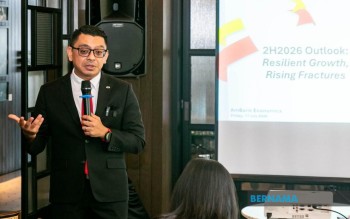
The analysis, presented by AmBank chief economist Firdaos Rosli, emphasises that geopolitical instability in West Asia has inadvertently strengthened Malaysia's competitive advantage. Companies routing cargo through the Strait of Melaka are increasingly viewing Malaysian ports as reliable transit points that offer both safety and operational efficiency. This preference for Malaysian facilities reflects a broader trend whereby multinational firms and shipping lines are deliberately diversifying their supply chain networks to reduce exposure to conflict zones and unpredictable disruptions. The shift represents a structural change in global commerce rather than a temporary phenomenon, suggesting that Malaysia's ports will continue attracting container traffic for the foreseeable future.
Performance metrics from Malaysia's two leading ports underscore the sector's robust trajectory. Port Klang, the nation's flagship facility, processed 15.14 million twenty-foot equivalent units (TEUs) throughout 2025, while the Port of Tanjung Pelepas (PTP) handled 14.03 million TEUs during the same period. These figures demonstrate Malaysia's significant capacity within regional container handling markets. More impressively, growth has accelerated into 2026, with Port Klang recording a five per cent year-on-year increase in container volumes during the first five months of the year, whilst PTP achieved an eight per cent expansion over the identical period. This acceleration suggests that the initial wave of trade rerouting is gathering momentum rather than plateauing, indicating sustained demand for Malaysian port services.
However, maintaining this growth trajectory will require substantial capital investment and strategic planning. As Firdaos noted, competing effectively in an increasingly crowded transhipment market demands continuous upgrades to port infrastructure and expansion of handling capacity. Malaysia's ports must invest in modern container handling equipment, terminal facilities, and logistics systems to accommodate growing volumes whilst maintaining the operational efficiency that attracts international shipping lines. The competition from regional rivals, particularly ports in Singapore and the Middle East, means that complacency could quickly erode Malaysia's advantages. Strategic infrastructure projects targeting both capacity and technological modernisation will prove essential to sustaining the sector's competitiveness.
Beyond traditional container throughput, Malaysia is positioning itself as a pioneering regional hub for green maritime fuels, a sector that will likely define the shipping industry's future economics. The government's Green Bunkering Regulatory Roadmap establishes an ambitious target whereby low-carbon fuels account for 40 per cent of maritime fuel consumption by 2050, reflecting the international maritime community's commitment to reducing greenhouse gas emissions. This transition toward cleaner fuels aligns with global regulatory frameworks and corporate sustainability commitments, creating substantial commercial opportunities for ports that can provide alternative fuels efficiently. By developing green bunkering capabilities now, Malaysia is positioning its ports to capture a disproportionate share of this emerging market segment as regulations tighten globally.
Port Tanjung Pelepas has already commenced operations in both LNG and methanol bunkering, establishing Malaysia's early-mover advantage in this critical sector. Liquefied natural gas represents a significant improvement over conventional heavy fuel oil in terms of emissions reduction, whilst methanol offers an alternative pathway for maritime decarbonisation with increasing industrial support. These initiatives demonstrate that Malaysian ports are not merely passive beneficiaries of trade flows but are actively investing in capabilities that will shape the future of global shipping. The technical expertise and infrastructure being developed now will generate competitive advantages as shipping lines increasingly seek ports capable of supplying these alternative fuels.
The broader shipping environment, reflected in freight rate indicators, further illuminates why trade rerouting through Malaysian waters remains attractive despite elevated logistics costs. The Baltic Exchange Index, which measures global shipping rates, surged above 120 per cent year-on-year twice during February and May, with June readings remaining elevated at 64.6 per cent above previous year levels. Typically, freight rates spike temporarily following disruptions before declining as markets adjust to new realities. However, the persistence of elevated shipping costs despite the absence of acute recent crises suggests deeper structural shifts in global maritime capacity and demand patterns.
This sustained elevation in freight rates reflects ongoing supply-side constraints within the shipping industry rather than temporary bottlenecks. The West Asian geopolitical tensions, whilst no longer generating dramatic headlines, continue exerting profound effects on maritime route selection and operational planning. Shipping companies remain reluctant to commit vessels to routes perceived as higher-risk, effectively constraining available capacity on traditional pathways. Consequently, the pressure to reroute cargo through safer alternatives like the Strait of Melaka persists, benefiting Malaysian ports through incremental traffic gains. Understanding this dynamic is crucial for Malaysian policymakers, as it suggests that growth opportunities may persist even as headline geopolitical risks potentially recede.
For Malaysia's economy, the port sector's trajectory carries implications extending beyond maritime commerce itself. Ports function as critical nodes within broader logistics ecosystems, generating employment, supporting manufacturing clusters, and facilitating trade that sustains numerous downstream industries. Port growth therefore multiplies throughout the economy, supporting container trucking operations, warehouse facilities, trade finance services, and manufacturing activities dependent on efficient supply chains. The current expansion cycle creates opportunities for Malaysian companies across the maritime value chain to expand operations and invest in capabilities. Moreover, by establishing leadership in green bunkering, Malaysia can attract specialised service providers and technology companies focused on maritime decarbonisation, fostering economic diversification.
Looking forward, Malaysia's port operators should recognise that their current advantages, whilst substantial, remain contingent upon continued strategic investment and technological innovation. The global shipping landscape is evolving rapidly, with decarbonisation imperatives, supply chain diversification trends, and technological advances all reshaping competitive dynamics. Ports that successfully navigate these transitions—investing simultaneously in traditional capacity expansion and emerging green technologies—will secure outsized returns. Malaysia's geographic position and early initiatives in alternative fuels provide a strong foundation, but sustained effort will determine whether current advantages translate into long-term market leadership within the region's rapidly expanding maritime ecosystem.

