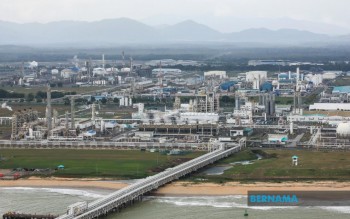
Malaysia's decision to explore the establishment of a national petroleum reserve reflects a critical reassessment of energy security threats that extend far beyond traditional supply concerns. Prime Minister Datuk Seri Anwar Ibrahim's announcement that the government will examine the necessity and implementation of such a reserve marks a significant policy pivot, driven by the recognition that geopolitical volatility has shifted from occasional crisis to permanent structural feature of global energy markets. This development carries profound implications not only for Malaysia but for the entire Southeast Asian region, which remains heavily dependent on stable oil supplies passing through vulnerable maritime chokepoints.
The Strait of Hormuz remains central to this energy security equation, serving as the passage through which approximately 20 million barrels of petroleum daily—roughly one-fifth of the world's total supply—transit to international markets. What distinguishes current conditions from previous disruptions is the persistence of threats. Rather than isolated incidents, analysts now observe a recurring pattern of tensions, shipping delays, elevated insurance premiums, and constrained tanker availability that collectively maintain an underlying risk premium throughout global energy markets. This structural change fundamentally alters how policymakers must approach energy planning and resilience strategies.
According to Stephen Innes, managing partner at SPI Asset Management, the problem has become increasingly entrenched. The various constraints and pressures maintaining energy market volatility are unlikely to ease substantially until alternative infrastructure—including expanded pipeline networks, new export corridors, and bypass routes—becomes operational. Such infrastructure development typically requires years to complete, suggesting that the Strait of Hormuz will continue serving as a source of unpredictable disruption for the foreseeable future. This assessment underscores why Malaysia and other regional governments face mounting pressure to develop independent mechanisms for stabilizing their energy supplies.
The situation has become more complex with recent developments in the Red Sea, where Iranian-aligned Houthi forces in Yemen have reportedly intensified preparations for maritime attacks and claimed responsibility for strikes against Saudi oil tankers. Following escalatory military actions by the United States against Iranian targets, these confrontations add a second critical vulnerability to the maritime energy supply chain. The possibility of simultaneous disruptions across both the Persian Gulf and Red Sea shipping lanes presents an acute risk scenario that Southeast Asian economies are ill-prepared to absorb. Higher oil prices, increased freight costs, and supply delays would ripple through the region's manufacturing sectors, transportation networks, and consumer prices with little warning.
Innes emphasized that Southeast Asian governments must move beyond treating energy security as a reactive policy domain. His recommendations prioritize a comprehensive audit of strategic fuel inventories across the region, deliberate diversification of crude oil sources and refined product suppliers, and enhanced coordination among ASEAN members regarding emergency stockpile levels and collective response protocols. The analyst particularly highlighted the need for governments to strengthen liquefied natural gas procurement strategies, as LNG represents a crucial alternative to conventional crude supplies vulnerable to maritime disruptions. Such coordinated action could substantially reduce the region's exposure to supply shocks originating from distant geopolitical conflicts.
Malaysia's specific situation underscores the urgency of this broader regional challenge. Although the country produces approximately 570,000 barrels of oil daily, it remains a net importer of refined petroleum products. More critically, 69.2 percent of Malaysia's crude oil imports originated from suppliers dependent on Strait of Hormuz access during 2025, creating pronounced exposure to disruptions affecting that critical waterway. This import dependency means that Malaysia cannot insulate itself from global supply disruptions through domestic production alone, making strategic reserve accumulation a logical defensive measure.
Tariro Chiweza, oil and gas analyst at BMI, noted that commercial petroleum inventories—typically maintained by private companies and government agencies for routine operational continuity—provide insufficient protection against prolonged external shocks. A national petroleum reserve, by contrast, would serve explicitly as emergency insurance, providing policymakers with crucial time to implement alternative sourcing arrangements or adjust demand during extended supply disruptions. Such a reserve cannot resolve all energy challenges, but it transforms the response timeline available to government planners during crises, potentially preventing the cascading economic damage that rapid supply shocks would otherwise inflict.
Implementing a national reserve successfully requires clarity regarding storage infrastructure, decision-making protocols, and replenishment mechanisms. Innes cautioned that reserves must integrate seamlessly within a comprehensive energy security strategy rather than function as standalone policy initiatives. This broader strategy should encompass diversified supplier relationships, improved storage capacity for multiple fuel types, and predetermined protocols governing when reserves are deployed and subsequently replenished. Without such integration, national reserves risk becoming politically contentious resources subject to pressure for civilian consumption during periods of elevated prices, ultimately compromising their strategic value.
Beyond immediate petroleum reserves, analysts recommend that Malaysia simultaneously pursue complementary energy resilience measures. These include expanding domestic gas production, accelerating renewable energy development, deploying battery storage systems, improving regional power grid interconnections, and advancing electrification of transport networks. Malaysia's dry gas production is forecast to reach 82.3 billion cubic metres in 2026, strengthening the domestic energy base and reducing vulnerability to imported fuel price volatility. Initiatives including Solar@PETRA, the Corporate Renewable Energy Supply Scheme (CRESS), B15 biodiesel programs, and electric public transport infrastructure collectively address energy resilience through multiple complementary pathways.
Crude oil prices responded immediately to the deteriorating security environment, with Brent crude rising 2.97 percent to US$96.86 per barrel and West Texas Intermediate increasing 1.93 percent to US$88.76 per barrel at the time of the analysis. These price movements illustrate how maritime security concerns translate directly into cost pressures affecting Malaysian consumers and businesses. Innes also raised the question of fuel subsidies, arguing that broad-based price controls become increasingly unsustainable if crude prices remain elevated due to geopolitical uncertainty. Targeted assistance for lower-income households and critical industries would prove more fiscally sustainable than universal subsidies, allowing governments to protect vulnerable populations without distorting price signals that encourage efficient energy consumption.
The distinction between energy security and energy resilience increasingly shapes policy discussions among Southeast Asian governments. Energy security traditionally emphasizes ensuring access to adequate energy supplies, while resilience encompasses the capacity of energy systems to continue functioning when normal supply routes or suppliers become unavailable. Achieving true resilience requires maintaining backup inventory systems, cultivating diversified supplier relationships, developing alternative transportation routes, strengthening electricity transmission infrastructure, and enabling fuel switching before crises emerge. Malaysia's petroleum reserve proposal addresses one dimension of this multifaceted challenge, but only when combined with the broader measures outlined by analysts will it meaningfully enhance the nation's energy independence.
For Malaysia and Southeast Asia more broadly, the convergence of structural maritime vulnerabilities and recurring geopolitical tensions has created a new policy imperative. The region can no longer rely on stable, predictable global energy supplies or assume that disruptions will prove brief and manageable. Instead, governments must construct layered defenses against supply shocks, combining strategic reserves, supplier diversification, infrastructure investment, and regional coordination. Malaysia's examination of a national petroleum reserve represents an important first step in this necessary strategic reorientation, one that other Southeast Asian economies will likely evaluate carefully for their own contexts.

