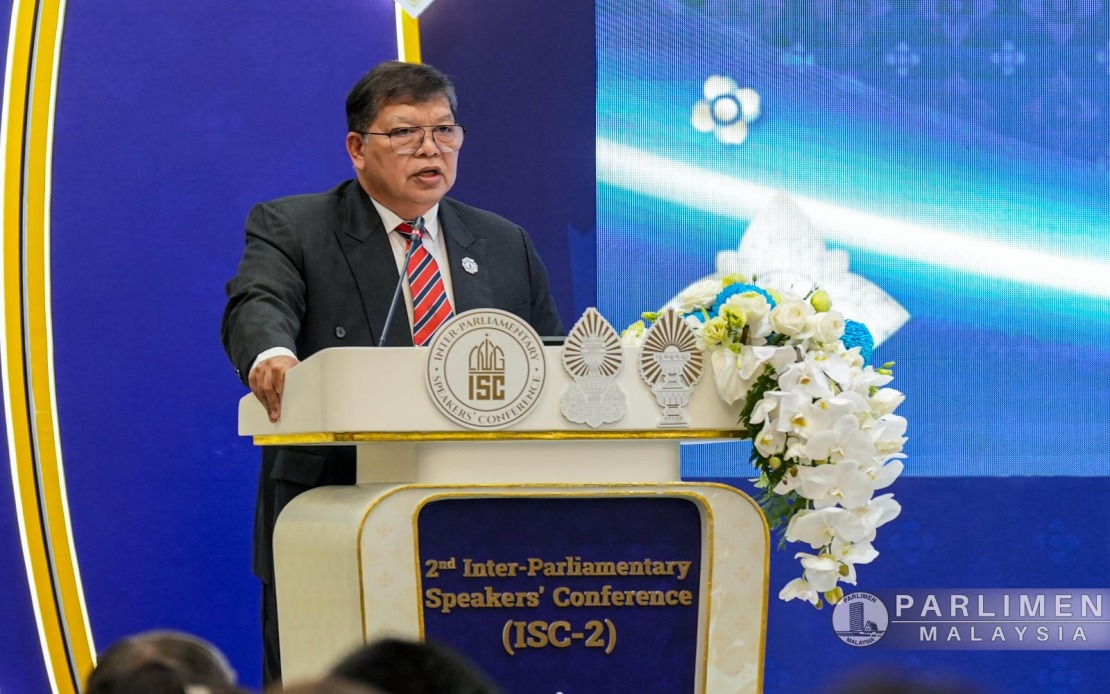
During the Second Inter-Parliamentary Speakers' Conference held in Phnom Penh from August 26 to 28, Malaysia's Dewan Rakyat Speaker Tan Sri Dr Johari Abdul delivered a stark warning about the interconnected threats posed by climate change to global stability. Speaking to journalists on the sidelines of the conference on Friday, Johari emphasized that the climate crisis has evolved far beyond an environmental concern—it now directly imperils economic systems, public health infrastructure, and the foundational pillars of food and energy security that sustain modern societies.
Johari's intervention carries particular weight given Malaysia's position as a Southeast Asian economic hub vulnerable to climate pressures. He lamented what he perceives as a dangerous knowledge gap among global leaders, suggesting that insufficient education about climate science among legislators is hampering effective policy responses. His criticism extended to energy production patterns, questioning why nations continue to prioritize coal-fired power generation when viable alternatives exist. The Speaker argued for a fundamental reorientation of educational curricula to include climate science as a core subject, enabling younger generations to understand the interconnections between environmental degradation and their own livelihoods.
The timing of Johari's remarks proved particularly resonant, arriving mere days after catastrophic flooding devastated Nepal following a glacial collapse in the Himalayan region. The disaster, which claimed 469 confirmed lives with 2,381 individuals still reported missing—including 644 foreign nationals—served as a grim illustration of the climate vulnerabilities afflicting South Asia. Several Malaysian citizens remain unaccounted for in the tragedy, bringing the crisis uncomfortably close to home for policymakers in Kuala Lumpur.
Beyond Nepal's immediate tragedy, the broader regional context reveals alarming climate exposure across the entire South and Southeast Asian corridor. From landlocked Laos to the mountainous terrain of Myanmar and the archipelagic Philippines, communities face recurring cycles of destructive weather events. The Philippines alone confronts approximately 20 typhoons annually, while millions of rural inhabitants across the region exist in perpetual vulnerability to flash floods, landslides, and tropical storms that systematically destroy agricultural livelihoods and critical infrastructure. This recurring pattern of disaster-driven displacement and economic loss undermines development gains across multiple nations.
Johari's core argument centered on the necessity of political will and technological transformation to bridge the widening chasm between wealthy and disadvantaged nations. He highlighted China's strategic investments in green technology ecosystems—including electric vehicle manufacturing, renewable energy expansion, and urban reforestation initiatives—as a model demonstrating how sustained commitment to environmental protection can be operationalized at scale. These examples underscore the feasibility of transitioning away from carbon-intensive energy systems when governments allocate sufficient resources and policy support.
The Speaker's emphasis on research and development funding reflects an understanding that technological solutions to climate adaptation require sustained investment. Renewable energy technologies including solar power, wind turbines, and wave energy systems remain insufficiently deployed across Southeast Asia, despite regional advantages in geography and climate. Malaysia, positioned on the equator with consistent tropical rainfall patterns and coastal access, possesses particular potential for both solar and marine renewable development—yet these sectors remain underfunded relative to their economic promise.
Cambodia's Prime Minister Hun Manet amplified these concerns just days before the parliamentary conference, warning riverine communities throughout the Mekong River basin of rising water levels and urging heightened preparedness. While acknowledging that complete prevention of natural disasters lies beyond governmental capacity, Hun Manet articulated an alternative framework emphasizing resilience-building and systemic disaster response mechanisms. This perspective complements Johari's focus on education and technology by acknowledging that mitigation and adaptation must proceed in tandem.
For Malaysia specifically, Johari's intervention signals the parliament's recognition that climate policy cannot remain peripheral to national development planning. The country's manufacturing-dependent economy faces supply chain risks from climate events affecting regional producers and logistics networks. Additionally, Malaysia's significant palm oil and agricultural sectors face productivity threats from altered rainfall patterns and rising temperatures, with implications for both domestic food security and export revenues that underpin government budgets.
The call for enhanced climate education resonates particularly within Malaysia's context, where environmental awareness varies significantly across urban and rural demographics. Incorporating climate science into school curricula would establish foundations for informed citizenship around environmental policy, potentially building broader public support for carbon pricing, renewable energy subsidies, and conservation initiatives that face periodic political resistance.
Johari's articulation of climate change as a multilayered crisis—simultaneously environmental, economic, and security-related—reflects evolving international consensus that siloed approaches prove inadequate. When climate disruption undermines agricultural productivity, it threatens food prices and availability; when it damages infrastructure, it cascades through supply chains and financial systems; when it displaces populations, it creates humanitarian emergencies and regional instability. This interconnectedness demands responses equally comprehensive in scope.
The parliamentary speaker's intervention also underscores that climate action cannot rest solely with environmental ministers and technical agencies. Legislative bodies themselves must develop sufficient expertise and institutional commitment to scrutinize climate-related legislation, budget allocations, and international agreements. His observation that some lawmakers lack adequate climate literacy points to a critical governance gap—parliaments cannot effectively oversee climate policy without members who understand the underlying science and policy options.
Moving forward, Johari's advocacy suggests Malaysia may intensify its international positioning on climate issues within regional forums and multilateral negotiations. As a middle-income nation with developed financial systems and manufacturing capabilities, Malaysia possesses potential to become a center for green technology development and climate finance intermediation—roles that could generate economic opportunities while advancing regional climate objectives. The convergence of climate imperative, economic opportunity, and security necessity creates unusual alignment for ambitious environmental policymaking.

