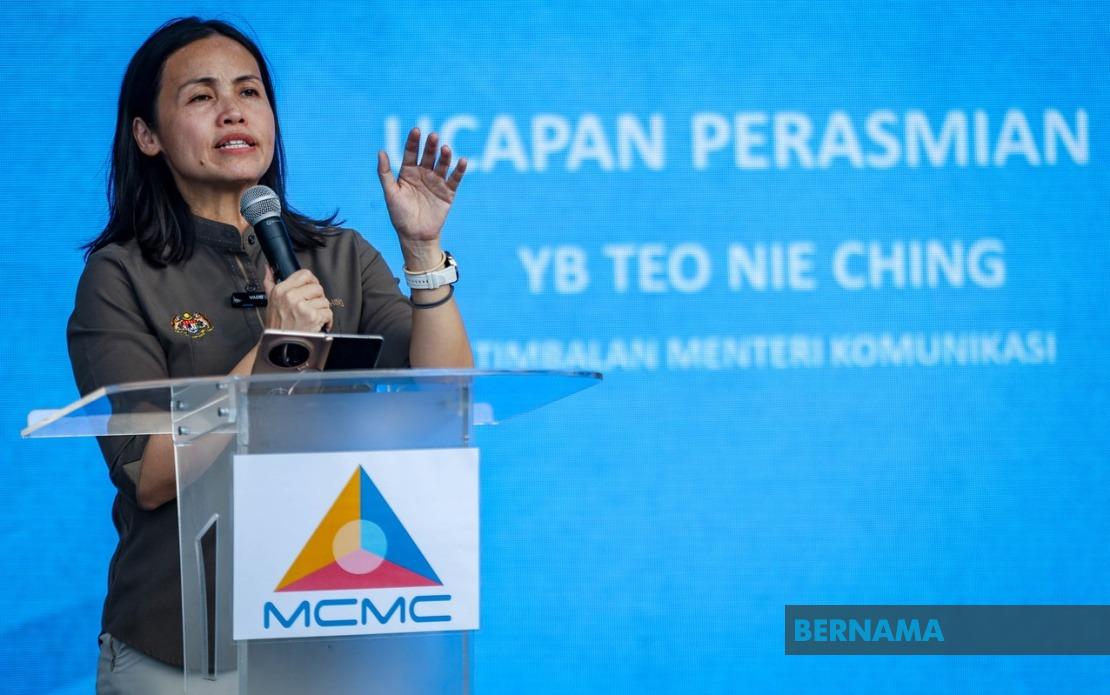
The scale of online fraud threatening Malaysian consumers has become starkly visible, with the National Scam Response Centre documenting nearly 6,000 scam complaints within just the first four months of 2025. Deputy Communications Minister Teo Nie Ching revealed these figures while addressing media at the Safe Internet Campaign Community Carnival in Kulai on August 28, underscoring an escalating problem that continues to catch citizens off guard despite growing public awareness initiatives.
Breaking down the composition of these complaints provides insight into which fraudulent schemes pose the most immediate threat to ordinary Malaysians. E-commerce fraud dominates the landscape, accounting for 2,566 of the reported incidents—representing over 43 per cent of all cases. Telecommunications-based scams form the second major category with 1,369 reports, a method that typically involves spoofed phone numbers or deceptive SMS messages luring victims into compromised links or fraudulent money transfers. The remaining cases encompassed schemes centring on non-existent loans and investment opportunities, reflecting the diverse arsenal of tactics deployed by organised cybercriminal networks operating across the region.
Teo's comments highlighted an encouraging sign that the 997 hotline—Malaysia's dedicated scam response number—has gained sufficient traction within the population that victims are increasingly aware of where to report fraud. The establishment of this centralised reporting mechanism represents a significant infrastructure improvement, enabling authorities to aggregate data and identify emerging criminal patterns more effectively. However, the deputy minister stressed that the surge in reports should not be interpreted solely as positive; rather, it reflects a troubling underlying reality that significantly more scam victims exist within the community than those actually coming forward to lodge formal complaints.
The strategic shift in Malaysia's approach to combating online fraud represents a maturation of the government's cybersecurity posture. The Safe Internet Campaign, originally launched in 2025 with a focus narrowly aimed at educational institutions ranging from primary and secondary schools to universities and teacher training colleges, has been recalibrated to embrace community-wide participation. This expansion acknowledges a fundamental truth that digital literacy gaps span all demographic segments, not merely school-age populations. Parents, working professionals, and senior citizens—who constitute a disproportionately vulnerable cohort—require targeted education about emerging fraud methodologies.
Teo, who represents Kulai as Member of Parliament, announced an ambitious rollout of the campaign across nine additional Johor districts following the successful launch in Kulai. The programme will progressively move through Kluang, Muar, Kota Tinggi, Pontian, Segamat, Batu Pahat, Mersing, Tangkak, and culminate in Johor Bahru by December 19. This geographic dispersal strategy ensures that awareness-building initiatives reach both urban and semi-rural communities, recognising that scammers do not restrict their operations to particular regions but rather exploit vulnerabilities wherever they exist.
The urgency driving this expanded campaign stems from recognising that digital literacy remains a critical blind spot across Malaysian society. Awareness alone, without practical knowledge of how to identify phishing attempts, verify seller legitimacy on e-commerce platforms, or recognise the red flags embedded in investment pitches, provides insufficient protection. Scammers continuously evolve their tactics, employing increasingly sophisticated social engineering techniques that exploit psychological vulnerabilities and time pressure to overwhelm victims' critical thinking. The proliferation of mobile payment systems and digital wallets, while economically beneficial, has simultaneously created new attack surfaces that fraudsters aggressively exploit.
The telecommunications fraud category warrants particular scrutiny given Malaysia's high mobile penetration rates. With most Malaysians conducting substantial portions of their financial and personal interactions through mobile devices, the prevalence of SMS-based scams and spoofed calling represents an existential threat to consumer confidence in digital financial services. These schemes typically impersonate banks, government agencies, or logistics companies—entities that citizens routinely interact with—thereby exploiting legitimate patterns of behaviour to lower victims' defences. The psychological sophistication embedded in such attacks necessitates ongoing public education that goes beyond simple warnings.
E-commerce fraud's dominance within the statistics reflects Malaysia's rapidly expanding digital marketplace ecosystem. The convenience of online shopping has become deeply embedded in consumer behaviour, particularly accelerated by pandemic-era normalisation of digital transactions. However, this expansion has outpaced the development of robust fraud prevention infrastructure on both platform and consumer sides. Counterfeit marketplace accounts, fake product listings, and intercepted delivery logistics create numerous vulnerability points where organised fraud networks extract value through stolen credentials, fake product shipments, or payment diversion schemes.
The investment and loan fraud category, though representing smaller numerical totals, carries disproportionate financial consequence for individual victims. These schemes often target individuals experiencing temporary financial difficulties or aspiring entrepreneurs seeking capital, capitalising on genuine economic anxieties. The sophistication of modern fake lending and investment platforms—complete with fabricated testimonials, seemingly professional websites, and incremental trust-building through small initial returns—makes them particularly insidious. Victims frequently lose life savings or become trapped in debt cycles through schemes that promised reliable returns.
For Southeast Asian observers beyond Malaysia's borders, the NSRC data provides a cautionary benchmark regarding the scale of cybercrime threats permeating the region. Similar fraudulent methodologies operate across the Association of Southeast Asian Nations, with criminals exploiting cross-border ambiguities and regulatory gaps to evade accountability. The Malaysian experience of implementing centralised reporting systems and community-based awareness campaigns offers a potential template for other nations grappling with comparable challenges. Regional cooperation mechanisms that facilitate intelligence sharing about emerging fraud patterns could substantially enhance protective capabilities across the entire Southeast Asian digital economy.
The challenge ahead extends beyond merely reporting incidents or expanding awareness campaigns to fundamentally restructuring digital trust architectures. This requires coordination between telecommunications providers implementing stricter caller verification protocols, e-commerce platforms deploying enhanced transaction authentication systems, financial institutions developing sophisticated anomaly detection capabilities, and consumers developing genuine competency in digital hygiene practices. Teo's emphasis on the criticality of digital literacy acknowledges that no technological solution alone suffices without corresponding cultural change regarding how citizens approach online interactions.

