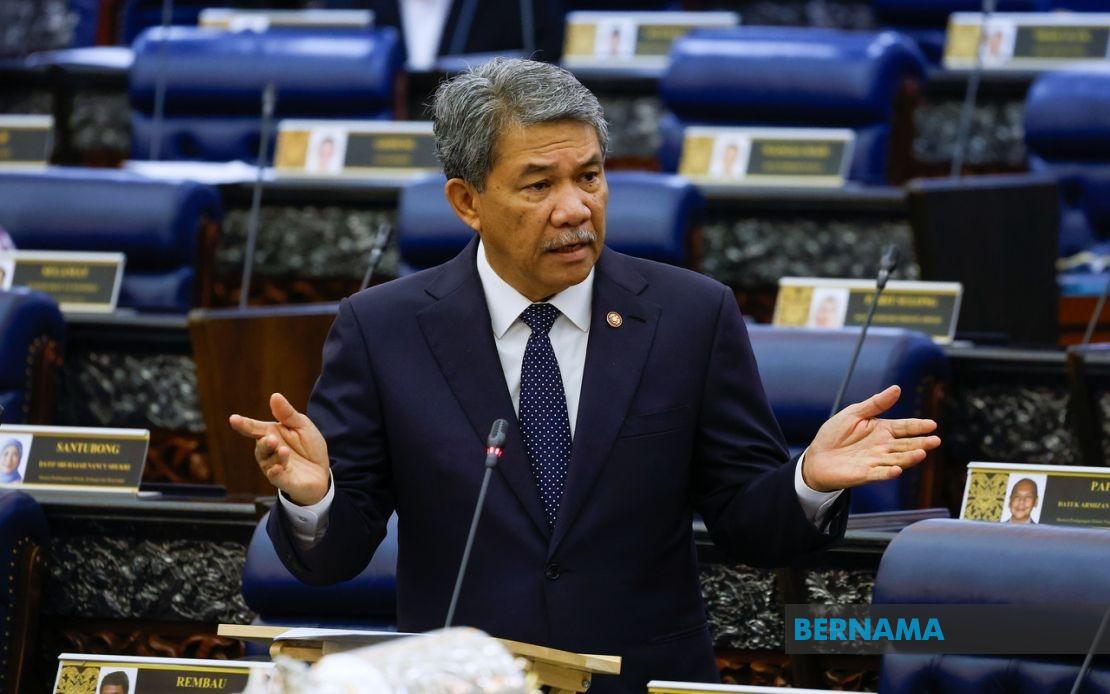
Foreign Minister Datuk Seri Mohamad Hasan has moved to dispel concerns about Malaysia's diplomatic posture towards Myanmar, clarifying that a delegation visit to the country in May represented a pragmatic effort to maintain communication channels rather than any softening of Malaysia's principled stance on the junta. Speaking in Parliament, Mohamad was emphatic that the engagement did not signal recognition of Myanmar's ruling military administration and remained consistent with Malaysia's longstanding position alongside ASEAN partners.
The visit, conducted at the ministerial level, followed a directive emanating from the 48th ASEAN Summit that tasked regional foreign ministers with sustaining informal dialogue with Myanmar. Mohamad explained that these conversations occur within a broader ASEAN framework designed to prevent further isolation of the country, which sits uncomfortably between the regional community and international criticism over its political trajectory. The timing and nature of such engagement reflects the delicate balance Southeast Asian nations attempt to strike when managing internal conflicts within their own membership.
Mohamad recounted details of his meeting with Myanmar Foreign Minister Tin Maung Swe, emphasizing that the encounter took place in a hotel rather than at official government premises, a deliberate choice that underscores Malaysia's refusal to grant the visit formal diplomatic legitimacy. During this engagement, Mohamad conveyed specific Malaysian and ASEAN priorities regarding the resolution of Myanmar's political crisis, articulating expectations without offering implicit endorsement of the current administration's authority. This distinction between maintaining channels and granting recognition carries particular weight in Southeast Asian diplomacy, where symbolism and setting carry substantial meaning.
Central to Mohamad's position is the concept of differentiated responsibility. He emphasized that while Myanmar possesses rights as an ASEAN member state, these privileges come paired with corresponding obligations and duties towards the regional organization. This framing rejects any notion that membership entails unconditional acceptance of internal governance choices, instead positioning ASEAN membership as a reciprocal arrangement with mutual expectations. By explicitly articulating this principle in parliamentary debate, Mohamad sought to educate Malaysian lawmakers and the public about the nuanced nature of ASEAN relations during moments of internal tension.
The underlying strategic calculation motivating Malaysia's continued engagement reflects a broader ASEAN concern about power vacuums and external interference. If Myanmar becomes further isolated from regional dialogue, Mohamad warned, other international actors with competing interests might exploit that disconnection, potentially destabilizing the broader Southeast Asian balance. This argument resonates particularly in Malaysia's policy framework, which has historically prioritized preventing extra-regional powers from leveraging internal ASEAN divisions for geopolitical advantage. The fear of becoming a pawn in great power competition remains a driving factor in regional diplomacy.
Mohamad's clarification regarding the Five-Point Consensus provides important context for understanding Malaysia's diplomatic stance. This framework, agreed upon by ASEAN leaders, establishes specific benchmarks for Myanmar's behaviour, including cessation of violence, implementation of ceasefires, and engagement in inclusive political dialogue. Malaysia's continued emphasis on these five pillars demonstrates that engagement does not imply abandoning expectations or accepting the status quo. Rather, dialogue becomes the vehicle through which ASEAN seeks to gradually move Myanmar towards compliance with collectively established standards.
The humanitarian dimension of ASEAN's approach cannot be overlooked. Mohamad reiterated Malaysia's commitment to ensuring that aid reaches Myanmar's civilian population, whose suffering has intensified amid ongoing conflict. This emphasis on humanitarian assistance appeals to Malaysian domestic audiences concerned about civilian welfare and reflects the organization's role beyond narrow political considerations. For a Muslim-majority country like Malaysia, humanitarian concerns hold particular resonance, especially regarding vulnerable populations within Myanmar's borders.
Planned engagement mechanisms further demonstrate the sequential nature of this diplomatic approach. Mohamad indicated that Malaysia would convene another round of meetings with Myanmar stakeholders during early or mid-July, suggesting that engagement is not a one-time occurrence but an ongoing process requiring sustained commitment. This timeline indicates patience and persistence in diplomatic efforts, reflecting an understanding that resolution of Myanmar's crisis cannot be rushed through sporadic interventions. Instead, regular contact maintains relationships and creates multiple opportunities for advancing ASEAN's collective agenda.
For Malaysian policymakers and observers, Mohamad's parliamentary clarification serves multiple purposes simultaneously. It addresses potential domestic criticism that Malaysia has capitulated to junta pressure, reassures international partners of Malaysia's principled position, and emphasizes ASEAN's collective commitment to engagement-based diplomacy. This balancing act becomes increasingly delicate as Myanmar's internal situation deteriorates and international pressure on ASEAN intensifies from various quarters. Malaysia's approach reflects a conviction that isolation produces less favourable outcomes than sustained dialogue, even when that dialogue proves frustrating and produces limited immediate results.
The broader implications for Southeast Asia suggest that ASEAN will continue its engagement strategy despite Myanmar's apparent resistance to implementing the Five-Point Consensus. This regional approach contrasts sharply with Western strategies emphasizing sanctions and diplomatic isolation, reflecting fundamentally different assumptions about leverage and persuasion. Whether Malaysia's persistent engagement ultimately produces meaningful change in Myanmar remains uncertain, but Mohamad's parliamentary defence indicates that Malaysia considers this diplomatic investment worthwhile despite its uncertain returns.
Moving forward, Malaysia's position establishes a template for how ASEAN members balance principle with pragmatism. By maintaining that engagement does not constitute recognition while simultaneously refusing to abandon dialogue, Malaysia charts a middle course between competing pressures. This approach acknowledges that ASEAN membership carries expectations, yet respects the organization's commitment to addressing crises through discussion rather than exclusion. Whether this formula succeeds in incrementally moving Myanmar towards compliance with regional expectations depends significantly on developments on the ground and the willingness of all parties to engage constructively.

