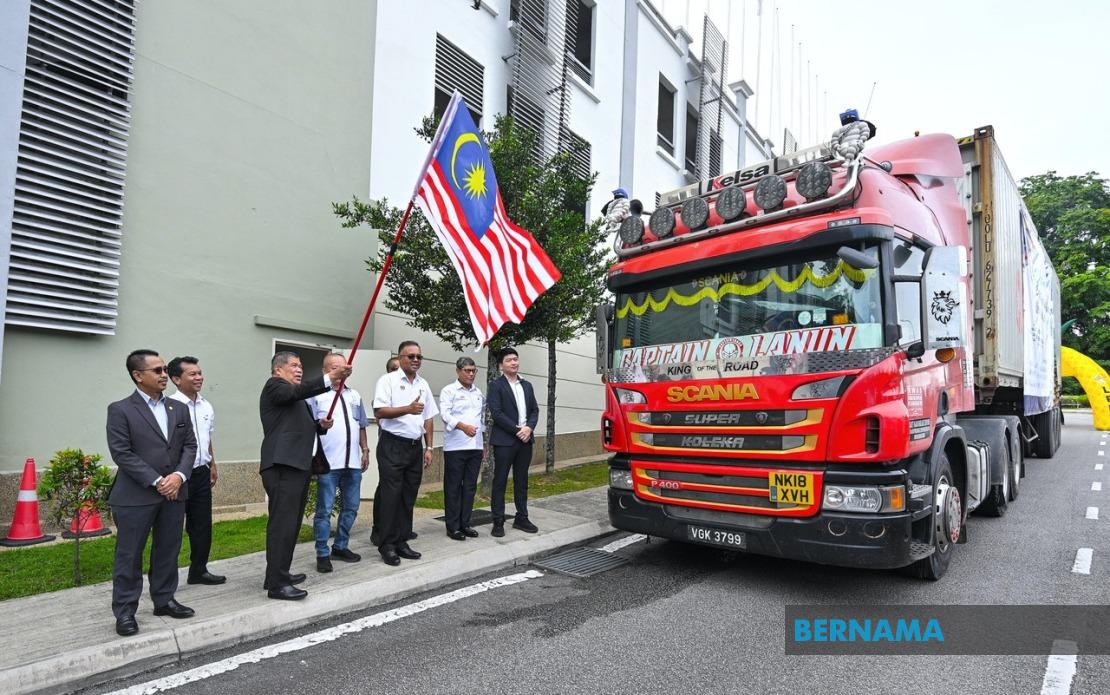
Malaysia has opened a significant new export avenue for its pineapple industry with the launch of fresh MD2 shipments to New Zealand, a development anticipated to contribute RM4.3 million to the nation's agricultural revenue each year. The achievement represents a strategic diversification of Malaysia's tropical fruit exports, which have historically concentrated on Asian destinations. Agriculture and Food Security Minister Datuk Seri Mohamad Sabu marked the occasion at an official export launch ceremony, highlighting the collaborative effort that made this market access possible.
The foundation for this export initiative rests on sustained cultivation efforts at the Permanent Food Production Park in Lanchang, Pahang, where over 121.4 hectares of land now support MD2 pineapple production. This agricultural investment demonstrates Malaysia's capacity to scale production for high-value export markets while maintaining the quality standards demanded by international buyers. The development was facilitated through partnership between the Agriculture and Food Security Ministry, the Rural and Regional Development Ministry, and private sector operators, signalling the government's commitment to strengthening the nation's agricultural export profile.
The inaugural shipment comprises 22.5 tonnes of MD2 pineapples packed into 1,500 boxes, departing Malaysian ports with expected arrival at Auckland in mid-July. This inaugural consignment serves as both a commercial transaction and a proof-of-concept demonstration, establishing the logistics framework and distribution channels necessary for sustained trade with New Zealand retailers and consumers. The Malaysian Pineapple Exporters Association and its member company Aqina Fruits Sdn Bhd spearheaded the effort, leveraging a joint producer development programme with FELDA to ensure consistent supply quality.
New Zealand represents uncharted territory for Malaysian pineapple producers, but the market access comes at an opportune moment. Deputy Prime Minister Datuk Seri Dr Ahmad Zahid Hamidi revealed in July that New Zealand has actively requested Malaysia to increase pineapple shipments, reflecting robust consumer demand for the fruit. This buyer interest transforms the new market from a mere export opportunity into a responsive commercial relationship, where demand signals from the importing nation align with Malaysia's supply capacity and export ambitions.
The trade relationship benefits substantially from the Malaysia–New Zealand Free Trade Agreement, which grants Malaysian pineapples preferential tariff treatment when entering the New Zealand market. These tariff exemptions meaningfully enhance the price competitiveness of locally produced fruit relative to alternatives from other origins, providing Malaysian exporters with a structural advantage in negotiations with New Zealand wholesalers and distributors. Such preferential treatment effectively subsidizes export competitiveness without direct government expenditure, leveraging diplomatic agreements to strengthen commercial outcomes.
Minister Mohamad contextualised the pineapple export initiative within Malaysia's broader food security and trade balance objectives. The nation currently imports more than RM80 billion in food annually, a figure that continues expanding and represents a persistent drain on foreign exchange reserves. By cultivating high-value agricultural exports and expanding their geographic reach, Malaysia can gradually narrow this substantial trade deficit in food products. The pineapple sector, though modest in isolation, exemplifies the strategic potential of agricultural diversification when combined with reliable production systems and market access agreements.
The expansion into Pacific markets carries implications extending beyond immediate revenue generation. Success in New Zealand creates a potential springboard for accessing other Pacific nations, particularly Australia, which Minister Mohamad identified as a secondary target. The regulatory approvals and distribution networks established for New Zealand trade can often be adapted for neighbouring markets, reducing the marginal cost of additional expansion. This cascading market access dynamic means that the Lanchang cultivation programme can be leveraged to serve multiple export destinations with minimal incremental infrastructure investment.
Regional geopolitical developments have heightened awareness of supply chain resilience in the broader Indo-Pacific region. While Minister Mohamad acknowledged ongoing tensions affecting maritime trade through the Strait of Hormuz, he assessed Malaysia's domestic food supply as stable through at least December, with contingency monitoring protocols in place. The diversification of Malaysian agricultural exports into the Pacific region partially hedges against future disruptions to traditional Asian trade corridors, building redundancy into export logistics and reducing dependency on any single geographic corridor.
The MD2 variety selection reflects market-driven horticultural decisions rather than arbitrary production choices. MD2 pineapples have established strong global demand due to their consistent sweetness, extended shelf life, and visual appeal—characteristics that international consumers increasingly value. By concentrating cultivation on this particular variety rather than traditional Malaysian cultivars, producers can target premium market segments willing to pay prices that reflect quality and consistency rather than competing primarily on volume and cost. This quality-focused positioning aligns Malaysian pineapples with New Zealand's retail environment, where consumers typically demonstrate willingness to pay for imported specialty produce.
The institutional architecture supporting this export initiative involved multiple government agencies coordinating policy, infrastructure, and regulatory approvals. The collaboration between KPKM and KKDW, alongside FELDA's operational involvement, illustrates the sectoral approach now characterised as essential for agricultural export development. Such coordination reduces duplicative bureaucratic processes and accelerates certification, inspections, and customs clearances—practical considerations that often determine whether small-scale agricultural exporters can profitably access distant markets or instead remain confined to regional sales.
Longer-term implications centre on whether this New Zealand entry constitutes a sustainable diversification or merely a one-year spike in export volumes. Market retention will depend on consistent supply quality, reliable logistics performance, and competitive pricing as New Zealand importers gain familiarity with Malaysian suppliers. The 121.4 hectares under cultivation should theoretically support expanded volumes beyond the initial 22.5-tonne shipment, provided that FELDA and Aqina Fruits commit capital to additional land development and processing infrastructure. Minister Mohamad's reference to future expansion aspirations suggests government willingness to pursue scaling, though commercial viability ultimately determines private sector participation.