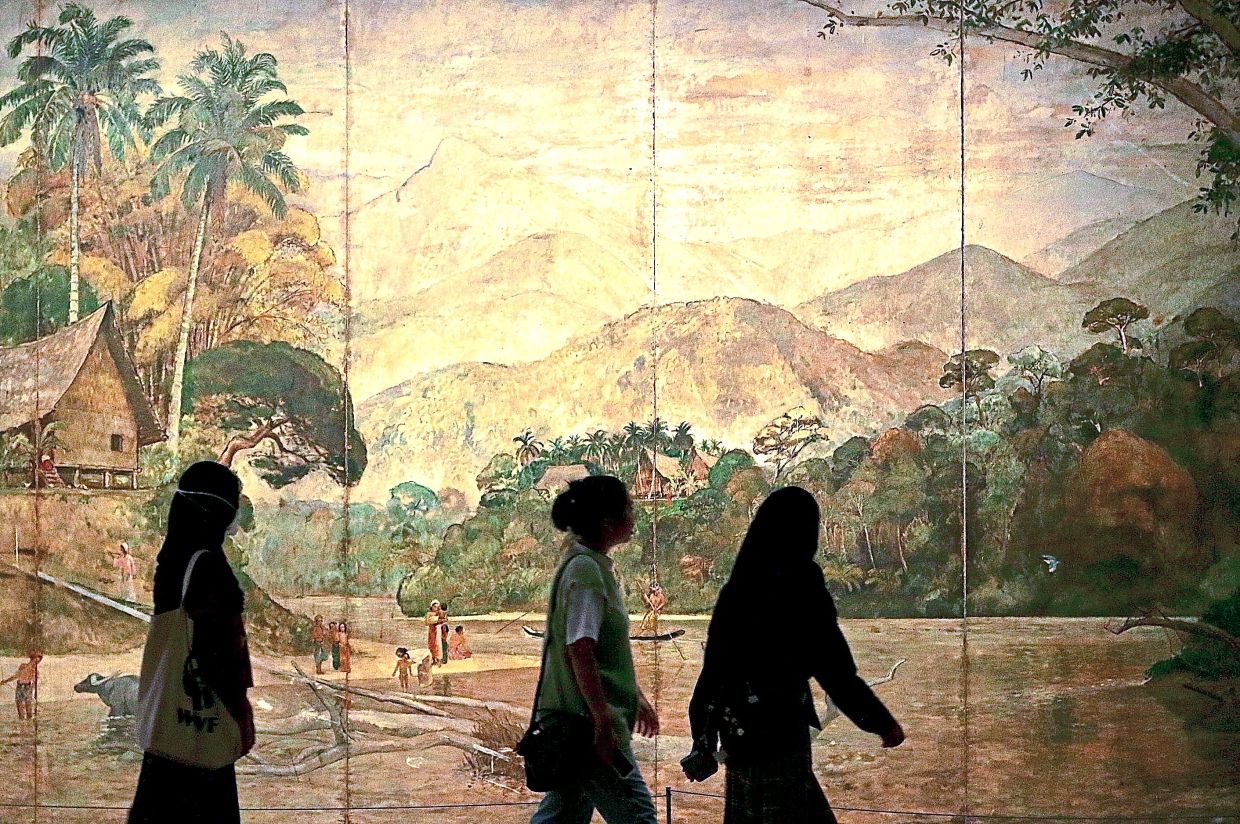
The preservation of Malaysia's artistic heritage faces an ongoing battle against the nation's tropical climate, where high humidity and relentless sunlight work silently to degrade the materials that make up paintings, textiles and sculptures housed in galleries and museums across the region. Unlike institutions in temperate zones that can rely on relatively stable atmospheric conditions, Malaysian art custodians must contend with an environment that constantly challenges the structural integrity of their collections, demanding innovative and locally-rooted approaches to conservation that have only recently begun to receive the focused attention they deserve.
Tan Hui Koon, senior chief curator of the Collection and Conservation section at the National Art Gallery, explains that the threat operates on multiple fronts. Artwork materials, particularly organic substances like canvas, wood and textiles, actively absorb moisture from the air, setting in motion cycles of expansion and contraction that accumulate damage over months and years. This mechanical stress gradually weakens paint layers, warps wooden supports and can ultimately render an artwork structurally unsound even if its visual appearance remains initially intact. The ultraviolet radiation that penetrates Malaysia's atmosphere with particular intensity adds another layer of deterioration, fading pigments and breaking down chemical bonds in materials that may have survived for centuries in different climates.
The standard response in many Western institutions—using ultraviolet-filtering glass and climate-controlled storage facilities—cannot always be directly transplanted to Malaysia's context, both for practical and economic reasons. Tan emphasises that conservation today must embrace a preventive philosophy that extends far beyond emergency restoration of damaged pieces. Rather than waiting for problems to manifest and then attempting repairs that can never fully return an artwork to its original state, institutions must implement comprehensive environmental management strategies tailored to local conditions, alongside meticulous handling protocols and purpose-designed storage systems.
Once an artwork sustains damage through material loss—whether paint flaking from wood, canvas splitting, or textile fibres degrading—complete restoration to original condition becomes impossible. Conservators can attempt to stabilise the remaining material and present the work in the best possible light for public viewing, but the lost components represent an irreversible diminishment of cultural heritage. This reality underscores why preventive conservation has become the paramount concern for institutions managing collections in challenging climates, and why Malaysia's tropical context demands dedicated research into how different materials behave under these specific environmental stresses.
The National Art Gallery will host the seventh Asia-Pacific Tropical Climate Conservation Art Research Network conference from December 7-9, bringing together specialised experts from Malaysia, Thailand, Singapore, Australia and the Philippines to collectively grapple with these preservation challenges. The gathering represents a significant moment for regional institutions to share methodologies, research findings and practical solutions developed through their experiences managing artworks—particularly Western paintings—in Southeast Asian climates where conventional museum practices often prove inadequate or unsustainable.
This year's conference marks a deliberate shift toward privileging locally-generated knowledge and intergenerational transfer of expertise over the wholesale adoption of Western conservation models. Sessions will explore disaster response strategies and preservation techniques that have been adapted to the geographical and climatic realities of individual Asia-Pacific nations, recognising that solutions developed in Europe or North America may not address the specific challenges faced by Malaysian and regional institutions. The programme will additionally investigate how climate change, materials science advances, artificial intelligence applications, and ethical frameworks for conservation work can be harnessed to strengthen institutional capacity across the region.
Participants will undertake site visits to heritage locations in Lenggong as part of a collaborative programme involving the Islamic Arts Museum Malaysia, the Department of National Heritage and People of Remarkable Talents. These practical field experiences allow conservators to observe how historical materials have responded to tropical climate exposure over extended periods, generating real-world data that informs institutional practice. The excursions also facilitate networking among practitioners and create opportunities for informal knowledge exchange that often proves as valuable as formal conference sessions.
Tan highlights that the research network serves a critical function in cultivating the next generation of conservators by creating structured pathways for knowledge transfer and practical mentorship. Conservation has evolved into an inherently interdisciplinary field that demands expertise spanning art history, chemistry, materials science, engineering and technology. Malaysian institutions require skilled professionals who understand both the artistic and scientific dimensions of their work, capable of deploying sophisticated research technologies while respecting cultural and aesthetic considerations that cannot be reduced to technical metrics.
Since its inaugural meeting in 2008, the Asia-Pacific network has facilitated Malaysia's gradual development of indigenous conservation expertise and shifted the country's institutional practices toward approaches specifically calibrated to tropical conditions. The December conference provides an opportunity to assess this progress across fifteen years while identifying emerging challenges posed by accelerating climate change and expanding urban development that threatens heritage sites. By strengthening these international networks and consolidating Malaysian expertise in tropical climate conservation, the nation positions itself to contribute meaningfully to global conservation discourse while building institutional capacity that protects irreplaceable cultural assets for future generations.

