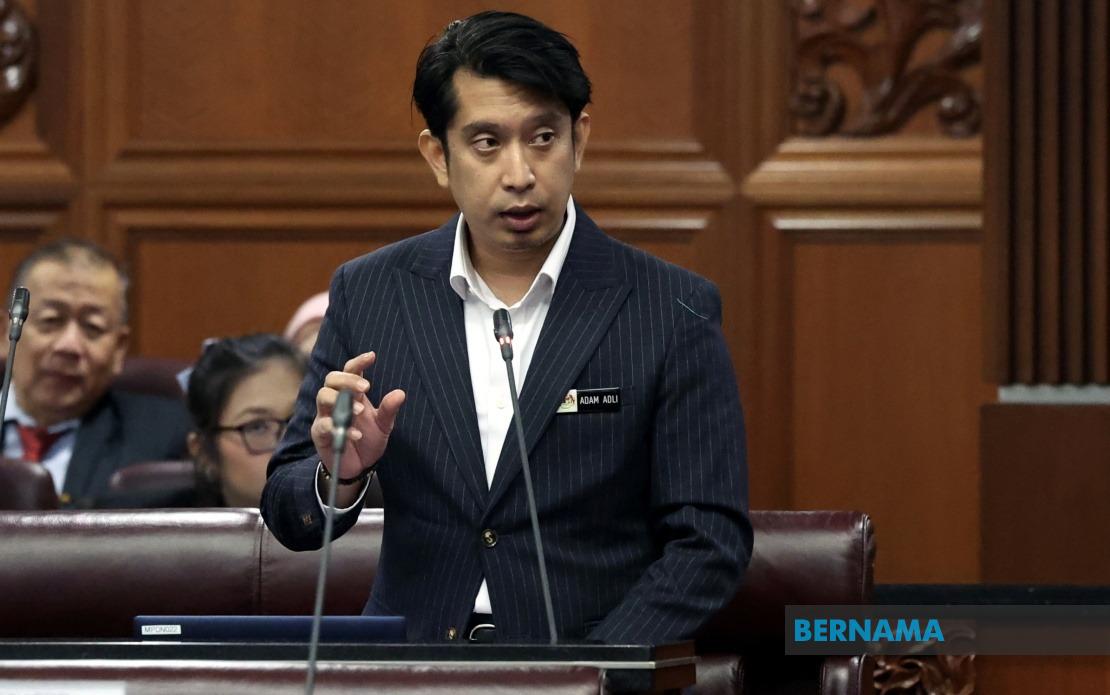
The Ministry of Higher Education is advancing plans to construct a substantial residential facility in Betong, Sarawak, designed to house approximately 700 students attending technical and vocational institutions in this rural region. Deputy Higher Education Minister Adam Adli Abd Halim disclosed the initiative during parliamentary proceedings, framing the project as part of a broader effort to improve access to quality technical education in underserved areas beyond Malaysia's more developed urban corridors. The proposed facility represents a significant infrastructure investment aimed at addressing longstanding accommodation challenges that have historically limited student enrolment at rural polytechnics and community colleges.
The residential complex is intended to serve dual institutions: Politeknik Metro Betong Sarawak (PMBS) and Kolej Komuniti Betong, both of which currently operate at substantially below capacity. PMBS in particular enrolls only 291 students across its existing Diploma in Finance and Diploma in Tourism Management programmes, leaving significant unused space within its 600-student maximum capacity. This underutilisation underscores a fundamental challenge facing many technical institutions in Malaysia's remote states: geographic isolation and inadequate student accommodation options deter potential applicants, creating a vicious cycle of low enrolment that prevents institutions from achieving operational efficiency.
The Sarawak Land and Survey Department has identified an 8.814-hectare federally owned parcel in Batu Api district as the preferred site for the hostel development. Located approximately 650 metres from the PMBS campus, this location offers clear logistical advantages, minimising student commute times while remaining close enough to share campus amenities and services. However, realising the project requires navigating a complex bureaucratic pathway: the ministry must first secure a change in land use designation before obtaining approval from the Prime Minister's Department, which holds title to the property. This multi-stage approval process reflects the intricate governance structures governing federal land utilisation in Malaysia and suggests the initiative, while advancing, may face procedural delays before construction commences.
Adam Adli emphasised that the ministry prioritises resolving fundamental student welfare concerns before pursuing additional institutional upgrades at PMBS. This sequencing reveals deliberate policy thinking: rather than expanding academic programmes or infrastructure ambitiously, officials recognise that accommodation shortages represent the primary constraint limiting growth. Indeed, the establishment of a dedicated Student Residential and Accommodation Management Committee signals the ministry's understanding that even temporary off-campus housing arrangements require careful coordination to ensure safety, welfare standards, and integration with academic programming. This administrative layer, though less visible than physical infrastructure, reflects mature recognition that student success depends substantially on living conditions and pastoral support systems.
The pathway toward hostel completion will proceed in phases, allowing the ministry to manage funding requirements and construction timelines systematically. During this interim period, PMBS continues implementing strategic academic initiatives designed to broaden curriculum offerings and attract additional students. Beginning in December, coinciding with Session 2 of the 2026/2027 academic year, the polytechnic will introduce a Diploma in Business Information Systems, marking a deliberate expansion into digitally focused technical education. This programme addition reflects both evolving labour market demands and the government's broader commitment to equipping Malaysian vocational graduates with skills aligned to contemporary economic priorities.
Beyond formal diploma offerings, PMBS has developed a substantial portfolio of short-term professional development courses under its Lifelong Learning agenda. Recent workshops in accounting and tourism management attracted 1,137 participants, demonstrating considerable community engagement and revenue generation beyond traditional student cohorts. This diversified educational model transforms the polytechnic from a conventional academic institution into a broader community learning hub, generating sustainable funding streams while building workforce capabilities in regional priority sectors. For Sarawak specifically, tourism sector development remains strategically important, making tourism management training particularly relevant to state economic objectives.
The hostel initiative must be understood within Malaysia's broader educational equity framework. Rural regions, particularly in Sarawak and Sabah, have historically experienced disproportionate disadvantages in accessing quality technical education. Geographic distance, inadequate transportation infrastructure, and family economic constraints combine to limit rural students' participation in TVET pathways that might otherwise provide viable employment alternatives to resource extraction industries. By reducing accommodation barriers, this project seeks to democratise access to technical qualifications, potentially transforming demographic patterns within Malaysia's vocational education system and expanding opportunity pathways for rural youth.
The proposal also reflects shifting government priorities regarding higher education's spatial distribution. Rather than concentrating investment exclusively in peninsular urban centres, policy increasingly recognises that Sarawak and Sabah require proportional resource allocation to support demographic needs and regional economic development. The 700-student capacity hostel, while significant, represents calibrated ambition: substantial enough to meaningfully improve residential capacity without overestimating market demand given current institutional enrolments. This measured approach contrasts with more grandiose earlier policies and suggests more sophisticated understanding of infrastructure-demand relationships.
Politically, the initiative responds to specific parliamentary advocacy. Datuk Dr Richard Rapu, the GPS-representing Member for Betong, had specifically raised concerns regarding educational equity and rural student prospects, prompting the ministry's detailed response. This exchange exemplifies how localised parliamentary representation can translate into concrete policy development, though the extended approval timeline suggests that translating political commitment into operational outcomes remains chronologically demanding. For Malaysian states beyond the peninsula, such targeted advocacy remains essential for ensuring that policy attention and resource allocation reflect genuinely distributed demographic needs rather than concentrating exclusively on urban-centred institutional development.
Looking ahead, the hostel project's success will depend substantially on complementary investments in programme quality, faculty recruitment, and employer engagement to ensure PMBS graduates obtain meaningful employment. Accommodation alone, while necessary, proves insufficient without parallel attention to educational excellence and labour market connections. The ministry's sequenced approach—addressing welfare foundations before expanding academic scope—reflects this holistic understanding. However, realising these ambitions requires sustained political commitment and budgetary resources across multiple government fiscal cycles, a test that many Malaysian infrastructure initiatives have historically struggled to meet.
The Betong hostel initiative ultimately signals a significant policy commitment to decentralising technical education access across Malaysia's federal structure. While specific approval timelines remain uncertain and funding mechanisms unspecified, the project's advancement through parliamentary channels and multiple government departments indicates genuine institutional commitment rather than aspirational rhetoric. For rural students in Sarawak and comparable regions elsewhere in Malaysia, the facility would represent a transformative infrastructure investment, removing one substantial barrier that has historically limited their ability to pursue technical qualifications and associated professional advancement.

