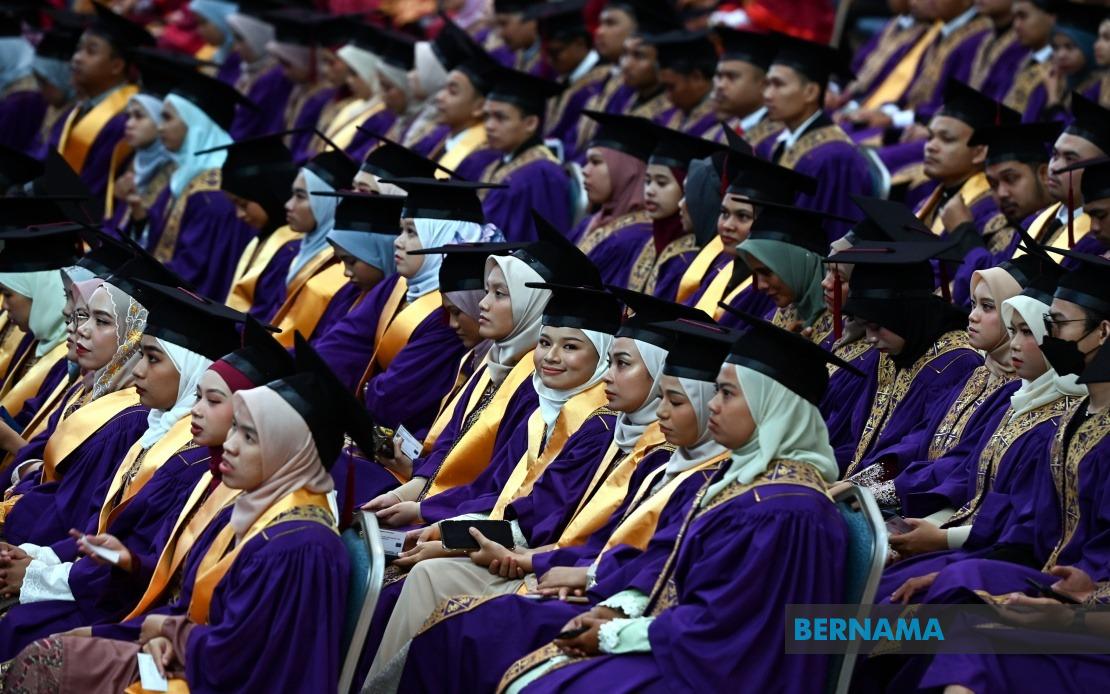
Malaysia's Ministry of Higher Education has taken decisive action to shield student activism and expression from institutional reprisal, announcing an immediate halt to all ongoing disciplinary proceedings at public universities that stem from students exercising their freedom of speech, expression, assembly and association. The ministry's announcement on August 28 represents a significant reversal of decades-long restrictions embedded in university governance frameworks, responding directly to Prime Minister Datuk Seri Anwar Ibrahim's pledge to dismantle oppressive provisions and reshape Malaysia's higher education landscape through sweeping legislative reform.
The directive marks a watershed moment in Malaysian university culture, where students have historically faced severe sanctions for political activism and critical commentary. Under the old regime, students could face expulsion or suspension for speaking publicly about institutional or political matters, for organising campus events without excessive bureaucratic approval, or for distributing materials deemed problematic by administrators. By halting existing cases immediately rather than awaiting formal legislative overhaul, the government has signalled that reform will not be delayed by the lengthy parliamentary process needed to replace the Universities and University Colleges Act 1971 (Act 30), which has governed Malaysian higher education for over five decades.
Prime Minister Anwar Ibrahim outlined this transformation at the Malaysia MADANI Intellectuals Forum Series 13, emphasising that students must enjoy substantially greater freedoms while the government works toward comprehensive legislation. His intervention reflects broader commitments within his administration to expand democratic participation, strengthen civil society, and position Malaysia's universities as intellectually vibrant institutions capable of competing globally. The current approach allows immediate relief from restrictions while a new legal framework is being developed, preventing a lengthy hiatus during which outdated rules might continue to suppress student voices.
The ministry has identified several core areas where students will now have enhanced protections. These encompassing provisions permit students to establish, manage and lead their own associations and clubs with minimal administrative interference; organise campus activities including forums, lectures, and cultural events without excessive prior approval; express themselves freely through speech and written communication; assemble peacefully; utilise digital and traditional communication platforms; and produce, circulate and publish materials related to academic, social and political discourse. These freedoms collectively represent the foundation of university life globally, yet in Malaysia they have been constrained for decades through restrictive disciplinary codes that treated student organising as inherently subversive.
Crucially, the ministry emphasised that expanded freedoms must be exercised responsibly and within legal boundaries. The statement makes clear that acts constituting actual violence, vandalism, destruction of property, criminal offences, academic dishonesty, or violations of legitimate disciplinary rules remain prosecutable under existing law. This calibration suggests the government seeks to distinguish between legitimate expression and dissent on one hand, and genuine criminal conduct on the other—a distinction that has often been blurred in Malaysia where peaceful activism has sometimes been conflated with disorder or sedition. The framework thus aims to protect students from arbitrary punishment for lawful speech while maintaining institutional order and legal accountability.
Private and semi-autonomous institutions outside the AUKU framework will also undergo parallel reviews. Universiti Teknologi MARA (UiTM) and the International Islamic University Malaysia (IIUM), which operate under different governance structures, will have their student-related provisions examined and amended to align with the reform principles being implemented across public universities. This coordinated approach ensures that students across Malaysia's higher education sector receive consistent protections rather than facing a fragmented landscape where some institutions offer freedoms unavailable elsewhere. The inclusion of religious and technical universities signals an intention to embed these principles universally rather than treating them as applying only to secular or conventional academic environments.
For Malaysian students and Southeast Asian observers, this reform carries significant implications. Universities serve as crucial incubators for civil society leadership, investigative journalism, policy analysis, and democratic participation. When students operate under fear of disciplinary sanction for ordinary advocacy, the entire ecosystem of public debate and intellectual development suffers. Malaysia's universities have historically lagged behind regional counterparts in research output and global rankings, partly because talented scholars have been reluctant to work in environments where intellectual risk-taking invites institutional punishment. Liberalising student expression creates conditions for more dynamic campus life, more rigorous academic discourse, and greater institutional credibility both domestically and internationally.
The announcement also reflects broader geopolitical positioning. As Malaysia competes with countries like Singapore, Thailand and Indonesia for regional educational prominence, the capacity to attract and retain top talent—both domestic and international—depends partly on institutional reputation. Universities that suppress student voices struggle to recruit world-class faculty and draw ambitious scholars. By embracing greater freedom, Malaysia signals its commitment to knowledge-based development and positions itself as a jurisdiction where ideas can be explored without fear of political or institutional retribution. This is particularly significant given Malaysia's demographic profile, with a young, increasingly educated population seeking opportunities for intellectual engagement and meaningful participation in national discourse.
The implementation of these reforms will require cultural shifts within universities themselves. Administrators, security personnel, and senior academics trained under the restrictive regime may initially resist permitting activities they have long considered problematic. The ministry must provide clear guidance to institutions, support institutional leaders in adopting new practices, and establish mechanisms for students to challenge violations of their newly protected rights. Without sustained oversight and capacity-building, formal policy change risks becoming hollow if entrenched bureaucratic instincts continue to constrain students through informal pressure or creative reinterpretation of remaining rules.
The timing of this reform within the broader MADANI agenda suggests that student freedom is conceived not as an isolated concession but as integral to the government's vision for national transformation. The Anwar administration has positioned itself as committed to rule of law, democratic institution-building, and expanding civic space. Universities are testing grounds for these commitments; if the government permits robust student expression and protects it genuinely, it demonstrates sincere commitment to pluralism. Conversely, if restrictions creep back through bureaucratic channels or selective enforcement, it undermines broader claims about democratic reform. Thus this policy change carries symbolic and practical weight for Malaysia's democratic trajectory.
Looking forward, the success of these reforms depends on complementary measures. Students need clear information about their rights and accessible mechanisms for redress if institutions violate them. Campus security and administrative protocols must be updated to reflect new permissiveness. Perhaps most importantly, the promised new legislation replacing Act 30 must embed these freedoms permanently rather than leaving them hostage to administrative discretion. The immediate suspension of disciplinary cases represents a crucial first step, but genuine transformation requires institutional architecture that makes these freedoms durable and enforceable. For Malaysian higher education and regional observers, this moment signals either the beginning of sustained liberalisation or merely a temporary thaw before old restrictions return—with profound consequences for universities' ability to serve as engines of intellectual progress and democratic development.

