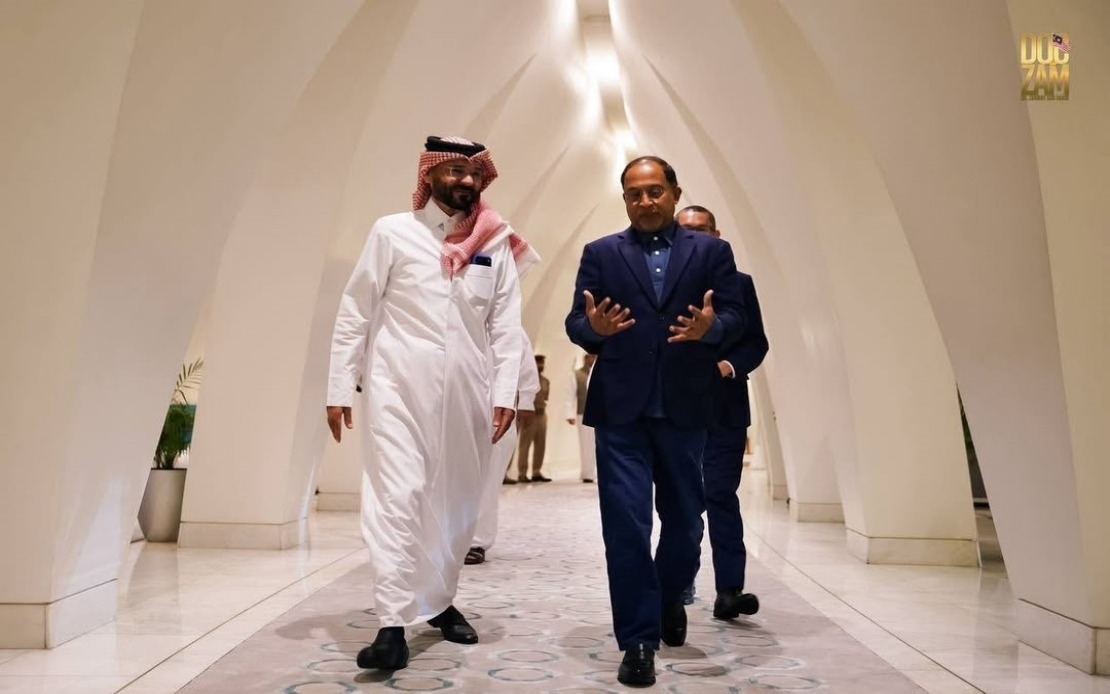
Malaysia dispatched its Higher Education Minister to Qatar this week as part of diplomatic ceremonies honouring the death of one of the Gulf state's most influential modern leaders. Datuk Seri Dr Zambry Abd Kadir touched down in Doha in the early hours of Tuesday morning, tasked with representing Malaysia's government at final respects ceremonies for Sheikh Hamad bin Khalifa Al Thani, the former Amir who passed away on Sunday at the age of 74.
Zambry's presence underscores the significance Malaysia places on its relationship with Qatar, a strategically important partner in the Arabian Peninsula. Through a Facebook statement, the minister conveyed official condolences to Qatar's ruling establishment and broader population, framing the moment as one of collective grief across bilateral ties. His scheduled meeting with the current Amir, Sheikh Tamim bin Hamad Al Thani, at Lusail Palace was intended to facilitate face-to-face diplomatic engagement during the period of mourning.
Sheikh Hamad's passing marks the end of an era that fundamentally reshaped Qatar's geopolitical standing. During his reign from 1995 until 2013, he transformed the nation from a minor regional player into a significant force on the international stage. His tenure witnessed Qatar's emergence as a major liquefied natural gas exporter, a development that substantially increased the country's economic leverage and global influence. The former Amir also oversaw the establishment of Al Jazeera, the Arabic-language satellite news network that would become one of the world's most recognizable media brands.
The transition of power in 2013, when Sheikh Hamad voluntarily ceded authority to his son Sheikh Tamim, was considered unusual in Gulf monarchies where leaders typically retained power until death or severe incapacity. This succession arrangement reflected both Sheikh Hamad's strategic thinking about institutional stability and his confidence in his heir's capabilities. The peaceful handover set a precedent that contrasted with succession challenges elsewhere in the region and demonstrated institutional maturity within Qatar's governance framework.
Qatar's formal mourning period extended across four days commencing on Sunday, July 12, reflecting the cultural and political importance of the departed leader. Government ministries, administrative entities, and public institutions throughout the nation observed closure during this span, effectively halting routine operations to allow citizens and officials time for reflection and commemoration. This nationwide pause symbolises the depth of Sheikh Hamad's legacy within Qatari society and acknowledges his foundational role in building modern Qatar.
For Malaysia, the diplomatic gesture carries significance beyond ceremonial protocol. The two nations share common interests across energy markets, where Qatar remains a significant liquefied natural gas supplier to Asian markets including those in Southeast Asia. Malaysia's substantial Muslim population and its positioning as a moderate Islamic-majority nation create natural points of alignment with Qatar's own regional diplomacy. Senior-level attendance at state funerals represents a language of diplomatic respect, signalling the importance a government attaches to bilateral relationships during moments of transition and vulnerability.
Sheikh Hamad's leadership legacy extends into contemporary Middle Eastern politics and economics. His decision to position Qatar as a regional mediator in various disputes, combined with his investment in soft power through institutions and infrastructure projects, created a model that younger Gulf leaders have attempted to emulate. The nation's hosting of the 2022 FIFA World Cup, initiated under his stewardship, further amplified Qatar's international profile and demonstrated the strategic vision that characterised his tenure.
Zambry's mission reflects Malaysia's broader diplomatic engagement strategy within the Gulf region, where consistent relationship-building across multiple government levels maintains channels for cooperation. These formal state occasions provide opportunity for direct communication between leadership figures, enabling discussion of bilateral matters in contexts where personal rapport can be established or reinforced. The participation of a cabinet-level minister rather than a lower-ranking diplomat signals Malaysia's assessment of the relationship's importance.
The succession from Sheikh Hamad to Sheikh Tamim has now been tested across a full decade of governance, establishing stability that positions Qatar favourably for continued economic and diplomatic expansion. Sheikh Tamim has continued many of his father's strategic initiatives while introducing his own priorities, demonstrating continuity with selective evolution. Malaysia's engagement with Qatar's current leadership, facilitated through occasions such as the funeral ceremonies, helps establish rapport and understanding that facilitates cooperation on energy security, Islamic finance, and regional stability issues affecting Southeast Asia.

