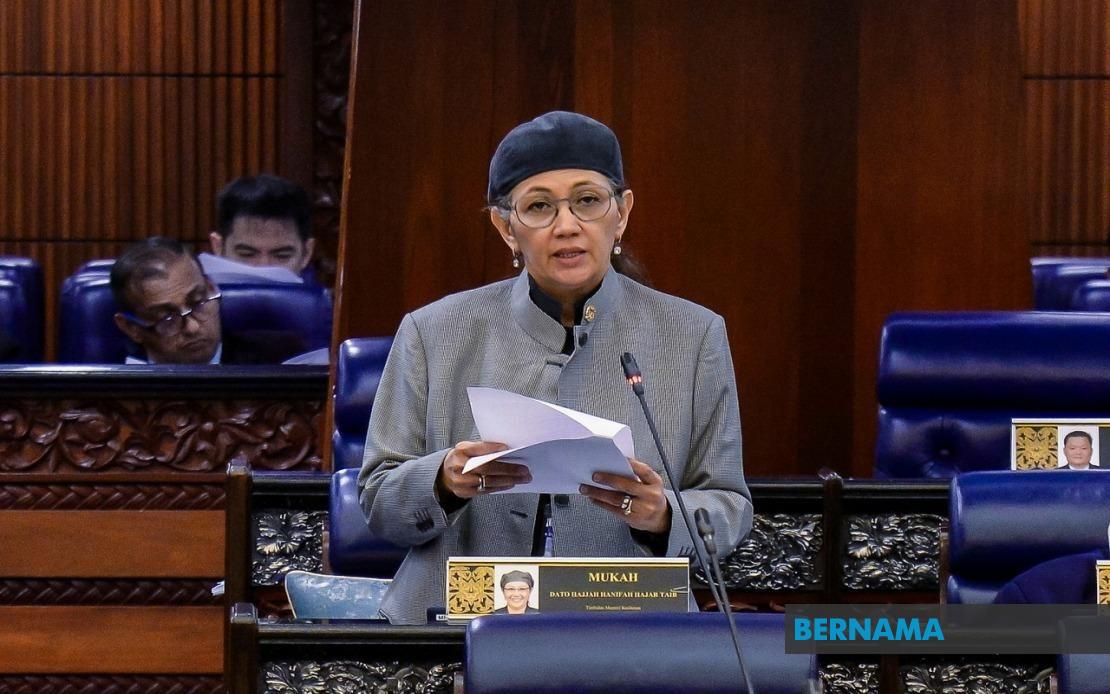
Sabah's chronic doctor shortage is being tackled with an ambitious recruitment drive: the Ministry of Health intends to place 560 permanent medical officers in the East Malaysian state beginning this October. Deputy Health Minister Datuk Hanifah Hajar Taib announced the plan during parliamentary proceedings, framing it as a critical intervention to stabilise healthcare delivery across one of Malaysia's most underserved regions.
Yet beneath the headline commitment lies a sobering reality that has plagued similar recruitment efforts. Drawing on historical patterns, the Ministry projects that merely 280 of the 560 offered positions will actually result in doctors reporting for duty. This is because the acceptance and reporting rate for permanent postings in Sabah has hovered around the 50 per cent mark—a gap that threatens to undermine the initiative even before it begins. Even achieving that optimistic projection would leave Sabah with a shortfall of roughly 256 medical officers against its established needs.
Sabah's predicament reflects systemic challenges in Malaysia's health workforce distribution. The state currently maintains 2,803 established medical officer positions on paper, yet the reality is far grimmer: only 1,863 positions, or 66.5 per cent, are filled by permanent staff. A further 366 officers, representing 13.1 per cent of posts, are away on study leave, while 570 positions—20.3 per cent—remain completely vacant. To bridge this substantial gap, the Ministry has deployed 680 contract doctors, a temporary measure that, while necessary, creates instability in healthcare continuity and planning.
The underlying issue is that many Malaysian doctors, once offered permanent placements in states like Sabah, decline the postings and opt for positions in more developed regions, particularly in Peninsular Malaysia. This phenomenon of low acceptance rates reflects broader challenges including career advancement concerns, family considerations, and perceived gaps in infrastructure and amenities in less urbanised areas. During the first phase of recruitment in 2026, Sabah was allocated 39 permanent positions from a nationwide cohort of 328 officers. Of these, only 20 actually reported for duty while 19 rejected their assignments entirely—a telling rejection ratio that foreshadows challenges ahead.
The Ministry's nationwide strategy encompasses two rapid deployment phases targeting 4,500 permanent medical officer positions across all of Malaysia. The initial phase, which commenced in June 2026, has already demonstrated the uptake difficulties now affecting Sabah. The second phase, commencing in October 2026, is expected to distribute 4,172 additional permanent postings throughout the country, with Sabah receiving the largest single allocation of 560 officers. This concentration reflects the state's dire need but also suggests the Ministry recognises that only a large intake offers realistic hope of achieving meaningful workforce gains despite anticipated rejections.
According to the 2024 Health Indicators report compiled by the Ministry, Sabah ranks among eight Malaysian states falling below the national average doctor-to-population ratio, indicating systemic underservice across multiple regions. However, progress has been registered: Sabah's doctor-to-population ratio improved by 25.1 per cent between 2020 and 2023, demonstrating that sustained effort can move the needle. This improvement occurred before the latest permanent appointment initiative, suggesting that if acceptance rates improve, further gains are achievable. The challenge now is transforming that trajectory into permanent staffing rather than relying on temporary contractual arrangements.
To combat the persistent rejection phenomenon, the Ministry has implemented strategic changes to its placement system. A new requirement mandates that contract officers transitioning to permanent employment must select at least one placement option in either Sabah, Sarawak, or Labuan as part of an enhanced e-Placement system launched in 2025. This mechanism essentially forces career-conscious doctors to consider East Malaysian postings if they wish to secure permanent status, representing a subtle but potentially effective lever to improve acceptance rates without explicit coercion. By tying permanent appointment status to regional mobility, the Ministry seeks to reshape incentive structures.
The e-Placement system itself reflects modernisation efforts to address workforce distribution. Within this system, placement quotas have been formally established: Sarawak is allocated 650 permanent medical officer positions and Sabah receives 310, together representing 42.7 per cent of the national placement quota of 2,248 positions. This generous apportionment underscores official recognition that East Malaysia's healthcare systems face exceptional challenges requiring above-average resource allocation. Yet quotas mean little if doctors continue rejecting assignments; the system's effectiveness hinges entirely on improving acceptance rates through either incentive restructuring or career pathway redesign.
For Malaysian healthcare policymakers, Sabah's situation represents a microcosm of regional inequality in professional workforce distribution. Rural and less urbanised areas consistently struggle to attract and retain medical talent despite being precisely where healthcare access gaps are widest. The Ministry's acknowledgment that a 50 per cent reporting rate represents baseline historical performance suggests that overcoming this barrier requires interventions beyond simply offering more positions. Salary adjustments, accelerated promotion pathways, improved facility infrastructure, and family support programmes for posted officers have proven effective in other countries but remain underutilised here.
The implications extend beyond Sabah to broader regional healthcare security in Southeast Asia. Malaysian states serve as economic hubs for the region, and healthcare workforce shortages create vulnerabilities that affect not just residents but the business confidence and competitiveness of entire zones. Sabah, with its significant role in Malaysia's energy sector and tourism economy, cannot afford prolonged healthcare instability. Solutions must address why doctors persistently decline East Malaysian postings despite recruitment urgency and policy changes designed to incentivise acceptance. Structural transformation may ultimately prove necessary if the nation is to achieve equitable healthcare workforce distribution.

