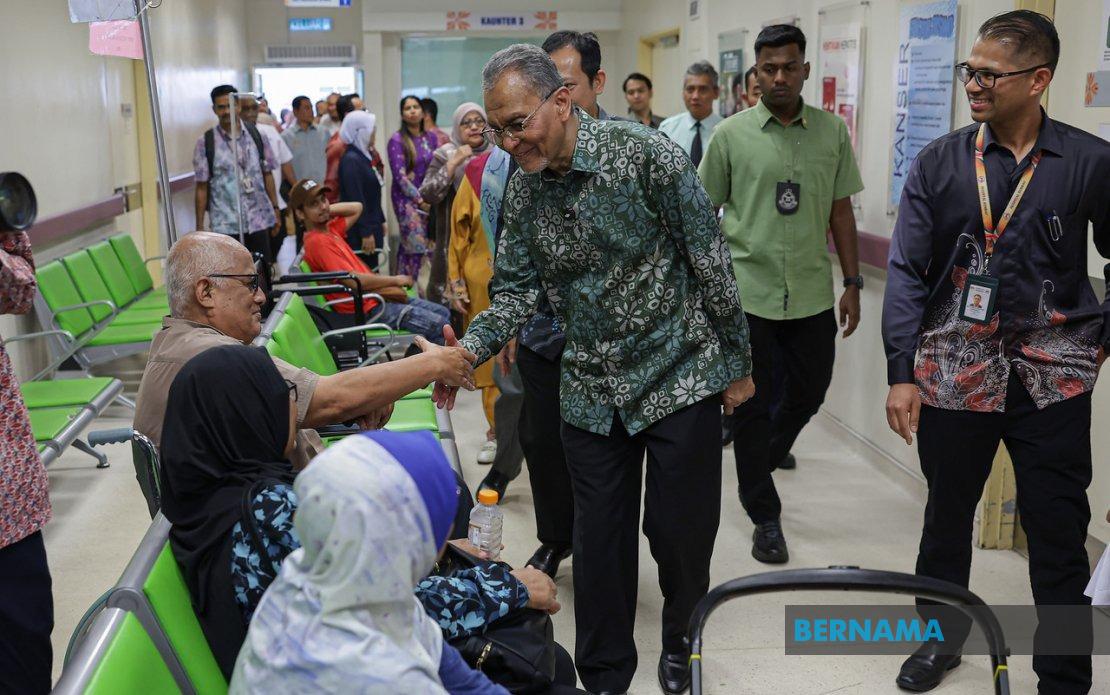
The Ministry of Health is on track to complete a comprehensive workplace mental health policy framework by September or October, Health Minister Datuk Seri Dr Dzulkefly Ahmad announced during an event in Rembau. The initiative represents a significant step toward addressing mental wellbeing in Malaysian workplaces, a growing concern as organisations grapple with stress-related illnesses and employee burnout. The policy development process involves extensive coordination among key stakeholders, reflecting the government's commitment to creating standards that bridge healthcare, employment, and occupational safety sectors.
The ministry's engagement process draws together diverse institutional perspectives essential for crafting practical, implementable guidelines. The Ministry of Human Resources, the Department of Occupational Safety and Health, the Malaysian Employers Federation, and the Malaysian Trades Union Congress are all contributing to the framework. This multi-stakeholder approach ensures the final policy addresses needs from both employer and employee standpoints, a balance critical for genuine workplace culture change. By incorporating input from business leaders, workers' representatives, and government agencies, the MOH aims to develop guidelines that are both ambitious in scope and realistic in application across Malaysia's varied employment landscape.
Dr Dzulkefly framed mental health support within the broader context of the United Nations Sustainable Development Goals, positioning Malaysia's policy effort as part of a global movement toward workplace wellness. This framing underscores that mental health is not merely a healthcare concern but a fundamental workplace rights and development issue. The policy's emphasis on sustainable practices aligns Malaysia with international standards while remaining sensitive to local employment contexts and cultural factors that shape how workers experience stress and seek help.
Beyond basic counselling services, which are increasingly standard in corporate settings, the emerging policy will address multifaceted dimensions of mental wellbeing. The framework explicitly includes work-life balance considerations, recognising that mental health deteriorates when boundaries between professional and personal time blur. Support mechanisms for employees feature prominently, suggesting provisions for crisis intervention, ongoing mental health literacy, and accessible treatment pathways. These elements collectively create an ecosystem where mental health is managed proactively rather than reactively, reducing the human and economic costs of untreated psychological distress.
The policy development reflects accumulating evidence of mental health's impact on workplace productivity and employee retention. Malaysian organisations have increasingly reported challenges with staff absenteeism and turnover linked to psychological stress. By establishing clear standards and support mechanisms, the health ministry aims to help employers recognise that investing in mental health infrastructure yields returns through improved productivity, reduced sick leave, and stronger organisational culture. Workers benefit directly through decreased stigma, improved access to services, and greater accountability from employers regarding workplace conditions.
Workplace burnout has become particularly acute across certain sectors in Malaysia, including healthcare, education, and high-pressure corporate environments. The policy framework offers an opportunity to establish preventive measures that identify early warning signs of stress and fatigue before they escalate into serious mental health conditions. By strengthening capacity at organisational level—through training managers, developing peer support networks, and ensuring reasonable workload distribution—the policy targets systemic causes rather than treating only symptoms.
A critical dimension of the policy involves ensuring that mental health support reaches workers across all employment scales. While multinational corporations and large Malaysian firms may already offer wellness programmes, smaller businesses and the informal economy often lack resources for comprehensive mental health initiatives. The MOH's framework will likely include accessible models that smaller employers can implement, and guidance on government support programmes available to workers in vulnerable employment situations. This inclusivity is essential for genuine national impact, as Malaysia's economy encompasses diverse business sizes and employment arrangements.
In parallel developments, Dr Dzulkefly outlined the health system's evolution through a cluster hospital concept aimed at distributing specialist services more equitably across the country. This initiative reveals how workplace mental health policy fits within broader healthcare system strengthening. By enhancing capacity in general hospitals to provide specialist services—including psychological and psychiatric care—the MOH ensures that workplace mental health support connects to robust treatment pathways. Workers experiencing mental health crises can access appropriate clinical care locally rather than navigating tertiary referral systems in major cities.
The cluster approach extends to specific specialist disciplines critical for workplace mental health, including obstetrics and gynaecology services, which directly address perinatal mental health issues affecting working parents. Ear, nose and throat services and paediatric specialists similarly support employees managing chronic health conditions that intersect with psychological wellbeing. By strengthening these services nationwide, the MOH creates an integrated health system where workplace mental health policy and clinical capacity develop in tandem.
The timeline toward September or October completion signals realistic policymaking that prioritises consultation over rushed implementation. Engagement sessions with multiple ministries and stakeholders require careful negotiation, as different sectors have competing interests and priorities. Extended timelines allow for meaningful feedback incorporation and consensus-building, reducing resistance to implementation once the policy formalises. This measured approach contrasts with reactive policymaking and suggests the MOH recognises that sustainable change requires legitimate stakeholder buy-in.
For Malaysian workers and employers, the emerging policy represents recognition that mental health is no longer peripheral to occupational policy but central to fair and productive workplaces. As Southeast Asia's economies intensify and competition increases, psychological wellbeing of the workforce becomes competitive advantage. The policy framework will position Malaysia alongside regional and global leaders in workplace mental health standards, potentially influencing standards across ASEAN as peer nations observe implementation.
Implementation will test the policy's real-world effectiveness. Clear guidelines and stakeholder consensus mean little without enforcement mechanisms, adequate funding, and sustained commitment from employers. The health ministry will need to establish monitoring processes, provide training and capacity-building for workplace managers, and ensure vulnerable worker populations—including migrant workers and informal economy participants—are not excluded. Success ultimately depends on whether Malaysian workplaces translate policy principles into daily practices that genuinely protect and nurture worker wellbeing.

