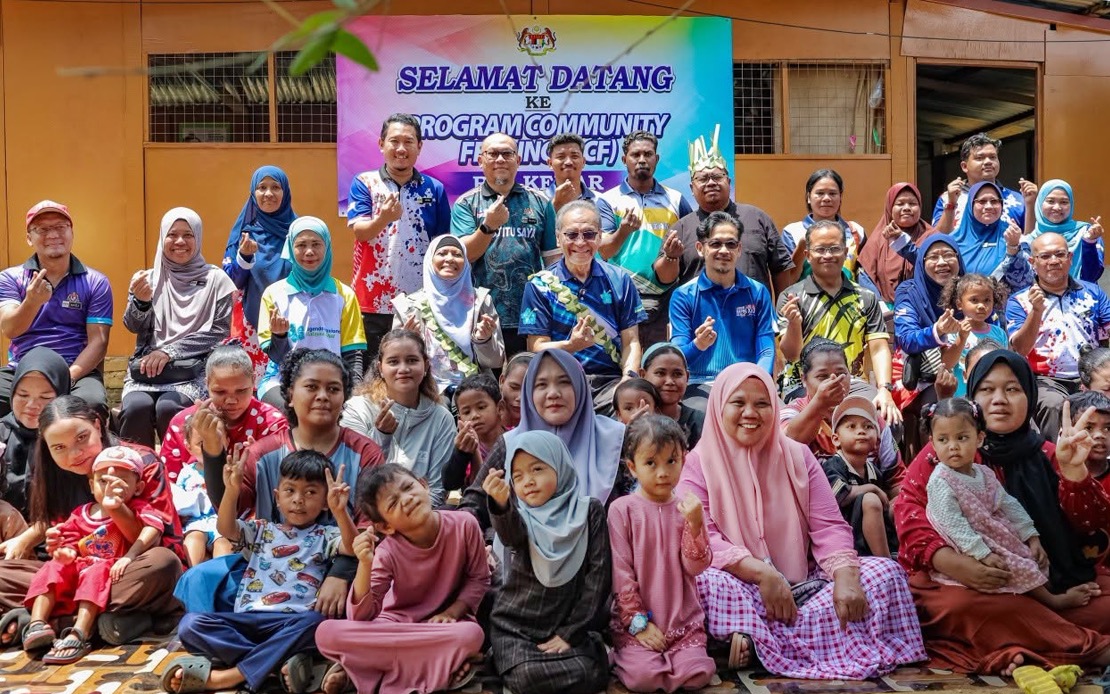
The Ministry of Health has channelled RM500,000 into a comprehensive upgrade programme at the Kemar Health Clinic in Gerik, Hulu Perak, marking a significant push to enhance healthcare delivery for the region's indigenous population. Health Minister Datuk Seri Dr Dzulkefly Ahmad announced the immediate allocation during a visit to the facility, emphasising the government's determination to ensure remote communities enjoy parity in medical services despite geographical barriers.
At the heart of the improvement initiative lies the construction of a new Boat Storage Facility, a decision that underscores the unique challenges of delivering healthcare in regions where waterways constitute the primary transportation network. The existing storage structure, now exceeding eleven years in age, has deteriorated substantially and can accommodate only a single vessel, leaving the clinic's critical assets vulnerable to damage and rendering maintenance operations cumbersome. For an Orang Asli population that depends entirely on water transport to access emergency care, a functional and secure boat storage system represents far more than infrastructure—it forms the backbone of survival in health crises.
Beyond the boat facility, the funding will support the procurement of essential operational assets, including a new four-wheel-drive vehicle to replace an ageing transport unit that no longer reliably serves the clinic's land-based operations. The allocation also encompasses critical medical equipment, notably a Video Laryngoscope, an advanced diagnostic and therapeutic instrument vital for intubation procedures during emergency interventions. Such equipment typically remains scarce in rural Malaysian clinics, making this acquisition particularly significant for a facility serving a vulnerable demographic with limited alternative healthcare options.
Concurrently, the Ministry has placed the Medik 8 multipurpose boat into service at Belum Rainforest Resort Jetty, a vessel designed to reduce emergency response times for more than 4,500 Orang Asli residents clustered around the RPS Kemar settlement. Costing RM350,000 and capable of carrying twelve passengers, this addition expands the existing fleet of six boats and represents a targeted investment in rapid-response capability across waterways where conventional ambulance access remains impossible. The timing of this deployment—intended to slash critical minutes from emergency medical interventions—reflects a recognition that geography itself can become a barrier to life-saving treatment.
Dr Dzulkefly's emphasis on personnel reflects an often-overlooked dimension of rural healthcare delivery: the extraordinary dedication required from frontline workers who navigate unpredictable river conditions and severe weather to fulfill professional obligations. Doctors, nurses, and boat operators operating in Hulu Perak function in circumstances far removed from urban clinical environments, demanding not only technical competence but also physical resilience and psychological commitment. The Minister's acknowledgment of these sacrifices signals broader appreciation within the Health Ministry for the human cost of delivering Malaysia's stated principle that healthcare constitutes a universal right.
The upgrade initiative aligns with the Malaysia MADANI framework, which positions equitable healthcare access as non-negotiable regardless of terrain or population remoteness. This ideological positioning carries practical implications: it suggests the government views rural Orang Asli health outcomes not as peripheral concerns but as measures of systemic success or failure. By allocating substantial capital to a single clinic serving perhaps 4,500 people, the Ministry effectively demonstrates commitment to proportional resource distribution favouring marginalised communities, a stance that distinguishes this approach from earlier healthcare funding models centred on urban population density.
Complementing infrastructure improvements, the Ministry continues implementing the Community Feeding Programme at RPS Kemar, a decade-long nutritional intervention targeting Orang Asli children aged six months to six years. This scheme transcends basic food provision; it combines supervised feeding protocols with full-cream milk supplementation, multivitamin administration, and Ready-to-Use Therapeutic Food for diagnosed malnutrition cases. The programme's documented outcomes reveal transformative impact: stunting rates declined from 75.2 per cent in 2015 to 50.8 per cent by 2025, whilst underweight prevalence dropped from 43.7 per cent to 25.2 per cent across the same period.
These nutritional statistics carry profound implications for long-term health trajectories and cognitive development in vulnerable populations. Stunting and underweight conditions in early childhood frequently correlate with diminished educational outcomes, reduced economic productivity, and perpetuated poverty cycles. The Community Feeding Programme's success suggests that targeted nutritional interventions, sustained over years rather than months, can partially reverse entrenched patterns of malnutrition affecting indigenous communities. However, the persistence of substantial stunting rates—even after ten years of implementation—underscores the complexity of addressing health inequities rooted in systemic poverty and limited economic opportunity.
The Kemar clinic upgrade programme also signals recognition that infrastructure gaps in rural healthcare extend beyond individual facility limitations. The decision to construct a new Type 5 health clinic facility indicates forward-thinking recognition that current infrastructure cannot accommodate future demand. Type 5 facilities represent comprehensive primary care centres equipped to handle expanded patient loads and broader service menus than existing structures. For the Orang Asli population, the promised new facility promises not merely modernised surroundings but expanded diagnostic and treatment capacity, potentially reducing the necessity for distant referrals to urban hospitals.
The strategic deployment of medical technology, particularly the Video Laryngoscope, deserves analytical attention as a window into evolving healthcare standards. This equipment facilitates superior visualisation during airway management procedures, reducing complications and improving success rates in emergency intubation scenarios. Its introduction at Kemar represents a deliberate choice to equip remote facilities with technology approaching urban standards, implicitly rejecting historical practices that reserved advanced equipment for metropolitan centres and medical training institutions.
For Southeast Asian observers, the Kemar initiative offers a case study in targeted infrastructure investment addressing indigenous health disparities. Malaysia's approach—combining capital-intensive boat acquisition, facility construction, medical equipment procurement, and sustained nutritional programming—reflects integrated thinking about rural healthcare access. Yet the persistence of elevated malnutrition rates despite a decade of programming also cautions against overstating the reach of facility-based interventions divorced from broader poverty reduction, employment creation, and educational advancement for Orang Asli communities.
Looking forward, the ultimate measure of success will involve sustained funding commitment beyond the current allocation, continuous equipment maintenance and replacement cycles, recruitment and retention of qualified healthcare personnel willing to serve remote postings, and integration of Orang Asli communities into planning and governance structures affecting their health services. The RM500,000 commitment, whilst substantial, represents a beginning rather than a comprehensive solution to entrenched health inequities affecting Malaysia's indigenous populations.

