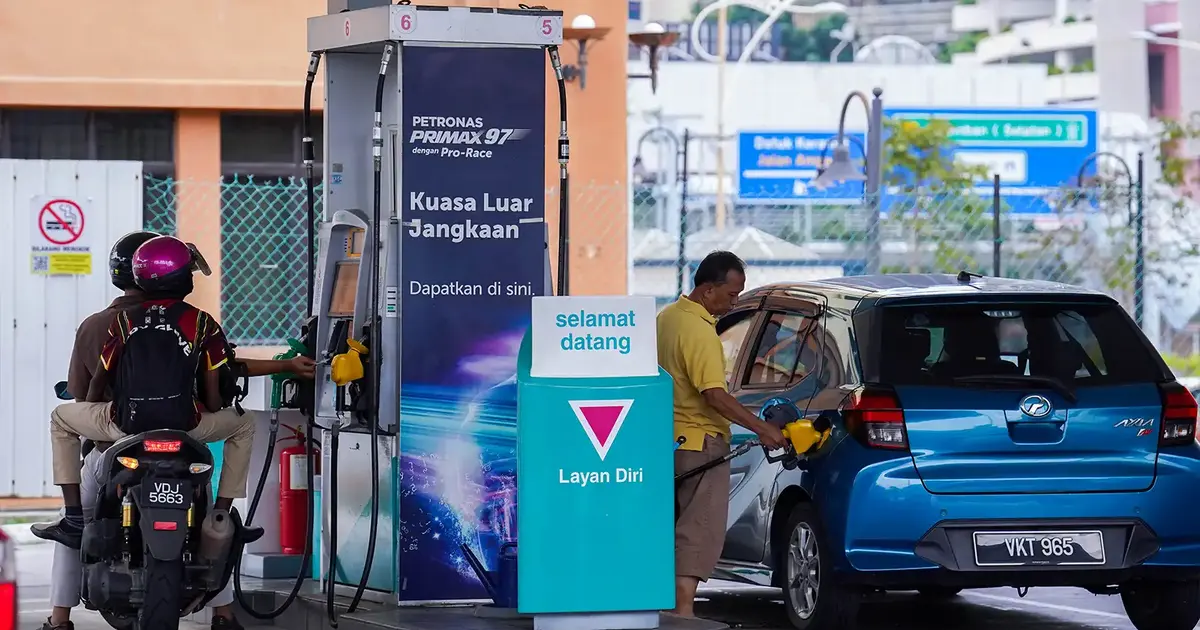
Malaysia faces mounting pressure on its fiscal finances as fuel subsidies are projected to consume RM40 billion of the government budget in 2026, reflecting the growing strain that energy price volatility places on the nation's public accounts. Prime Minister Anwar Ibrahim has sought to reassure the public that despite these substantial expenditures, the country's petroleum reserves and supply mechanisms remain robust and fully capable of meeting domestic demand without interruption.
The trajectory of fuel subsidy costs underscores a fundamental economic challenge confronting Malaysian policymakers. As global crude oil prices fluctuate and the local ringgit's exchange rate movements amplify import costs, the gap between regulated domestic fuel prices and international market rates widens considerably. This financial pressure cascades through government budgets, forcing authorities to balance competing priorities between maintaining fuel affordability for ordinary Malaysians and preserving fiscal space for essential infrastructure, healthcare, and education initiatives.
The RM40 billion projection for 2026 represents a significant commitment of public resources that merits close scrutiny from economists and fiscal observers. For context, this sum equates to roughly seven to eight percent of Malaysia's typical annual government expenditure, making fuel subsidies one of the more substantial budget line items alongside debt servicing and civil service salaries. The government's capacity to sustain such outlays depends critically on maintaining stable revenues from petroleum taxation and ensuring that economic growth continues to generate adequate tax receipts.
Anwar Ibrahim's explicit reaffirmation of petroleum supply stability carries strategic importance beyond mere reassurance. The prime minister's statement addresses underlying concerns among investors and policy analysts about whether Malaysia possesses sufficient proven reserves and production capacity to maintain current domestic consumption levels indefinitely. Declining production rates in some mature oil fields have generated periodic discussions about Malaysia's long-term energy security, making official confirmation of supply adequacy a matter warranting attention from both domestic and international audiences.
Malaysia's petroleum sector has historically been a cornerstone of national economic development, generating foreign exchange and supporting downstream industries including petrochemicals and manufacturing. However, the accelerating global transition toward renewable energy and electric vehicles presents evolving challenges for revenue projections based on hydrocarbon exports. These structural shifts in global energy markets intersect uncomfortably with Malaysia's domestic subsidy obligations, creating a squeeze on both revenue and expenditure sides of energy-related government accounts.
The subsidy burden particularly affects lower-income Malaysians who depend on affordable fuel for transportation, agriculture, and small business operations. Any abrupt termination or sharp reduction of fuel subsidies could trigger inflationary pressures that ripple through food prices, transportation costs, and the broader cost of living. This political economy reality constrains the government's ability to implement rapid subsidy reforms, even when economists argue that rationalization would improve long-term fiscal sustainability and reduce distortions in energy consumption patterns.
Regional observers from Indonesia, Thailand, and the Philippines face analogous subsidy challenges, though the scale and structure of their programs differ. Malaysia's experience navigating between subsidy maintenance and fiscal prudence carries lessons for neighbouring countries grappling with similar pressures. The Southeast Asian region has witnessed periodic subsidy crises that triggered social unrest and economic volatility, lending weight to the government's cautious approach in managing both energy prices and public expectations.
Looking ahead, the government's fiscal framework will require careful calibration to accommodate the RM40 billion subsidy projection without crowding out investments in transitional energy infrastructure. Parallel development of liquefied natural gas capacity, renewable energy expansion, and energy efficiency programs could gradually reduce the proportion of budget resources devoted purely to price support mechanisms. Such strategic investments might help future governments achieve a more sustainable equilibrium between energy affordability and fiscal responsibility.
The subsidy question also intersects with Malaysia's broader development agenda and regional competitiveness. Neighbouring competitors who have undertaken more aggressive energy sector reforms have sometimes redirected subsidy savings toward human capital development and technological innovation. Malaysia's policymakers must weigh whether the political costs of subsidy rationalization are justified by potential long-term gains in public resource allocation efficiency and economic resilience.
Beyond fiscal mechanics, the supply stability assurance reflects Malaysia's capacity in downstream petroleum refining and the strategic reserves maintained under Petronas stewardship. The nation's four operating refineries and strategic storage facilities position Malaysia to weather moderate supply disruptions affecting regional markets. However, maintaining this operational readiness requires sustained investment in infrastructure maintenance and technological upgrades that compete for scarce government capital budgets.
Moving toward 2026 and beyond, Malaysia's trajectory will depend substantially on global energy price movements, exchange rate stability, and the pace of domestic demand growth. Economic expansion increases fuel consumption just as rising international prices and weakening currency worsen the subsidy burden mathematics. Conversely, economic slowdown reduces demand-side pressures but narrows government revenues simultaneously, creating a different form of fiscal constraint that offers no obvious relief.

