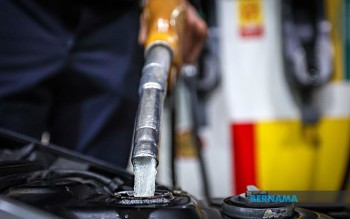
The Malaysian government faces mounting pressure on its fuel subsidy bill, with projections showing that keeping prices steady for consumers could cost taxpayers approximately RM3.5 billion every month if international crude oil prices hold steady around US$90 per barrel. Deputy Finance Minister Liew Chin Tong revealed these figures during parliamentary proceedings, breaking down the anticipated burden as roughly RM2 billion monthly for RON95 petrol subsidies and RM1.5 billion for diesel support. The disclosure underscores the delicate balancing act authorities must perform between protecting household purchasing power and managing the country's fiscal obligations in an increasingly volatile energy market.
Despite the substantial subsidy commitment, Liew sought to reassure lawmakers and the public that Malaysia's overall financial position remains robust enough to absorb these costs without derailing broader economic goals. He emphasized that current fiscal projections have not changed materially in light of elevated oil prices, suggesting that government planners had already factored in elevated energy costs when mapping out spending priorities. This stability reflects Malaysia's dual advantage as both a fuel consumer and a petroleum producer—a distinction that proves crucial when global crude valuations fluctuate sharply. The minister's measured tone reflects confidence in the treasury's ability to navigate energy market volatility without triggering fiscal distress.
Crucially, Malaysia benefits from the offsetting revenue stream generated whenever crude prices spike. According to Liew, the government captures additional income from its own petroleum reserves and exports, with every one-dollar increase in the international crude price yielding approximately RM300 million in extra government revenue. This mechanism provides a natural hedge against subsidy escalation: as the cost of maintaining domestic pump prices rises, so too does the state's petroleum-linked income. The relationship is not perfectly symmetrical, however, and heavily depends on Malaysia's production volumes and export capabilities at any given moment. Nevertheless, this revenue linkage distinguishes Malaysia from import-dependent nations that would face unambiguous fiscal strain from sustained elevated oil prices.
Looking ahead, government projections will be recalibrated when Prime Minister Datuk Seri Anwar Ibrahim tables the 2027 Budget in October, at which point officials will unveil refreshed fiscal estimates reflecting actual economic conditions. This timing allows policymakers to incorporate whatever energy market dynamics have unfolded over the preceding months and to adjust spending targets accordingly. The budgetary exercise will provide parliament and the public with a clearer picture of whether subsidies have continued climbing, stabilized, or potentially declined. Any such revision will signal how seriously the administration views the subsidy challenge and whether structural reforms to the fuel support system remain under active consideration.
The subsidy question connects directly to broader questions about Malaysia's fiscal sustainability and long-term energy policy direction. Maintaining artificially low fuel prices indefinitely imposes structural costs on government finances and distorts market signals that might otherwise encourage conservation or efficiency improvements. Several Southeast Asian neighbours, including Indonesia and Thailand, have experimented with targeted subsidy schemes or gradual price adjustments to reduce fiscal burdens while protecting low-income households. Malaysia's current approach prioritizes stability over restructuring, reflecting political sensitivities around consumer prices and the importance of petroleum subsidies to working-class voters.
Separately, the government is reviewing targeted subsidy schemes for specific regions and industries facing particular hardship. A supplementary parliamentary question raised the prospect of expanding the BUDI Diesel quota—a scheme providing concessional diesel fuel—for Sabah and Sarawak, reflecting concerns that East Malaysian users face geographic disadvantages and higher transport costs. Liew confirmed that the government remains open to expanding special provisions for groups with demonstrable needs, citing the example of pickup truck operators who recently received an additional 100-litre quota through a streamlined application procedure. This flexible approach acknowledges that blanket subsidy policies cannot capture the varied circumstances across Malaysia's diverse geography and economies.
The pickup truck case illustrates how the government is attempting to fine-tune subsidy targeting without comprehensive system overhaul. Rather than dramatically restructuring fuel support mechanisms, authorities are making incremental adjustments to accommodate specific constituencies facing elevated operating costs. Truck owners engaged in agriculture, construction, or logistics depend heavily on diesel expenses, and modest quota increases can meaningfully improve their competitiveness and profitability. By evaluating applications on a case-by-case basis, officials avoid the political backlash that would accompany broad-based subsidy reduction while still directing relief toward genuinely disadvantaged groups.
The fiscal arithmetic reveals why fuel subsidies consume such substantial resources within government budgets. Even with the partial offset from petroleum revenues, RM3.5 billion monthly translates to over RM42 billion annually—equivalent to major spending categories like defence or education. This scale constrains the government's ability to fund other priorities or invest in structural economic improvements. Economists and fiscal analysts frequently point to subsidy rationalization as essential for creating fiscal space to address infrastructure deficits, research investment, or social programmes. Yet politically, any move toward higher pump prices invites backlash from motorists already grappling with inflation in other essential services.
Malaysia's situation also reflects regional energy market dynamics where several countries maintain fuel price controls despite the fiscal drag they impose. Singapore, by contrast, has long allowed market-determined pricing and instead targets assistance directly to lower-income households through cash transfers or transport subsidies. This philosophical difference underscores competing approaches to managing energy costs and protecting vulnerable populations. Malaysia's continued commitment to broad-based pump price subsidies reflects particular national circumstances and political preferences, though the accumulating fiscal costs will eventually force a reckoning about whether the current model remains sustainable indefinitely.

