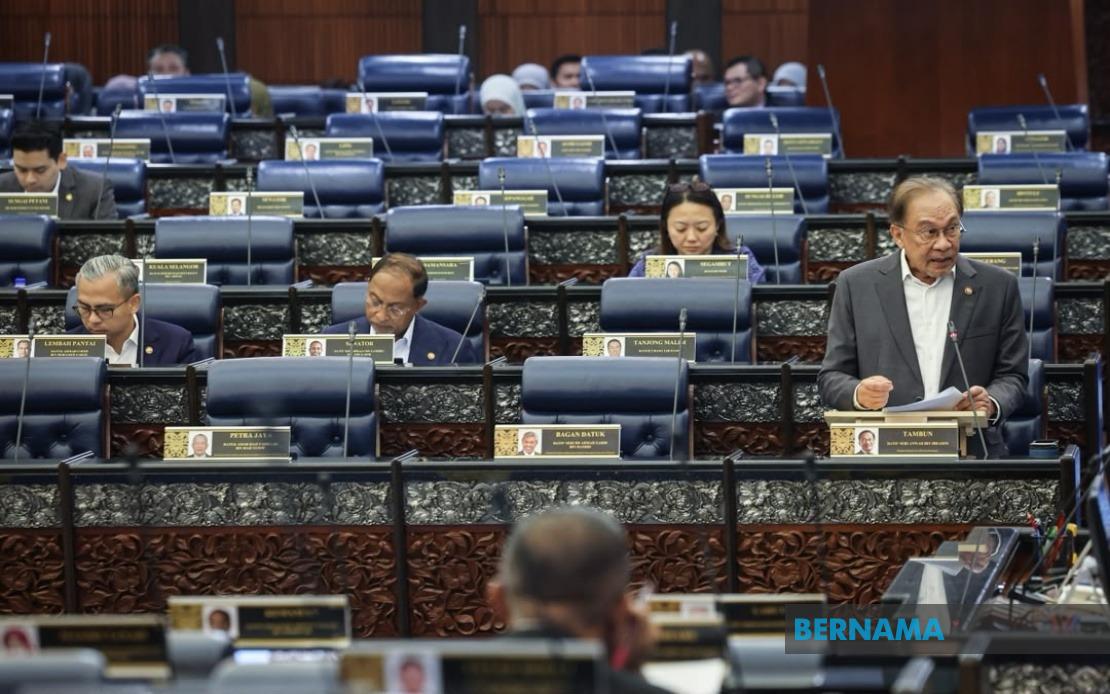
Prime Minister Datuk Seri Anwar Ibrahim has pushed back against criticism of Malaysia's fuel pricing strategy, using international comparisons to demonstrate that consumers here enjoy better value than counterparts in major oil-producing economies. Speaking in Parliament on July 14, Anwar highlighted that Malaysia's subsidised RON95 petrol pricing under the BUDI MADANI initiative has held steady at RM1.99 per litre, positioning the nation favourably against petroleum-rich neighbours and undercutting suggestions that domestic fuel costs have become uncompetitive.
The Prime Minister's remarks address a recurring political narrative that has persisted in Malaysian discourse since previous administrations, where opposition figures and commentators periodically question whether government fuel subsidies represent poor value. Anwar's intervention signals the current administration's determination to control this narrative by establishing a factual baseline that demonstrates government commitment to affordable energy access. By anchoring the comparison to established regional benchmarks, the government seeks to inoculate itself against charges of policy failure or broken campaign pledges regarding energy prices.
The core of Anwar's argument rests on concrete pricing data. Saudi Arabia's current fuel prices have climbed above RM2.40 per litre, substantially exceeding Malaysia's capped rate by approximately 21 sen per litre. This differential matters significantly in a region where fuel prices directly influence transportation costs, logistics expenses, and ultimately the price of goods and services that Malaysian consumers encounter daily. For a country where personal vehicle ownership remains high and public transport infrastructure in many areas remains underdeveloped, fuel affordability carries outsized importance in household budgeting.
The BUDI MADANI framework itself represents a carefully calibrated policy mechanism designed to balance fiscal sustainability with consumer protection. By maintaining the RON95 price at RM1.99 per litre rather than allowing it to fluctuate entirely according to global crude prices, the government absorbs volatility that would otherwise translate into inflationary pressure. However, this subsidy mechanism carries budgetary implications that Malaysian policymakers must continually evaluate, particularly as global oil prices fluctuate and fiscal commitments elsewhere compete for resources. Anwar's comparative framing serves to justify continued government expenditure on fuel price support by demonstrating that such investment delivers tangible benefits relative to peer economies.
The Prime Minister also drew attention to pricing movements in Qatar and the United Arab Emirates, two nations that possess far greater per-capita hydrocarbon wealth than Malaysia and therefore theoretically possess greater capacity to subsidise domestic fuel costs. That even these wealthy oil states have opted to charge higher prices reflects broader global energy market realities and suggests that Malaysia's pricing approach, while supported by subsidies, represents a deliberate policy choice rather than an inability to contain costs. The UAE's decision to raise fuel prices merely two months prior to Anwar's parliamentary statement underscores this point, demonstrating that even abundance of oil resources does not automatically translate into cheaper domestic energy.
Anwar's response also contextualised his earlier campaign commitments when he served in opposition. He recalled that during previous calls for fuel price reductions to RM1.50 per litre, Saudi Arabian petrol cost approximately 50 sen per litre—a vastly lower baseline that reflected different global market conditions. By acknowledging this historical context, the Prime Minister implicitly argues that campaign promises made years ago should be evaluated against the economic circumstances of their time rather than held as fixed commitments regardless of changed global conditions. This rhetorical approach allows him to present the current RM1.99 rate as a substantial achievement within contemporary constraints.
The parliamentary question from Datuk Rosol Wahid (PN-Hulu Terengganu) that prompted Anwar's remarks specifically invoked comparisons with fuel pricing under Datuk Seri Najib Razak's administration, introducing a partisan dimension to energy policy debate. This framing reflects how fuel pricing—a fundamentally technical economic matter—has become woven into Malaysia's broader political competition. Opposition figures attempt to highlight divergence between government rhetoric and outcomes, while the government must defend its record while managing expectations shaped by earlier promises. Fuel pricing thus serves as a convenient proxy for broader competence narratives in Malaysian politics.
For Malaysian consumers, the significance of these comparisons extends beyond simple price per litre. Transportation represents a fundamental cost element across the economy, affecting everything from food prices to delivery services to commuting expenses. A price differential of 20 sen per litre across an average monthly consumption of 80 litres translates to meaningful household savings of RM16 monthly, or roughly RM190 annually per vehicle. When multiplied across millions of Malaysian motorists, fuel subsidy mechanisms effectively represent a substantial wealth transfer mechanism from public coffers to private households, with distributional consequences that policymakers must carefully consider.
The government's emphasis on international competitiveness also reflects awareness that policy sustainability depends on public perception of fairness and effectiveness. If Malaysians believe their fuel prices represent poor value compared with accessible alternatives, political pressure for policy change accumulates regardless of fiscal implications. By demonstrating through concrete international comparisons that domestic pricing remains advantageous, the government constructs an evidence-based defence against claims of policy failure. This approach prioritises factual rebuttal over rhetorical assertion, a distinction that carries importance in an increasingly information-saturated political environment where competing claims require substantiation.
Looking forward, Malaysia's fuel pricing strategy will likely remain subject to continued political scrutiny as global oil markets evolve and comparative price relationships shift. The sustainability of current subsidy levels depends on several factors beyond government control, including crude oil price trajectories, currency exchange rates, and fiscal capacity to absorb energy price volatility. Anwar's parliamentary intervention represents an attempt to establish intellectual and political ground from which future fuel price discussions might proceed, anchoring expectations in comparative international evidence rather than allowing domestic debates to drift untethered from global realities. Whether this rhetorical positioning proves durable depends substantially on whether subsequent price movements reinforce or undermine the comparative advantage the Prime Minister has outlined.

