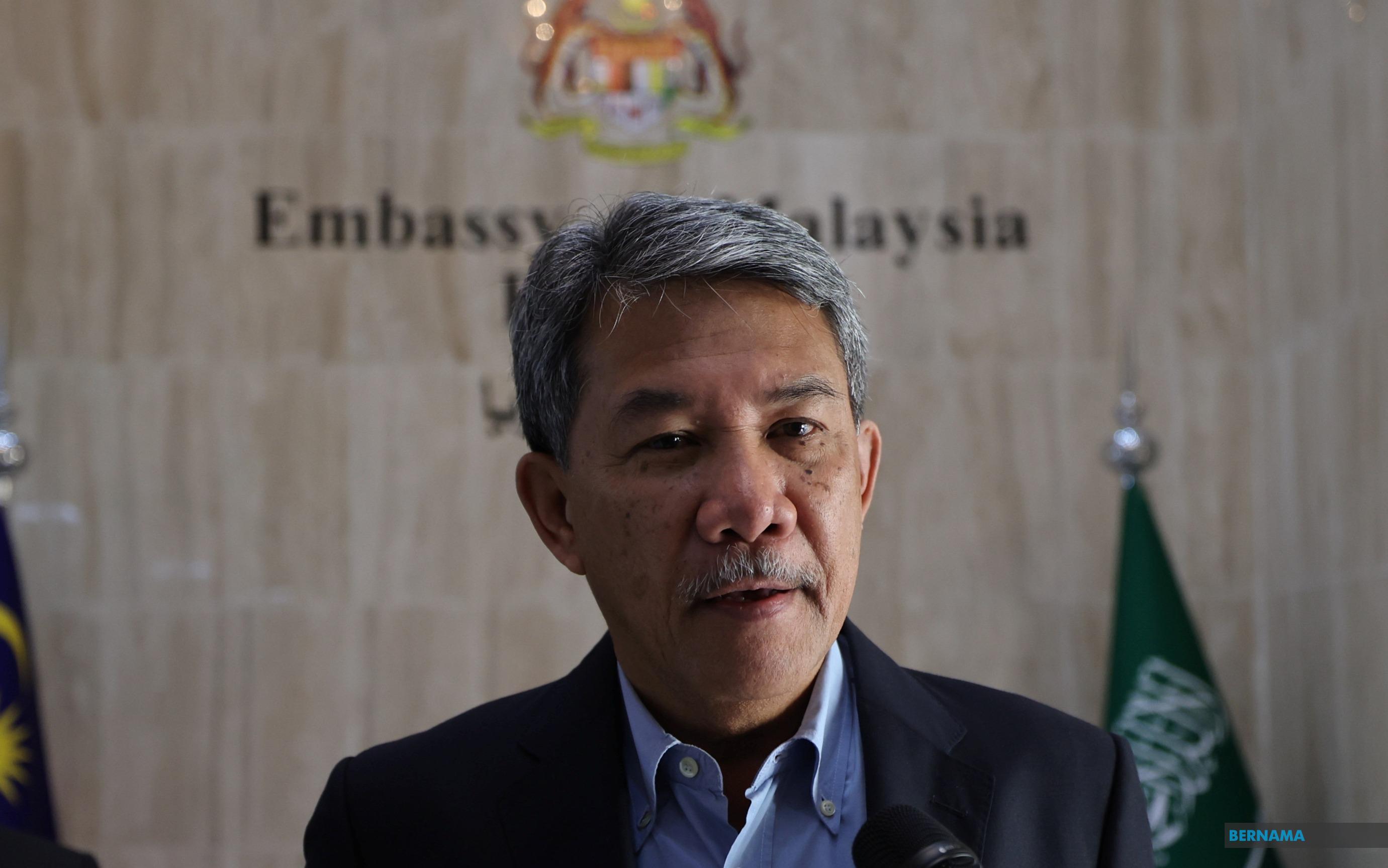
Foreign Minister Datuk Seri Mohamad Hasan touched down in Jeddah on August 26 to participate in a critical extraordinary session of the Organisation of Islamic Cooperation's Council of Foreign Ministers, signalling Malaysia's continued diplomatic engagement on Middle Eastern affairs. Arriving at King Abdulaziz International Airport at 5.45 pm, Mohamad was received by Malaysian Ambassador to Saudi Arabia Datuk Syed Bakri Syed Abdul Rahman, underscoring the significance Kuala Lumpur places on this gathering amid intensifying regional tensions.
The one-day forum convenes to examine the rapidly evolving situation in Palestinian territories, with particular emphasis on developments in Gaza and the West Bank alongside the contentious expansion of Israeli settlements deemed illegal under international law. This timing reflects the OIC's recognition that circumstances on the ground demand urgent collective attention from member states, especially as diplomatic channels remain strained and humanitarian concerns mount.
Leading Malaysia's representation at the session, Mohamad will deliver a national statement reaffirming the country's steadfast backing for Palestinian self-determination and statehood aspirations anchored on pre-1967 borders—a position Malaysia has maintained consistently within multilateral forums. Ambassador Syed Bakri previously emphasised that Malaysia's participation serves as a platform to articulate the nation's unequivocal condemnation of Israeli military actions and territorial expansion that displace Palestinian communities and threaten regional stability.
Malaysia's diplomatic presence at such gatherings reflects broader Southeast Asian interests in the Israeli-Palestinian conflict. The region, home to significant Muslim populations and traditionally aligned with Palestinian causes, views the situation through lenses of international law, humanitarian protection, and the principle of self-determination. By attending and speaking out, Malaysia positions itself within the mainstream of Muslim-majority nations addressing what many consider a foundational justice issue.
Beyond the formal agenda, Mohamad is slated to engage bilaterally with counterparts from various OIC nations to explore avenues for enhanced cooperation across multiple sectors. These conversations are designed to identify concrete opportunities for advancing Malaysian interests in commerce, trade, and investment partnerships with fellow member states, demonstrating how diplomatic forums often serve dual purposes—addressing global concerns while advancing national economic agendas.
The extraordinary nature of this OIC meeting underscores the perception among member states that routine mechanisms may be insufficient for addressing current circumstances. Such gatherings typically signal that developments have reached a threshold requiring collective decision-making and coordinated messaging. For Malaysia, participation ensures the country's voice resonates within a bloc representing 1.8 billion Muslims globally, amplifying national positions on matters affecting religious communities and international peace.
The timing of Mohamad's visit also reflects Malaysia's broader diplomatic calendar and foreign policy priorities. As a non-permanent Security Council member in recent years and a consistent advocate within United Nations bodies, Malaysia has built credibility as a voice articulating developing-world perspectives on international conflicts. Presence at high-level OIC meetings reinforces this standing and signals continuity in Malaysia's commitment to multilateral engagement on behalf of lesser-heard nations.
The situation in Gaza and the West Bank has intensified considerably, with civilian casualties, displacement, and humanitarian crises dominating international discourse. OIC member states, representing diverse geographic regions and political systems, nonetheless converge on core principles regarding Palestinian rights and opposition to settlement expansion. Malaysia's participation ensures these collective concerns receive expression in formal diplomatic channels while providing individual member states platforms to articulate distinct national positions.
Ambassador Syed Bakri's preparatory comments highlighted how Malaysia weaponises such forums to cement its brand as a principled actor committed to international law and human rights standards. This positioning carries domestic resonance among Malaysian constituents for whom Palestinian issues carry deep emotional and religious significance. Simultaneously, it advances Malaysia's broader foreign policy objective of building influence within the Non-Aligned Movement and OIC structures, positioning the country as a responsible stakeholder in global diplomacy.
The bilateral meetings Mohamad intends to conduct reveal how even crisis-focused gatherings serve as networking opportunities for officials to deepen relationships with counterparts. These informal exchanges often yield understandings on trade cooperation, investment frameworks, and diplomatic support on issues of mutual concern—benefits that extend far beyond the immediate agenda. For Malaysia's economic interests, engagement with oil-rich Gulf states and North African nations offers tangible opportunities in energy markets, halal commerce, and Islamic finance.
Looking ahead, the outcomes and statements from this extraordinary OIC meeting will likely be monitored by international observers, particularly Western governments watching for consensus-building among Muslim nations on Middle Eastern policy. Malaysia's contributions will help shape the collective narrative and potentially influence subsequent discussions at the United Nations and other global forums. The Foreign Ministry's careful orchestration of Mohamad's participation, from bilateral scheduling to statement preparation, reflects the calculated diplomacy Malaysia deploys on issues where principle and pragmatism intersect.
For Malaysian domestic audiences, Mohamad's presence in Jeddah reinforces government commitment to defending Muslim interests globally and upholding principles of justice and sovereignty. This narrative proves particularly important within plural Malaysian society, where foreign policy decisions on contentious international issues attract scrutiny across communal lines. By visibly engaging in OIC processes and articulating unwavering support for Palestinian rights, the government signals that all communities' international concerns receive serious consideration within foreign policy formulation.

