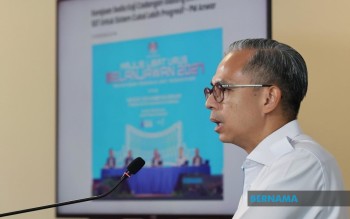
The Malaysian government has entrusted Finance Minister II Datuk Seri Amir Hamzah Azizan with developing a detailed report examining the feasibility of a hybrid taxation system that would blend features from the Goods and Services Tax with the existing Sales and Services Tax framework. According to MADANI Government spokesperson Datuk Seri Fahmi Fadzil, who serves concurrently as Communications Minister, the Ministry of Finance will receive adequate time to conduct this intricate analysis before presenting recommendations to Cabinet for consideration and approval.
The initiative represents a methodical approach to taxation reform, signalling that policymakers view this proposal as requiring careful deliberation rather than swift implementation. Fahmi emphasised during a post-Cabinet meeting press conference in Putrajaya that the complexity of the undertaking necessitates a thorough examination of Malaysia's prior experience with GST and the current operational challenges encountered within the SST regime. The Finance Ministry has been explicitly authorised to work through these technical considerations at its own pace, reflecting official recognition that hastily designed taxation systems can create unforeseen complications for businesses and consumers alike.
Prime Minister Datuk Seri Anwar Ibrahim has directed the Finance Ministry to conduct a comprehensive assessment of this proposed taxation hybrid, establishing it as a formal government priority. The Cabinet became aware of this directive during its latest meeting, though the Premier did not announce specific deadlines or concrete timelines for completion of the study. This absence of publicly stated completion dates provides the Finance Ministry with operational flexibility, though internal benchmarks may guide the ministry's work.
Fahmi clarified that while the proposal remains in its nascent stages, the government has not yet committed to announcing findings or outcomes during the upcoming federal budget presentation. This distinction matters significantly for businesses and investment planners who might otherwise have anticipated major taxation announcements in the budget speech. The spokesperson's comments suggest that Cabinet discussion and decision-making will precede any public disclosure, allowing for internal vetting and political consensus-building before formal announcements.
The proposed hybrid system would represent a notable shift in Malaysia's tax architecture. Rather than abandoning SST entirely, the government would selectively incorporate GST elements that serve broader policy objectives, particularly those advancing a more progressive taxation structure. This approach acknowledges the difficulties encountered during Malaysia's previous GST implementation period while attempting to capture efficiency and progressivity gains that GST offers. The selectivity of integration reflects sophisticated policymaking that recognises taxation systems involve intricate trade-offs between revenue generation, administrative simplicity, and distributional equity.
Malaysia's taxation history provides crucial context for understanding the current initiative. The country transitioned from GST to SST following widespread political and economic pushback against the former system. GST implementation generated substantial public controversy concerning its impact on cost-of-living, particularly for lower-income households, and the complexity it introduced for small and medium-sized enterprises managing compliance requirements. The subsequent reversion to SST addressed these concerns but created its own operational inefficiencies. This cycle of reform and reversal underscores why government officials emphasise the necessity for comprehensive, evidence-based analysis before proposing further changes.
The hybrid approach being studied would theoretically allow Malaysian policymakers to address SST shortcomings whilst avoiding mistakes that plagued GST implementation. Potential benefits might include improved revenue collection, simplified business compliance in certain sectors, and enhanced progressivity if carefully designed. Conversely, introducing GST elements risks rekindling public opposition and creating implementation challenges if not structured thoughtfully. The Ministry of Finance's extended timeline reflects awareness that getting this balance right requires extensive modelling, stakeholder consultation, and technical preparation.
From a regional perspective, Malaysia's deliberation on taxation modernisation occurs within a broader Southeast Asian context of tax policy innovation. Neighbouring countries including Singapore, Thailand, and Indonesia employ varying approaches to consumption and service taxation, each with distinct advantages and complications. Studying these regional examples whilst conducting domestic analysis could inform Malaysia's final recommendations. The extended timeline permits the Finance Ministry to learn from both internal lessons and international experiences before presenting Cabinet with recommendations.
The proposal carries significant implications for Malaysian business operations and consumer behaviour. Large enterprises with sophisticated accounting departments might manage a hybrid system reasonably well, but smaller businesses could face transition costs and compliance burdens. Consumer pricing may shift depending on how taxation is restructured. Sectors including retail, hospitality, and professional services would experience differential impacts based on how hybrid system features apply to various goods and services. These complexities necessitate thorough impact modelling that justifies the Ministry of Finance's extended preparation period.
Stakeholder engagement will likely constitute another crucial element of the study phase. Business associations, consumer groups, tax practitioners, and state governments each hold perspectives on taxation design that should inform final recommendations. The Finance Ministry's timeline expansion suggests recognition that consultation processes require adequate time for meaningful input. Premature announcement of a taxation system lacking broad stakeholder buy-in could replicate difficulties encountered with earlier reform attempts.
The cabinet's decision to commission this comprehensive study rather than simply implementing predetermined changes demonstrates a shift toward more consultative governance approaches. Rather than imposing taxation modifications top-down, the government is building institutional capacity to understand implications and build consensus. This methodology, whilst requiring patience, may ultimately produce more durable and publicly acceptable taxation policies than rapid implementation followed by reversal.
Looking forward, the successful completion and implementation of this hybrid taxation study will significantly influence Malaysia's fiscal sustainability and economic competitiveness. Well-designed taxation systems enhance business certainty and government revenue whilst poorly conceived ones create deadweight losses and administration costs. The Finance Minister II's work over coming months will shape not only immediate economic activity but also Malaysia's longer-term position within the region's evolving tax policy landscape.

