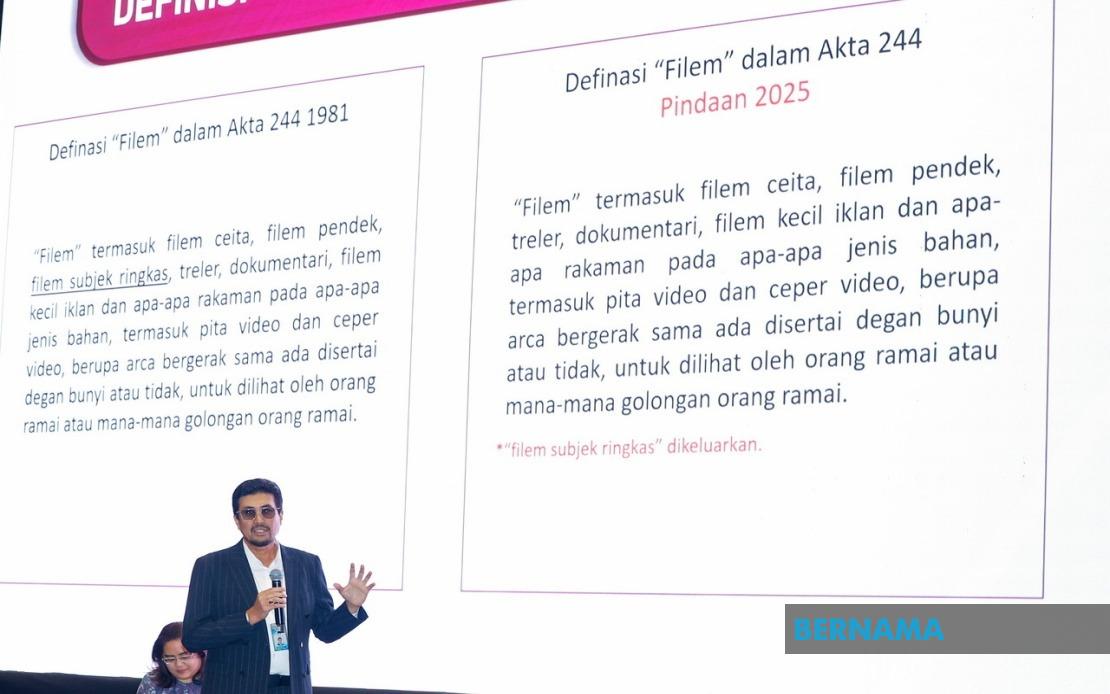
Malaysia's film industry stands on the cusp of sweeping reform with the impending launch of the National Film Policy 2026-2035, a comprehensive strategy designed to inject new vigour into an sector long considered underutilised as an economic and cultural asset. The policy, which has undergone two years of extensive consultation with industry participants and government stakeholders, is expected to receive Cabinet approval and launch before year-end, according to Datuk Azmir Saifuddin Mutalib, chief executive officer of the National Film Development Corporation Malaysia (FINAS).
The emerging framework encompasses more than 70 distinct initiatives organised around five foundational pillars: Financing and Investment; Marketing and Promotion; Industry Collaboration and Technology; Human Capital Development and Management; and Governance and Legislation. This multi-dimensional approach reflects recognition that Malaysia's film sector requires simultaneous intervention across production funding, audience reach, technological modernisation, workforce capability, and regulatory architecture to achieve meaningful international competitiveness and domestic prosperity.
Central to the policy's ambitions is the development of alternative financing models, a critical priority for a film industry that has historically struggled to secure adequate capital for production beyond government grants and internal studio reserves. By diversifying funding sources, the policy aims to reduce bottlenecks that have constrained local filmmakers and studios, enabling a broader range of creative voices and commercial ventures to materialise. This mirrors trends across Southeast Asia, where emerging film industries from Thailand to Indonesia have expanded production capacity by tapping institutional investors, private equity, and international co-production arrangements.
Market expansion constitutes another cornerstone, addressing the limited theatrical and exhibition reach that has hindered Malayalam cinema's international visibility. Initiatives under this pillar are designed to strengthen distribution networks, facilitate access to regional and global markets, and enhance Malaysia's standing within the Asian film ecosystem. For Malaysian audiences, expanded market access could translate to more diverse locally produced content competing alongside international offerings, while creating export opportunities that generate foreign exchange and cultural soft power.
The policy's embrace of artificial intelligence and advanced technologies signals an attempt to position Malaysia's film industry as forward-looking rather than tradition-bound. AI applications could streamline production workflows, enhance post-production capabilities, enable data-driven audience targeting, and lower barriers to entry for independent creators. However, this technological pivot also raises questions about workforce displacement and the need for retraining—concerns that the human capital development pillar aims to address through comprehensive training and certification programmes.
The intellectual property protections component of the policy reflects growing concern about digital piracy and unauthorised content distribution, perennial challenges across the Southeast Asian region. Strengthening legal frameworks and enforcement mechanisms could enhance creator confidence and investment returns, encouraging more ambitious local productions. This dimension also aligns with international copyright standards increasingly demanded by streaming platforms and multinational production companies considering Malaysia as a filming location or co-production partner.
The consultation process leading to this policy has been unusually inclusive, involving industry associations, academic institutions including Universiti Teknologi MARA and the National Academy of Arts, Culture and Heritage, and multiple government agencies. This breadth of input signals a departure from top-down policymaking, though stakeholder feedback from recent engagement sessions indicates continued demand for greater clarity on implementation frameworks, particularly regarding cooperation mechanisms between FINAS and industry associations. Such specificity will prove essential during the rollout phase to prevent the policy from becoming aspirational rhetoric divorced from operational reality.
The National Film Policy 2026-2035 represents Malaysia's third articulated film strategy since the country's initial film development framework emerged in the 1980s, and marks the first major legislative update since 2005. This two-decade gap underscores how dramatically the media landscape has transformed—from predominantly theatrical distribution to streaming dominance, from domestic-focused production to global digital audiences, and from traditional financing to platform-enabled crowdfunding. The new policy's recognition of these seismic shifts, while maintaining continuity with previous strategic aims, suggests thoughtful rather than revolutionary recalibration.
The policy's philosophical orientation—positioning film as a catalyst for economic development, a vehicle for showcasing Malaysia's multicultural character, and an instrument of social cohesion—reflects both intrinsic cultural values and pragmatic development objectives. Southeast Asian governments increasingly recognise cultural industries as high-value economic generators with minimal resource extraction externalities, making film an attractive strategic focus. Thailand's recent film industry incentives and Indonesia's growing production capacity illustrate this regional trend, against which Malaysia's policy initiatives can be benchmarked.
For Malaysian creatives, industry workers, and consumers, the policy's materialisation carries tangible implications. Expanded financing should lower capital barriers for independent filmmakers, potentially diversifying storytelling perspectives beyond what established studios have historically greenlit. Enhanced workforce development could transform Malaysia into a more attractive hub for regional and international productions seeking skilled technical talent. Market expansion initiatives might elevate local films' regional profile, creating competitive advantages in the increasingly crowded Southeast Asian streaming market dominated by Netflix, Disney+, and local platforms.
The Cabinet approval process remains the final formal hurdle before implementation commences. Once cleared, FINAS and partner agencies must translate these 70 initiatives into concrete programmes, funding allocations, and measurable targets. The policy's success will ultimately depend not on strategic elegance but on consistent execution, adequate resource allocation, and willingness to adapt implementation based on industry feedback and evolving market conditions. For Malaysia's film sector, this policy represents both opportunity and responsibility—an opportunity to finally unlock the industry's economic potential, and responsibility to deliver substantive change rather than another well-intentioned document gathering institutional dust.

