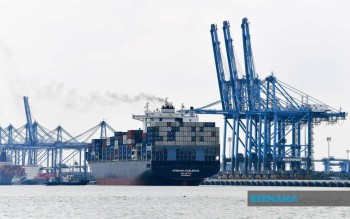
Malaysia's export growth outlook for 2026 has brightened considerably, with RHB Investment Bank revising its forecast sharply upward to 21.7 per cent from its previous estimate of 15.3 per cent. The upgraded projection reflects the country's exceptional trade performance in the first half of 2026, when exports expanded by 27.5 per cent compared with the same period the previous year, signalling stronger international demand than analysts had initially anticipated.
The revision underscores Malaysia's pivotal role within Asia's technology supply chains at a time when global investment in artificial intelligence infrastructure is accelerating. The electrical and electronics sector, which forms the backbone of Malaysian manufacturing exports, continues to benefit from a sustained technology upcycle driven by corporate and government spending on AI capabilities, cloud infrastructure, data centre expansion, and the proliferation of smart devices. This structural demand tailwind is expected to persist throughout 2026, providing a robust foundation for overall export growth.
Trade figures from the first half of 2026 provide concrete evidence of this momentum. Malaysia recorded a trade surplus of RM83.9 billion in the second quarter alone, a dramatic improvement from just RM15.3 billion in the corresponding quarter of 2025. This five-fold increase in the surplus is particularly significant for the country's macroeconomic health, as it bolsters foreign exchange reserves and provides breathing room for domestic policy flexibility. June 2026 data released by the Statistics Department confirmed the upward trajectory, with total trade expanding 44.7 per cent to RM340.9 billion, with exports climbing 45.4 per cent to RM177.9 billion.
Analysts attribute Malaysia's resilience and export dynamism to its deeply embedded position within regional and global manufacturing networks. Unlike economies heavily dependent on a narrow range of exports, Malaysia's diversified product portfolio spanning semiconductors, petroleum products, liquefied natural gas, electrical machinery, and optical instruments insulates it from single-sector shocks. This diversification has proven invaluable as supply chains have shifted and reshuffled across Southeast Asia in response to geopolitical pressures and changing trade patterns.
A second major investment bank, MBSB Investment Bank, independently arrived at similar conclusions, forecasting export growth of 18.9 per cent for 2026 compared with 6.6 per cent in 2025. MBSB's analysis mirrors RHB's emphasis on technology product demand as the primary growth driver, but also highlights the supportive contribution of traditional commodity sectors. Rising demand for Malaysian petroleum products and liquefied natural gas reflects broader global energy dynamics and the persistent need for hydrocarbons even as economies transition toward renewable energy sources.
The strength in exports is complemented by robust domestic demand, prompting both investment banks to upgrade their import forecasts as well. MBSB projects imports will grow by 13 per cent in 2026, up from 6 per cent in 2025, reflecting increased business investment and consumer spending as the domestic economy expands. This dual expansion in both exports and imports signals a maturing, dynamic economy managing healthy internal growth while capturing external opportunities—a combination not all emerging markets can claim.
Yet beneath this optimistic surface, several vulnerabilities merit close attention from policymakers and business leaders. Geopolitical tensions, particularly in the Middle East and between major powers, could disrupt shipping routes and elevate insurance premiums on traded goods. Prolonged instability in these regions would raise transportation costs significantly, squeezing margins in export-oriented industries that operate on relatively thin profit levels. Similarly, a sustained spike in oil prices would increase production and operational expenses across manufacturing, potentially dampening both supply and demand for Malaysian goods.
The semiconductor and electronics sectors, while buoyed by AI investment, remain vulnerable to cyclical fluctuations. Should global technology spending decelerate faster than anticipated—if artificial intelligence adoption proves disappointing or corporate capital expenditure contracts—Malaysia's export momentum could reverse sharply. The country's concentrated reliance on a handful of multinational corporations for semiconductor manufacturing output means sudden facility closures or production shifts elsewhere would have outsized economic consequences.
Trade policy uncertainty, particularly emanating from the United States, presents another material risk. Any significant tightening of tariff regimes or restrictions on technology exports could hamper Malaysia's participation in high-value supply chains. The recent protectionist rhetoric from major trading nations has already prompted some companies to evaluate alternative production locations, and further escalation could prompt relocations that would be difficult to reverse.
Despite these headwinds, Malaysia remains strategically positioned to weather external shocks. Its integration into multiple supply chains—rather than dependence on a single trade partner—provides flexibility. The ongoing diversification of export markets beyond traditional destination countries reduces vulnerability to any single economy's recession. Government efforts to attract higher-value manufacturing and research and development activities promise to upgrade the sophistication of Malaysia's export base over time.
The 2026 export outlook ultimately reflects a combination of cyclical tailwinds from the artificial intelligence investment wave and structural strengths embedded in Malaysia's economy. Whether this momentum sustains depends partly on factors beyond national control—global technology spending, geopolitical stability, and major-power trade policies. Domestically, policymakers would be wise to use this period of strong export growth to invest in infrastructure, human capital, and industrial capabilities that can sustain competitiveness regardless of which particular sectors drive demand in coming decades.

