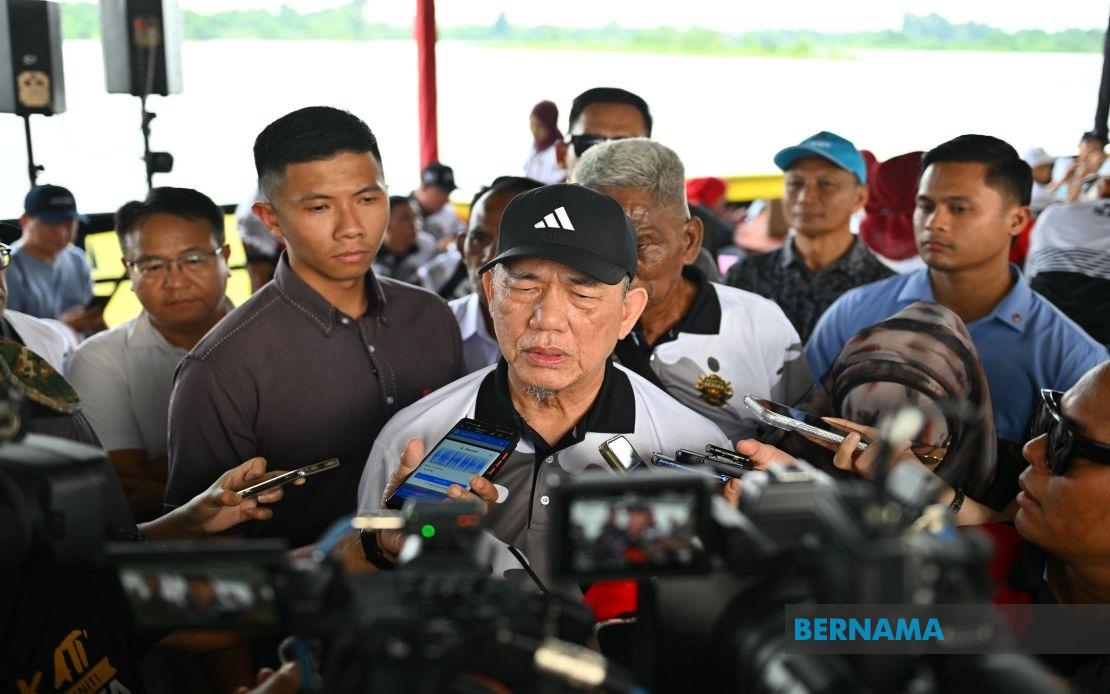
Malaysia's energy supply chain remains uninterrupted despite mounting geopolitical tensions in one of the world's most critical shipping corridors, Deputy Prime Minister Datuk Seri Fadillah Yusof said on Thursday in Kuching. The assurance comes as regional and global concerns mount over potential disruptions to energy flows through the Strait of Hormuz, a strategic waterway through which roughly one-third of global maritime oil trade passes annually. Fadillah, who also serves as Energy Transition and Water Transformation Minister, stressed that the government is taking the security situation seriously while maintaining confidence in the nation's fuel resilience.
The deputy premier attributed this supply stability to coordinated efforts between state-owned petroleum giant Petronas and Prime Minister Datuk Seri Anwar Ibrahim, who has been engaged in multilayered diplomatic and business negotiations to safeguard Malaysia's energy interests. These proactive measures represent a deliberate strategy to insulate the country from external shocks that could compromise fuel availability for domestic consumption, industrial operations, and power generation. The government's approach reflects lessons learned from past energy supply crises and demonstrates the importance of maintaining strong relationships with key energy suppliers and trading partners across the Middle East and beyond.
Fadillah made his remarks following his attendance at the closing ceremony of Regatta 2026 at the main jetty in Kampung Sejijak, highlighting how energy security considerations now intersect with broader national development priorities and international relations. The timing of his statement underscores the government's recognition that uncertainty in strategic global corridors demands transparent communication with the public to prevent panic or market speculation. By publicly confirming supply guarantees, Malaysian authorities aim to reassure businesses, consumers, and investors that energy flows will continue uninterrupted, crucial reassurance for a nation whose economy depends heavily on stable and affordable fuel.
However, the deputy prime minister acknowledged that while physical supply volumes remain adequate, Malaysia cannot insulate itself from the pricing pressures that ripple through international oil and gas markets. Global energy prices are inherently volatile, influenced by geopolitical developments, production decisions by major exporters, refining capacity fluctuations, and speculative financial trading. The Strait of Hormuz tensions exemplify how regional conflicts translate into pricing uncertainty, as traders and producers reassess supply risk premiums. For Malaysia, where oil and gas revenues contribute significantly to federal finances and where petroleum products affect everything from transport costs to manufacturing competitiveness, price swings create cascading economic effects.
The minister underscored that this price volatility presents a genuine policy dilemma for the government. Even with secure supply, elevated global prices feed inflation pressures across the economy, raising production costs for businesses and household expenses for consumers. Malaysia's commitment to maintaining subsidy programmes and direct assistance schemes for citizens adds fiscal strain when international crude prices spike, forcing difficult budgetary trade-offs between supporting people's purchasing power and maintaining sustainable government finances. This structural vulnerability reflects the challenge facing energy-dependent emerging economies caught between global market forces beyond their control and domestic obligations to protect citizen welfare.
The government's stated strategy involves balancing two competing imperatives: ensuring long-term fiscal sustainability while prioritising immediate support for vulnerable populations. This approach requires careful calibration of subsidy levels, targeting mechanisms, and complementary economic policies. Rising global prices particularly affect lower-income Malaysians who spend larger proportions of income on energy and transport, making political commitments to assistance programmes both morally motivated and electorally significant. Simultaneously, unchecked fiscal deficits from uncapped subsidies could eventually compromise Malaysia's credit ratings, borrowing costs, and economic stability—outcomes that would ultimately harm the very populations these programmes aim to protect.
The Strait of Hormuz remains a flashpoint reflecting broader Middle Eastern tensions and geopolitical rivalries that show no sign of imminent resolution. Any actual disruption to shipping through this chokepoint would immediately spike global oil prices, creating severe economic consequences for oil-importing nations. Malaysia, which imports petroleum products and relies on stable prices for its refining industry, faces outsized exposure to such scenarios. The government's proactive engagement through negotiations and bilateral relationships represents an attempt to maintain multiple supply sources and relationships that could provide alternative pathways if primary channels face disruption.
Fadillah's measured messaging balances reassurance with realism. By confirming supply security while candidly discussing price pressures, the government acknowledges public concerns without either dismissing risks or stoking unnecessary alarm. This transparency approach helps shape market psychology and public expectations rationally. Malaysian consumers and businesses understand that energy independence is not feasible for the nation, but intelligent diversification, strategic relationships, and prudent financial management can minimise vulnerability to external shocks. The deputy prime minister's statements reflect confidence in these institutional mechanisms while recognising that no government can fully control international commodity markets.
Looking forward, Malaysia's energy security strategy likely emphasises both near-term supply assurances and longer-term diversification and transition planning. The government has articulated ambitions for renewable energy expansion and energy efficiency improvements, partly motivated by supply security alongside climate considerations. These transitions take years to implement meaningfully, however, keeping Malaysia dependent on traditional fossil fuels and international markets in the medium term. During this transition period, active management of relationships with energy suppliers, careful monitoring of geopolitical developments, and transparent communication with stakeholders remain essential components of national energy security policy, precisely the approach the deputy prime minister outlined in his Thursday statement.

