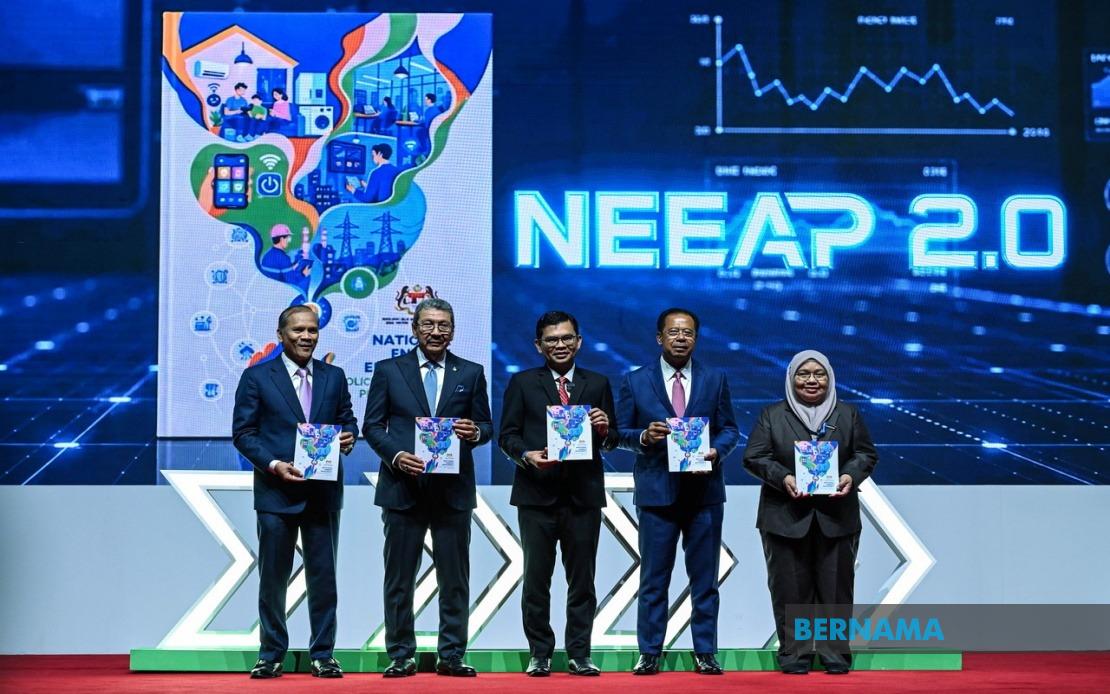
Malaysia has unveiled an ambitious energy efficiency framework designed to reshape how the country consumes power across industrial, commercial and residential sectors. The National Energy Efficiency Policy and Action Plan 2026-2035, launched by the Ministry of Energy Transition and Water Transformation (PETRA) in Putrajaya, represents a strategic investment in sustainability that officials claim will unlock substantial economic and environmental benefits over the coming decade.
The policy's headline figures are striking. Implementation is forecast to generate RM85 billion in net energy savings while attracting RM36 billion in private capital investment. Beyond the financial metrics, NEEAP 2.0 is expected to catalyse employment creation across the green economy, with projections suggesting approximately 29,000 new job opportunities will emerge as businesses and households transition to more efficient energy practices. For a nation grappling with balancing growth ambitions against climate commitments, these figures underscore the potential for economic development and environmental responsibility to advance together.
The environmental dimension of NEEAP 2.0 carries particular significance given Malaysia's commitment to achieving net-zero carbon emissions by 2050. The plan targets a reduction equivalent to 26 million tonnes of carbon dioxide emissions by 2035, a measurable contribution toward meeting that longer-term aspiration. This emissions trajectory positions Malaysia as a credible actor in regional and global climate governance, particularly important as Southeast Asian nations face increasing pressure to demonstrate concrete progress on decarbonisation commitments made at international forums.
Central to the policy's ambition is an 11.6 per cent improvement target for electricity and thermal energy efficiency relative to business-as-usual scenarios. While this percentage may appear modest, the underlying energy quantum is substantial. PETRA estimates the cumulative energy savings will amount to 815,000 terajoules, a figure that translates into sufficient electricity to power all of Peninsular Malaysia for nearly two years. This perspective helps contextualise the scale of transformation being pursued across the economy.
The policy's sectoral approach recognises that energy consumption patterns differ markedly between industrial users, commercial enterprises and households. Rather than imposing uniform mandates, NEEAP 2.0 emphasises fostering an efficiency culture that permeates all three segments while prioritising high-impact industries critical to economic competitiveness. This differentiated strategy acknowledges that manufacturing-intensive sectors such as semiconductors, electronics and petrochemicals face particular pressure to reduce energy intensity as global supply chains increasingly embed sustainability criteria into sourcing decisions.
NEEAP 2.0 functions as a continuation of Malaysia's earlier energy efficiency action plan, suggesting institutional learning and iterative policy refinement. The timing of its unveiling during the 7th International Sustainable Energy Summit indicates deliberate positioning within regional and global sustainable energy conversations. The summit provides a platform for Malaysia to demonstrate policy seriousness to international investors, technology providers and development partners who increasingly evaluate market attractiveness partly through environmental governance lenses.
The policy's alignment with the Malaysia MADANI development aspiration reinforces government messaging that energy transition serves broader national well-being objectives. By framing efficiency not merely as an environmental obligation but as a pathway to lower energy costs for consumers and enhanced competitiveness for businesses, policymakers attempt to build coalition support across constituencies that might otherwise view green regulations as impositions. This rhetorical strategy proves particularly important in emerging economies where affordability concerns frequently dominate energy policy debates.
Private sector participation emerges as pivotal to NEEAP 2.0's realisation. The RM36 billion investment target indicates reliance on commercial capital to fund efficiency upgrades, technology deployment and infrastructure modernisation. This contrasts with approaches dependent primarily on government expenditure and reflects Malaysia's relative fiscal constraints. Policymakers must therefore devise regulatory frameworks, incentive structures and financing mechanisms that make efficiency investments sufficiently attractive to corporate treasuries competing for capital across multiple sectors and geographies.
For Malaysian manufacturers and service providers, NEEAP 2.0 signals shifting competitive terrain. Global customers increasingly expect suppliers to demonstrate energy efficiency credentials, and regional competitors adopting similar policies may gradually establish efficiency benchmarks that become market-determining. Companies that view the policy instrumentally, as compliance burden rather than competitive opportunity, risk falling behind peers who leverage efficiency improvements to reduce cost structures and enhance environmental credentials valued by increasingly conscious consumers.
The employment dimension warrants deeper examination. The projected 29,000 jobs span diverse occupations from skilled engineers designing efficiency systems to technicians implementing upgrades to administrative professionals managing programme administration. For Malaysia's workforce, particularly younger cohorts entering labour markets, these opportunities signal that green economy sectors offer genuine career pathways rather than peripheral niches. Training and skills development institutions will need capacity building to ensure workforce readiness across the relevant technical domains.
Implementation challenges inevitably await NEEAP 2.0's execution phase. Coordinating efficiency improvements across fragmented private sector actors requires robust monitoring, verification and compliance mechanisms. Building owner resistance to capital expenditures, even when long-term operational savings justify investments, represents an enduring barrier in efficiency policy globally. Technology adoption rates depend partly on innovation availability and affordability, areas where Malaysia may require technology transfer from advanced economies to achieve ambitious targets.
The policy's success will ultimately hinge on sustained political commitment and technical competence across multiple government agencies, private sector responsiveness and consumer acceptance. For Malaysia's regional standing, delivering measurable progress against NEEAP 2.0's targets matters considerably. Success would validate Malaysia's claims to leadership in Southeast Asian sustainable energy transitions, potentially enhancing the country's attractiveness as an investment destination for green technology companies and climate-conscious multinational corporations seeking regional hubs.

