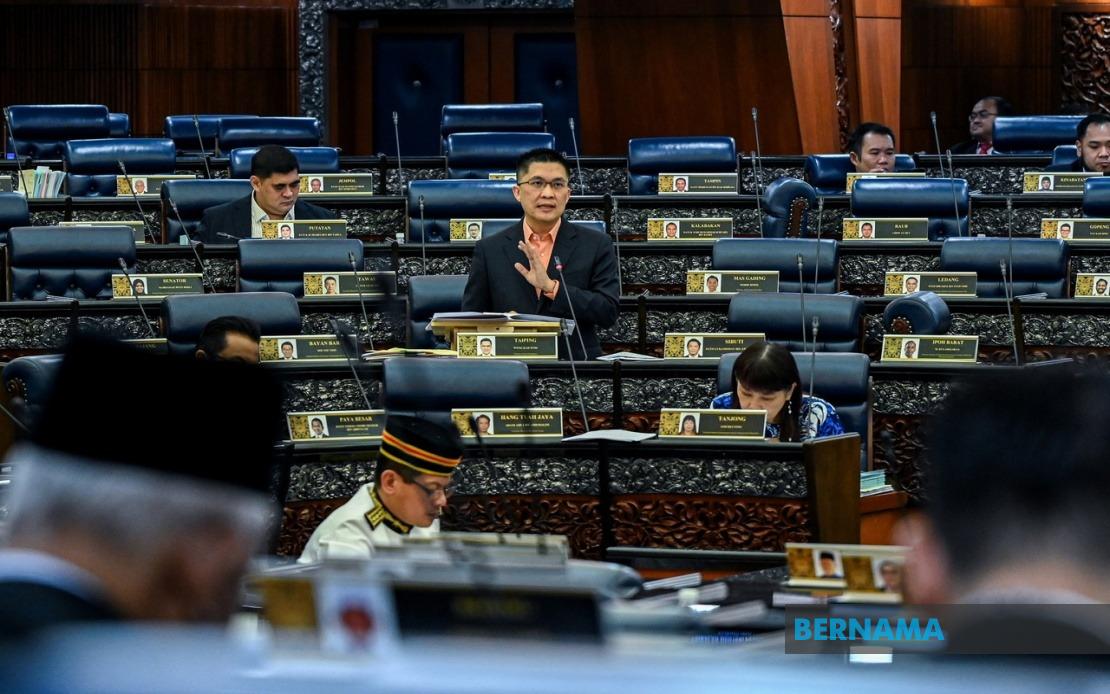
The Ministry of Education has pledged to systematically eliminate disparities in digital access across Malaysia's school system as part of its ambitious Malaysia Education Blueprint (RPM) 2026-2035 initiative. Deputy Education Minister Wong Kah Woh outlined a comprehensive approach during parliamentary proceedings, emphasizing that connectivity and technological equity will define the ministry's approach to modernizing education nationwide. The commitment extends beyond urban centers to encompass rural institutions, a significant undertaking given Malaysia's geographic diversity and existing infrastructure challenges across different states and administrative regions.
Central to the ministry's strategy is the deployment of high-speed internet infrastructure to every educational institution, with implementation tailored to local conditions and available technologies. Rather than imposing a uniform technological solution, the ministry recognises that different regions require appropriately calibrated approaches—a pragmatic acknowledgment that rural areas may require alternative connectivity solutions compared to densely populated urban zones. This flexibility should increase the likelihood of sustainable implementation while accommodating regional budgetary constraints and terrain-specific obstacles that have historically complicated infrastructure rollouts.
The initiative establishes intermediate digital competency as a baseline expectation for all students, measured through a Digital Competency Score framework. This standardized metric will enable the ministry to track progress and identify pockets where additional support or resource allocation becomes necessary. By setting quantifiable benchmarks, educators and administrators gain clearer targets for intervention, potentially creating accountability mechanisms that help sustain momentum across different school districts and state-level education departments.
Supporting this infrastructure push is the Digital Educational Learning Initiative Malaysia (DELIMa) platform, a centralized repository housing curated digital learning materials accessible to both educators and pupils. The platform represents a significant organizational investment, consolidating educational resources that previously may have been scattered across institutional silos or remained inaccessible to resource-constrained schools. By aggregating materials onto a single, internet-enabled platform, the ministry removes barriers for teachers seeking contemporary lesson content and provides students with standardized learning resources that bridge instructional gaps created by uneven school funding.
Wong's parliamentary remarks highlighted previous successes in narrowing achievement gaps during the Malaysian Education Development Plan (PPPM) 2013-2025 period, offering evidence that targeted interventions yield measurable results. The achievement data proves particularly striking: the average grade score disparity between urban and rural students in the 2024 Sijil Pelajaran Malaysia (SPM) examination contracted by 26.23 per cent, demonstrating that intentional policy focus can reverse long-standing inequities. Beyond geographic divides, gender-based gaps in SPM certificate eligibility narrowed by 52.78 per cent, while socioeconomic disparities shrank by 57.75 per cent—metrics suggesting that previous initiatives achieved cross-cutting improvements benefiting multiple disadvantaged cohorts simultaneously.
These quantifiable gains provide the ministry with confidence that systematic approaches to resource distribution and infrastructure development produce tangible outcomes. The previous decade's experience establishes a foundation upon which the new blueprint can build, suggesting that continuation and expansion of proven methodologies, now enhanced with digital infrastructure, should yield incremental improvements. However, bridging digital divides requires sustained funding and political commitment beyond single budget cycles, particularly as schools compete for capital allocations with healthcare, transportation, and other infrastructure priorities.
The ministry explicitly commits to equitable distribution of digital devices and educational resources, framing this as essential for reducing access gaps between privileged urban areas and underserved rural zones. This commitment extends beyond passive allocation, implying active monitoring to ensure schools in less developed regions receive proportionate resource shares rather than operating under assumption that market forces will naturally equilibrate provision. Such targeted distribution mechanisms acknowledge that schools serving lower-income populations often lack the financial capacity to independently procure technology, necessitating government intervention to prevent technology access from becoming another dimension of educational inequality.
Infrastructure development prioritization reflects recognition that quality education depends on foundational physical assets—reliable buildings, utilities, and connectivity before sophisticated pedagogical techniques can flourish. The ministry indicates that school upgrades will respond to local needs assessments rather than following standardized templates, potentially improving relevance and utilization of rehabilitated facilities. Communities better positioned to identify their specific infrastructure deficits should experience more responsive interventions, though this decentralized approach requires effective local consultation mechanisms and transparent processes for determining investment priorities across competing claims.
Parallel to infrastructure investments, the ministry underscores teacher welfare as a concurrent priority, acknowledging that educators represent the most valuable resource in any education system. Seven workload-reduction measures introduced since 2023 continue receiving attention, with particular emphasis on eliminating redundant administrative documentation. Paperwork reduction initiatives free educator time for classroom preparation and student engagement, potentially improving instructional quality without requiring additional recruitment. This suggests ministry recognition that structural inefficiencies—bureaucratic rather than pedagogical in origin—impose hidden costs on teaching professionals and ultimately diminish educational outcomes.
The broader policy framework indicates integrated thinking about education equity, treating connectivity, infrastructure, teacher support, and resource distribution as interdependent elements rather than isolated initiatives. For Southeast Asian nations monitoring Malaysia's approach, these implementation strategies offer models for addressing digital divides within emerging economies where competing development priorities complicate education investment sequencing. Malaysia's emphasis on measuring progress through standardized competency frameworks and disaggregated achievement data suggests that accountability mechanisms increasingly characterize education reform, a shift with implications for how neighboring countries conceptualize policy evaluation and resource justification to legislative bodies and taxpayers.
Looking forward, the RPM 2026-2035 blueprint positions digital access as foundational infrastructure comparable to electricity and water—essential utilities without which modern education cannot function. This rhetorical framing may strengthen political support for sustained funding as successive administrations recognize that education infrastructure investments require multi-year commitments extending beyond individual electoral cycles. Success ultimately depends on consistent implementation capacity, appropriate technical support for schools transitioning to digital-enabled pedagogies, and continuous curriculum evolution ensuring that digital resources meaningfully enhance learning rather than representing technology for technology's sake.

