Malaysia's communications sector is entering a critical juncture as the International Regulatory Conference 2026 convenes in Kuala Lumpur this week, bringing together regulatory bodies, technology leaders, and policymakers to chart a course through an increasingly complex digital landscape. Hosted by the Malaysian Communications and Multimedia Commission (MCMC), the two-day gathering operates under the banner 'Shaping the Next Digital Era: Regulation, Resilience and Trust,' signalling the nation's determination to forge its own regulatory identity rather than simply importing frameworks from elsewhere. With participants arriving from more than seven countries, the conference reflects Malaysia's growing ambition to position itself as a thoughtful regulatory voice within Southeast Asia and the wider Asia-Pacific region.
The timing of IRC 2026 carries particular significance given Malaysia's recent legislative strides. The Online Safety Act 2025 (ONSA) came into effect on January 1 this year, representing the culmination of years of consultation and debate about how to protect citizens without stifling digital innovation. This inaugural regulatory framework now provides the legal backbone for discussions unfolding at the conference, allowing participants to examine how provisions are operating in practice and where refinements might be needed. Communications Minister Datuk Seri Fahmi Fadzil is scheduled to open proceedings, underscoring the political commitment to this regulatory overhaul at the highest levels of government.
Child protection emerged as a centrepiece concern during the conference's opening sessions, reflecting mounting anxiety across the region about vulnerability in online spaces. A high-level dialogue centred on 'Online Safety by Design: Platform Accountability and Child Protection in an Age of User Vulnerability' brought together voices from Malaysia's Human Rights Commission (SUHAKAM), the United Nations Children's Fund (UNICEF), and international diplomacy, signalling that digital child safety transcends national boundaries and commercial interests. The emphasis on platform accountability and the integration of safety mechanisms into design architecture represents a philosophical shift away from reactive regulation towards preventive governance—a recognition that technological systems must embed protective features from inception rather than retrofitting them afterwards.
Data sovereignty and privacy protection constitute another pillar of Malaysia's emerging regulatory philosophy, topics that resonate deeply across Southeast Asia where concerns about foreign tech dominance and data extraction persist. A dedicated session explored how Malaysia can build consumer trust while advancing its digital economy ambitions, with contributions from cloud computing specialists and telecoms executives. This dialogue reflects the fundamental tension developing nations face: how to harness technology's economic benefits while retaining control over data resources and protecting citizen privacy. For Malaysian policymakers, striking this balance is not merely an administrative exercise but central to national competitiveness and citizen confidence in the digital ecosystem.
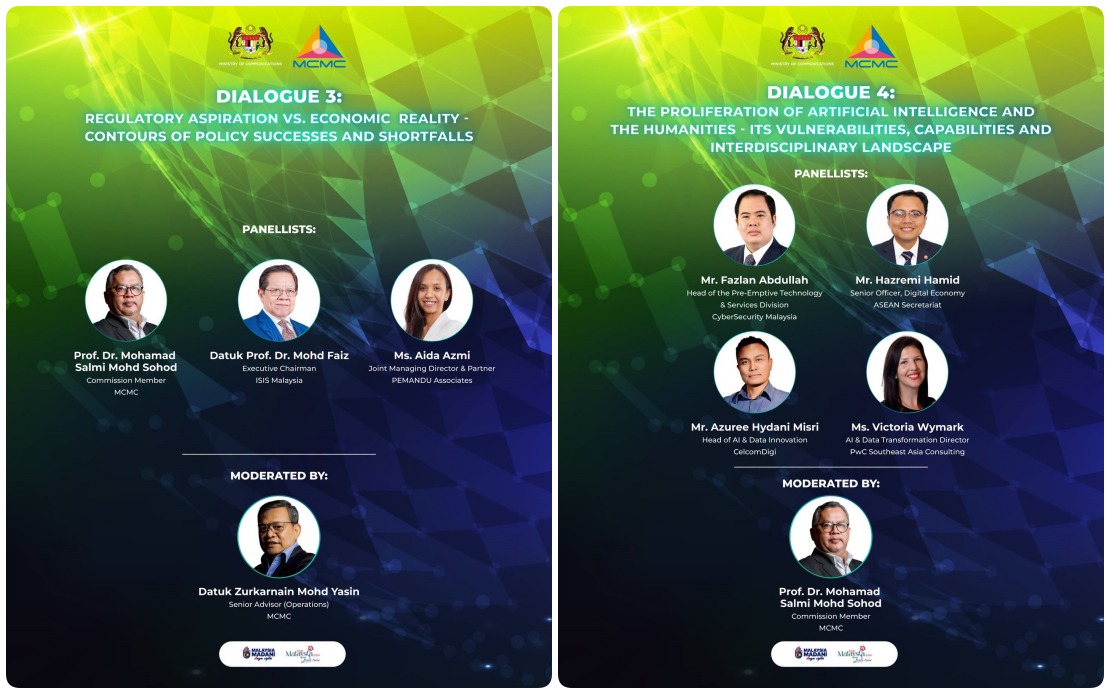
The conference programme reveals an institution grappling seriously with questions about regulatory efficacy and economic pragmatism. An afternoon session examining 'Regulatory Aspiration vs Economic Reality' acknowledges that well-intentioned policies sometimes produce unintended consequences, whether through over-compliance costs that disadvantage smaller players or rules that inadvertently stifle beneficial innovation. This intellectual honesty distinguishes Malaysia's approach from rigid regulatory regimes that fail to adapt. The participation of think tanks and policy associates suggests a willingness to examine both policy successes and shortcomings, creating space for evidence-based refinement rather than ideological entrenchment.
Artificial intelligence's societal implications feature prominently in conference discussions, reflecting anxieties that extend well beyond technical specifications into profound questions about human autonomy and social cohesion. A dedicated session exploring 'AI and the Humanities' brings together computer scientists, academics, and cybersecurity specialists to examine AI's vulnerabilities and capabilities through a multidisciplinary lens. This approach recognises that AI governance cannot remain confined to engineers and economists; rather, philosophers, social scientists, and humanities scholars must participate in shaping how these technologies integrate into Malaysian society. For a nation seeking to avoid the pitfalls of passive technology adoption, this interdisciplinary approach represents essential intellectual infrastructure.
The conference's second day pivots towards emerging technologies that will define digital infrastructure over the coming decade. Quantum computing discussions bring together IBM specialists and Malaysia's leading research universities, signalling the nation's determination to develop domestic expertise in frontier technologies rather than remaining perpetually dependent on foreign providers. Similarly, deliberations about robotics regulation and autonomous systems acknowledge that the Fourth Industrial Revolution is no longer a distant prospect but an immediate challenge requiring regulatory preparation. For Malaysia's positioning within regional tech ecosystems, developing homegrown regulatory capacity in emerging domains offers strategic advantage.
Mental wellbeing and human autonomy in an 'always-on' society represent themes that regional policymakers have largely overlooked, yet IRC 2026's inclusion of these concerns suggests Malaysia is thinking beyond traditional regulation into social implications. The tension between constant digital connectivity and human psychological needs, between algorithmic recommendations and knowledge integrity, between convenience and autonomy—these questions demand sustained attention. By elevating these concerns to conference prominence, Malaysia signals recognition that digital governance extends into domains traditionally considered outside regulatory scope.
The conference's third edition since 2024 demonstrates that Malaysia views digital regulation as an ongoing evolutionary process rather than a static rulebook to be established and filed away. This iterative approach allows lessons from initial ONSA implementation to inform conference discussions, which in turn may shape future policy refinements. For neighbouring Southeast Asian nations watching Malaysia's regulatory experiment closely, the conference serves as a real-time demonstration of how frameworks develop, adapt, and mature. The involvement of regional and international observers means insights generated here will likely influence discussions across ASEAN and beyond.
The breadth of Malaysian institutional participation—from telecoms operators like Maxis and CelcomDigi to research universities spanning UKM, UTM, and UM—creates an unusually comprehensive stakeholder ecosystem. This inclusivity suggests policymakers recognise that effective digital governance requires input from operators, academics, civil society, and international partners rather than emerging solely from government deliberations. However, such multi-stakeholder approaches also risk dilution where consensus becomes impossible and competing interests cannot be reconciled, a challenge the conference will presumably grapple with as specific policy recommendations emerge.
Deputy Communications Minister Teo Nie Ching's scheduled closing remarks tomorrow will presumably distil conference outcomes into actionable policy directions. Whether IRC 2026 produces formal recommendations, legislative amendments to ONSA, or simply establishes intellectual frameworks for ongoing discussions remains to be seen. Nevertheless, the conference's very convening represents a statement that Malaysia possesses agency in shaping its digital future—that the nation need not passively import regulatory models but can thoughtfully construct frameworks suited to its circumstances, values, and aspirations.
For Malaysian citizens and businesses navigating an increasingly regulated digital environment, IRC 2026 signals that government approaches digital governance with seriousness and intellectual engagement. The involvement of child protection advocates, privacy experts, and technology innovators suggests regulatory development balances multiple legitimate concerns rather than serving narrow interests. As the conference concludes and policymakers translate discussions into concrete measures, Malaysia's digital regulatory framework will continue its maturation—a process that IRC 2026 has undoubtedly advanced.

