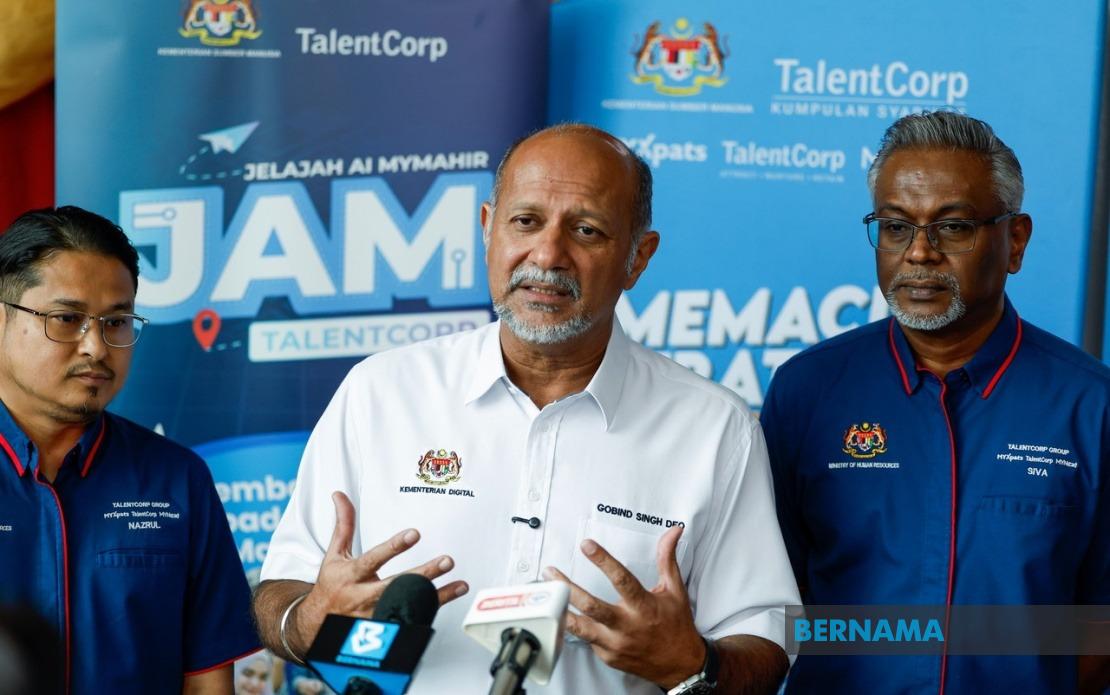
Malaysia's digital creative economy has emerged as a significant economic powerhouse, generating more than RM92.5 billion in revenue whilst attracting RM85.7 billion in investments and creating over 11,000 high-value employment opportunities. Digital Minister Gobind Singh Deo highlighted these achievements whilst addressing delegates at the Borneo Animation and Games Festival in Kuching, signalling the government's commitment to nurturing this rapidly expanding sector as a pillar of Malaysia's future economic development.
The minister's remarks underscore a fundamental shift in how policymakers view the creative industries. Beyond their intrinsic cultural and artistic value, animation, games and digital content are now recognised as legitimate engines of economic growth with substantial revenue-generating potential. This reframing reflects global trends where countries like South Korea, Japan and Singapore have built competitive advantages by investing strategically in creative talent and intellectual property development.
Malaysia's homegrown animation and entertainment franchises have demonstrated remarkable commercial potential. Properties such as Upin & Ipin, Ejen Ali and Mechamato have transcended domestic markets to gain traction internationally, proving that Malaysian creative talent can compete on regional and global stages. These successes validate the economic case for continued investment in the sector, as strong intellectual property not only generates direct revenue through licensing and merchandising but also creates multiplier effects throughout the creative ecosystem.
Gobind Singh Deo outlined an ambitious vision for the digital economy's role in Malaysia's future, projecting that the sector will contribute 30 per cent of the nation's gross domestic product by 2030. This target represents a significant increase from current levels and reflects the government's determination to position Malaysia as a digital-first economy. Alongside this growth trajectory, the ministry anticipates the creation of 500,000 high-value digital jobs over the next four years, a figure that could substantially reshape Malaysia's employment landscape and address skills demand in emerging technological fields.
Sarawak has been identified as a strategic focal point for this growth agenda. The state possesses a combination of advantages that position it uniquely for digital creative development: a rich cultural heritage and distinctive storytelling traditions, an increasingly sophisticated digital infrastructure, and an emerging creative community with entrepreneurial ambitions. The state's geographic location within Southeast Asia also offers strategic advantages for companies seeking to establish regional headquarters or production hubs serving the broader ASEAN market.
The Federal Government's commitment to partnership with Sarawak signals a decentralised approach to digital development, moving beyond concentration in Peninsular Malaysia. By supporting the state's digital capabilities and facilitating connections between local creative enterprises and opportunities across Malaysia, Southeast Asia and beyond, the government is attempting to create multiple growth centres rather than relying on traditional urban hubs. This distribution of economic activity could help address regional development imbalances and provide rural and semi-urban communities with pathways to high-skill employment.
The Borneo Animation and Games Festival represents more than a celebration of creative talent; it serves as a tangible demonstration of Sarawak's aspirations to establish itself as a regional animation and games hub. The festival's inaugural holding in Borneo, at a scale previously unseen in the region, symbolises both the ambitions of local stakeholders and the confidence of the Federal Government in the state's potential. Such flagship events attract industry professionals, investors and talent, creating networking opportunities that can catalyse business formation and investment flow.
For Malaysia more broadly, the digital creative sector's performance carries implications for economic diversification and resilience. As the nation seeks to reduce dependence on traditional sectors and commodity exports, digital content and intellectual property offer sustainable alternatives that create high-value employment and attract foreign exchange earnings through exports and licensing arrangements. The RM12.1 billion in exports already achieved demonstrates that Malaysian creative products have found market acceptance internationally.
The investment figures are particularly noteworthy, suggesting that both domestic and international capital recognise the sector's growth potential. RM85.7 billion in attracted investments indicates confidence among venture capitalists, private equity firms and strategic investors in the long-term viability and profitability of Malaysia's creative enterprises. This capital influx can accelerate innovation, enable scaling of successful platforms and fund infrastructure development necessary to support industry expansion.
The government's emphasis on connecting Sarawak's creative industries to broader Southeast Asian opportunities reflects an understanding of regional market dynamics. ASEAN's combined consumer base exceeds 600 million people, and the region's growing middle class represents an increasingly important market for digital entertainment and creative content. Malaysian companies positioned within this ecosystem can capture value across production, distribution and consumption chains throughout the region.
However, realising the ambitious targets outlined by Digital Minister Gobind Singh Deo will require sustained commitment to several enabling factors. Education and skills development must align with industry demands, ensuring that Malaysia produces sufficient talent in animation, game design, digital marketing and related fields. Regulatory frameworks must remain supportive of innovation and competitive, preventing unnecessary barriers that could drive talent and investment elsewhere. Infrastructure investments in broadband connectivity, data centres and creative production facilities will be essential, particularly in states like Sarawak where geographic challenges have historically constrained development.
The trajectory demonstrated by Malaysia's digital creative sector offers a compelling model for other Southeast Asian economies seeking to develop knowledge-intensive industries. The combination of homegrown intellectual property success, strategic government support, infrastructure investment and regional positioning creates conditions for sustained growth. As the sector continues expanding and mattering increasingly to national economic performance, the decisions made today regarding talent development, regulatory environment and regional collaboration will shape Malaysia's competitive position in the Asian creative economy for decades ahead.

