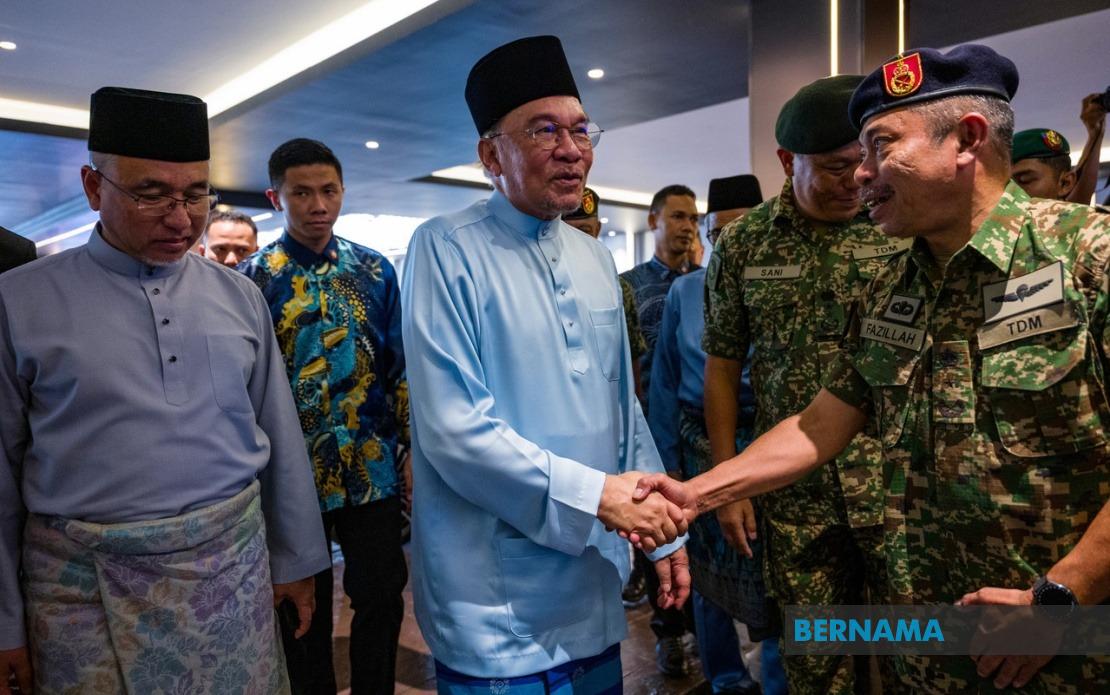
Prime Minister Datuk Seri Anwar Ibrahim has signalled a substantial increase in defence spending for Budget 2027, marking a decisive shift toward revitalising the Malaysian Armed Forces at a time when regional security pressures continue to mount. The announcement came during the Semarak Kenegaraan Programme at Terendak Camp in Melaka, where Anwar outlined the government's strategic intention to bolster military capabilities across multiple fronts. As Finance Minister overseeing the budget framework, Anwar's commitment to defence resources represents a tangible acknowledgement that maintaining credible armed forces requires sustained financial investment in a competitive regional environment.
Chief of Defence Force General Tan Sri Malek Razak Sulaiman affirmed that the additional allocation directly addresses the MAF's critical modernisation needs and operational preparedness. The financial boost will enable the armed forces to pursue its Future Force strategic development plan, a comprehensive roadmap designed to equip the military with contemporary assets and systems capable of addressing twenty-first-century security challenges. Malek Razak characterised the government's enhanced commitment as evidence of serious intent to develop the MAF into what he described as a superior and integrated deterrent, positioning the armed forces as the nation's fundamental defensive bulwark. This language underscores recognition that regional instability and evolving threats require capable military institutions backed by adequate resources.
Beyond hardware and equipment modernisation, the budget injection targets a dimension often overlooked in defence discussions: the human element. Anwar specifically highlighted that increased allocation would encompass personnel welfare initiatives, reflecting an understanding that military readiness depends fundamentally on the morale and living standards of service members. The government plans to improve military housing quarters, construct a new hospital facility within the defence establishment, and maintain essential utilities including water supply systems. These infrastructure investments signal that the government recognises the interconnection between serviceable military infrastructure and operational effectiveness. When soldiers and their families enjoy adequate housing, healthcare, and basic amenities, retention improves and institutional stability strengthens.
The defence spending announcement arrives amid a broader regional context in which Southeast Asian nations reassess military capabilities and defence postures. Malaysia, with its extensive maritime boundaries and strategic location along crucial sea lanes, faces genuine security considerations that extend beyond conventional threats. Competing claims in disputed waters, maritime surveillance requirements, and the need to protect national interests demand credible armed forces capacity. The 2027 budget increase positions Malaysia among Southeast Asian states taking military modernisation seriously, though the specific spending levels compared to neighbours like Thailand, Vietnam, and Indonesia would require detailed analysis to fully contextualise Malaysia's defence investment trajectory.
The modernisation agenda also reflects technological evolution in military affairs. Contemporary defence requires advanced surveillance systems, communications infrastructure, maritime and air patrol capabilities, and cyber security measures that twentieth-century equipment cannot provide. By committing to the Future Force plan, Malaysia signals awareness that outdated systems create strategic vulnerability. Regional competitors have invested substantially in military technology, and Malaysia must maintain competitive parity to ensure deterrence credibility. The defence budget increase, therefore, represents not merely spending but strategic positioning in an environment where technological capabilities increasingly determine military effectiveness.
Significantly, Anwar announced that the government has approved in principle a streamlined and expedited promotion process for both MAF and Royal Malaysia Police personnel, aligning their advancement pathways with broader public service schemes. This administrative reform addresses a persistent frustration within uniformed services, where cumbersome promotion procedures can discourage talent retention and create institutional rigidity. Simplifying career progression mechanisms demonstrates that the government recognises that modernising the armed forces requires not only financial resources but also structural reforms that make military service more attractive to capable personnel. Career predictability and merit-based advancement motivate skilled professionals to remain within the institution rather than seeking opportunities in the private sector.
The timing of these announcements carries political weight as well. Demonstrating visible commitment to defence and security appeals to constituencies concerned with national stability and regional standing. For Malaysian voters and businesses, capable armed forces provide the security foundation necessary for economic activity and normal life. By publicly articulating defence spending increases and concrete improvements to military personnel conditions, Anwar's government signals that security remains a priority despite competing budget demands in health, education, and infrastructure. In the Malaysian political context, where defence matters often receive less public attention than domestic welfare concerns, explicitly championing military modernisation suggests conviction about its importance.
The welfare component of the defence budget proposal deserves particular emphasis because it represents a departure from purely hardware-focused military spending. Constructing a new military hospital addresses healthcare access for service members and their dependents, a dimension that affects recruitment and retention significantly. Improved housing quarters reduce the financial stress on military families and free servicemembers to focus on duties rather than accommodation anxieties. These investments in human welfare represent recognition that military effectiveness flows from satisfied, well-cared-for personnel rather than accumulated equipment alone. A soldier living in adequate quarters with accessible healthcare and clear promotion prospects performs more effectively than one struggling with personal hardship, regardless of equipment quality.
For Malaysian defence analysts and regional observers, the budget announcement invites examination of implementation capacity and sustainability. Announcing spending increases differs substantially from executing them effectively. Malaysia must demonstrate that increased defence allocation translates into actual capability improvements, not merely inflated procurement costs or inefficient spending. The Future Force strategic plan requires clear prioritisation, effective project management, and measurable outcomes. Sceptics might question whether the government can sustain elevated defence spending across multiple budget cycles or whether competing demands will eventually constrain allocation growth. Sustained modernisation requires multi-year commitment and discipline.
The regional implications extend beyond Malaysia's borders. Southeast Asian defence trajectories influence broader regional stability dynamics. When major regional actors invest in military modernisation, it can trigger competitive spirals where neighbours feel compelled to match or exceed spending levels. Alternatively, transparent, defensive-oriented modernisation focused on protecting national interests rather than power projection might establish precedents for responsible military development. Malaysia's emphasis on defence readiness while maintaining commitment to regional cooperation mechanisms and dialogue platforms could model a balanced approach to modernisation that enhances security without unnecessarily escalating regional tensions.
Looking forward, the success of Malaysia's defence modernisation agenda depends on disciplined execution, technological absorption capacity, and maintaining institutional coherence within the armed forces. The financial commitment represents necessary but insufficient condition for genuine capability improvement. The MAF must translate additional resources into operational systems that function reliably, personnel must receive adequate training in new technologies, and defence planners must integrate hardware advances into coherent doctrinal frameworks. These organisational and human dimensions often prove more challenging than procurement itself, determining whether budget increases yield genuine military capability or merely accumulated assets. The government's parallel commitment to personnel welfare and promotion reform suggests awareness of these broader requirements, potentially positioning Malaysia for more comprehensive military modernisation than spending figures alone would indicate.

