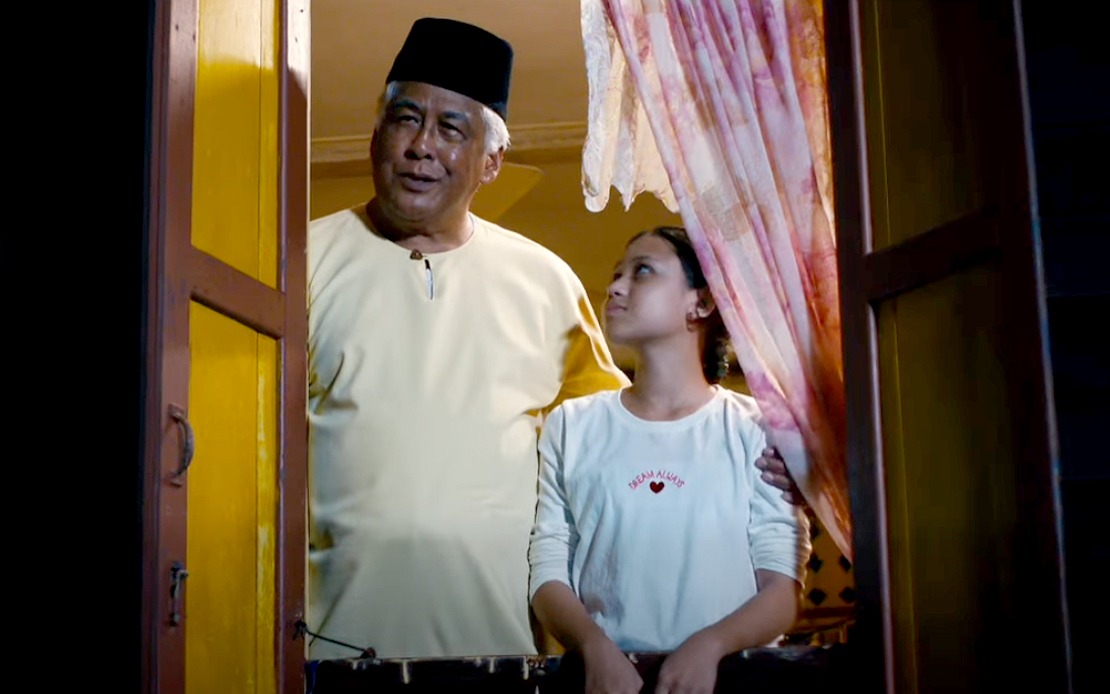
Malaysia's Cabinet ministers have mobilized across social media platforms to galvanize public sentiment around National Day, weaving together themes of sacrifice, shared identity, and collective national responsibility. The coordinated messaging campaign underscores a government strategy to leverage digital channels for civic engagement during major national commemorations, particularly emphasizing how independence, hard-won by previous generations, demands renewed commitment from contemporary Malaysians.
Deputy Prime Minister Datuk Seri Fadillah Yusof anchored the campaign with a poignant eight-minute video featuring veteran actor Datuk Jalaluddin Hassan portraying an intergenerational dialogue between grandfather and grandchild. This creative approach—combining emotional storytelling with explicit political messaging—reflects a modern approach to state communication that moves beyond formal addresses into the realm of digital storytelling. Fadillah's accompanying statement emphasized that Malaysia belongs collectively to all citizens, articulating the core tension in the government's narrative: defending sovereignty while respecting diversity, and strengthening unity without demanding conformity.
Deputy Prime Minister Datuk Seri Dr Ahmad Zahid Hamidi situated National Day within the government's broader policy framework, framing the 2026 National Day Perdana Address announcements as evidence that the Unity Government remains attuned to societal concerns. His remarks suggest the administration views National Day commemorations not merely as ceremonial obligations but as opportunities to reinforce the legitimacy of its governance model—one predicated on responsive policymaking that distributes developmental benefits equitably across demographic segments. This positioning becomes particularly significant given Malaysia's ongoing navigation of complex ethnic and religious dynamics.
National Unity Minister Datuk Aaron Ago Dagang articulated perhaps the campaign's most philosophically nuanced position: that national integration does not require cultural erasure. His assertion that Malaysians need not become identical to become unified directly addresses historical anxieties within minority communities about assimilationist pressures. By emphasizing a shared Malaysian identity constructed above rather than atop existing particularities, Dagang attempted to reconcile nation-building imperatives with pluralistic realities. His emphasis on freeing the nation from prejudice and division reframes national strength as fundamentally rooted in interpersonal trust rather than military capacity or economic metrics alone.
Defence Minister Datuk Seri Mohamed Khaled Nordin introduced the Total Defence framework—operationalized as HANRUH—to reconceptualize national security as a civilian responsibility rather than a military monopoly. This rhetorical move democratizes defence, suggesting that ordinary citizens contribute to sovereignty preservation through lawful conduct, social cohesion, and mutual respect across communal lines. The Defence Ministry's participation in this National Day messaging cascade signals a deliberate effort to connect security concerns with social harmony narratives, implying that fragmentation itself constitutes a vulnerability requiring defence against.
Home Affairs Minister Datuk Seri Saifuddin Nasution Ismail grounded the unity message in concrete governance outcomes, arguing that preserved harmony forms the prerequisite foundation for political stability and economic prosperity. His invocation of the 69th National Day theme—"Malaysia MADANI: Kesejahteraan Dinikmati" (prosperity enjoyed)—establishes a causal chain: security enables stability, stability enables economic growth, and growth permits distribution of benefits to all strata. This utilitarian framing attempts to render national unity not as abstract civic virtue but as practical necessity for material wellbeing, potentially resonating with economically anxious constituencies.
The campaign reflected a deliberate distribution of messaging across ministerial portfolios, with each official amplifying distinct but complementary dimensions of the national unity agenda. Human Resources Minister Datuk Seri R. Ramanan emphasized diversity as a unifying force and invoked the metaphor of Malaysia as a single extended family, linguistically positioning intercommunal relations within kinship frameworks that imply obligation and solidarity. This familial imagery carries particular weight in Malaysian political discourse, where national identity frequently draws upon concepts of shared household membership transcending individual preference.
Domestic Trade and Cost of Living Minister Datuk Armizan Mohd Ali completed the ministerial roundtable by connecting national progress to its experiential dimension—the tangible spillover of developmental benefits across society. His framing acknowledges popular frustration with top-down nationalism divorced from material improvement, suggesting that genuine unity requires demonstrable commitment to equitable distribution of prosperity. This emphasis on broadbased benefit distribution addresses longstanding grievances about whether national policies disproportionately advantage particular communities.
The campaign's deployment across Facebook, X, and Instagram reveals recognition among Malaysian policymakers that civic messaging now necessarily follows digital communication patterns. By saturating these platforms simultaneously with coordinated but individually voiced statements, the government attempted to create an impression of grassroots ministerial enthusiasm rather than centralized mandate—a distinction bearing psychological significance for audiences skeptical of top-down directives. The choice to feature creative content alongside official statements suggests an attempt to penetrate affective registers beyond rational policy persuasion.
For Malaysian readers, this coordinated campaign carries significance extending beyond ceremonial nationalism. It signals government preoccupation with social cohesion precisely at a moment when economic pressures, demographic anxieties, and polarizing rhetoric across platforms have strained the post-independence compact. The repeated emphasis that national strength derives from preserved diversity rather than enforced homogeneity responds to contemporary debates about assimilation, minority rights, and the permissible boundaries of multicultural coexistence. These ministerial statements thus function simultaneously as celebration of past independence and negotiation of ongoing nation-building challenges.
The campaign also reflects evolving patterns of political communication in Southeast Asia more broadly. As regional governments confront challenges from digital disinformation and social fragmentation, coordinated positive messaging campaigns have become standard tools for reinforcing official narratives. Malaysia's approach—combining emotional storytelling, utilitarian arguments about material benefits, and reframed security concepts—represents a relatively sophisticated deployment of these techniques. The implicit acknowledgment that unity requires continuous affirmation rather than assumed permanence hints at underlying anxieties about social cohesion that official optimism cannot entirely obscure.
As Malaysia approaches its 69th National Day, these ministerial appeals ultimately constitute an investment in renewal of the foundational social contract: that diversity, conscientiously managed through institutional mechanisms and individual forbearance, yields superior outcomes to homogenization or fragmentation. Whether this message gains resonance depends substantially on whether subsequent government actions—in resource allocation, policy implementation, and institutional fairness—substantiate the unity rhetoric deployed across digital platforms. For now, the campaign represents an explicit attempt to redirect public conversation toward shared national purpose at a moment when such appeals cannot be taken as inevitable.

