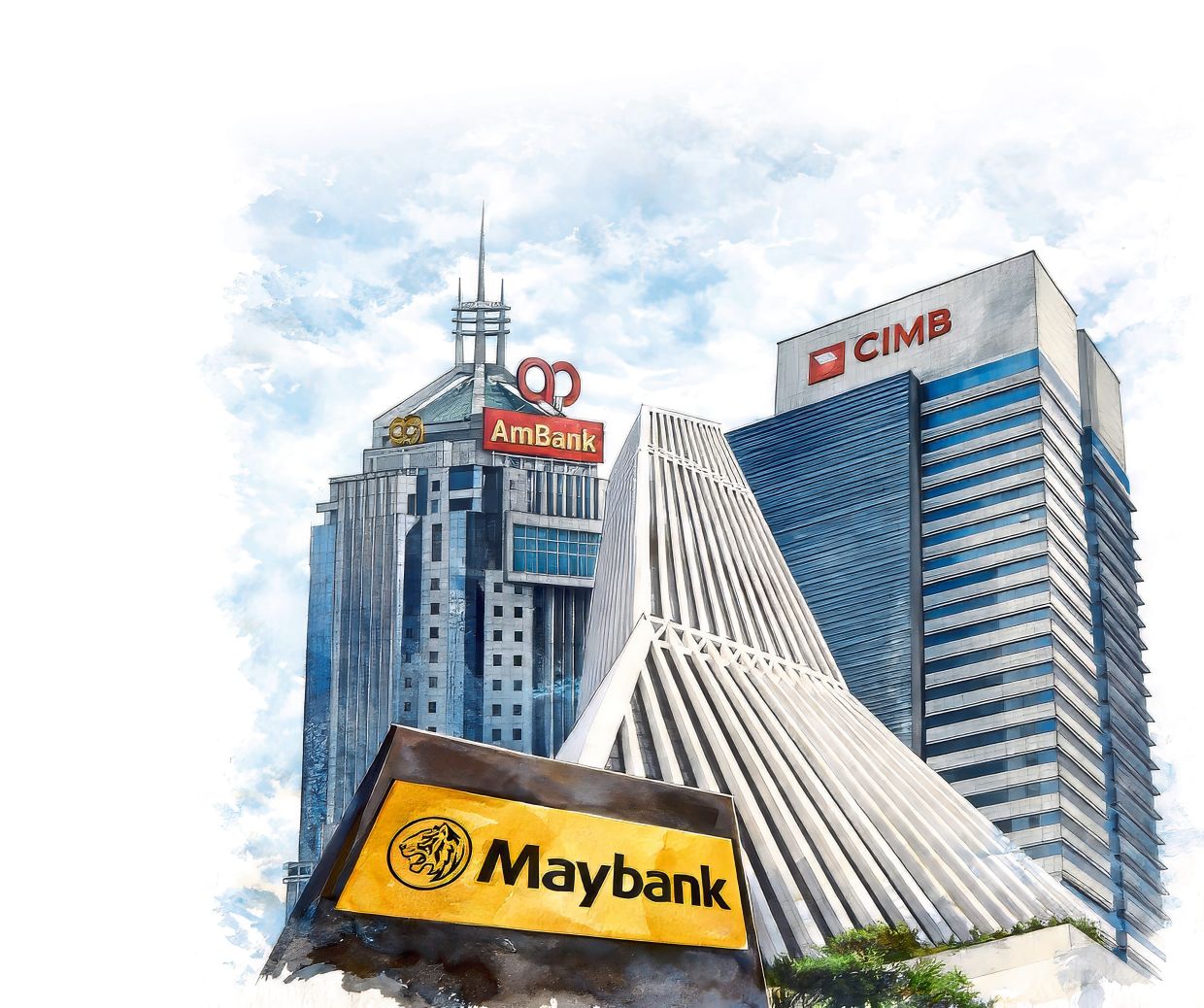
The global banking sector is at an inflection point as 2026 unfolds, with the familiar tailwinds that have supported profitability over recent years increasingly contested by geopolitical turbulence. For much of the past several years, banks have enjoyed the defensive characteristics that investors prize during uncertain times—steady earnings from rising interest rates and an expanding economic base. However, these protective features have weakened somewhat as international tensions have weighed on investor sentiment, prompting many to reconsider their exposure to financial stocks just as the year enters its crucial second half.
Malaysia's banking sector reflects this broader tension. The latest quarterly earnings, while generally holding their own, have revealed fissures beneath the surface as lenders contend with mounting external pressures. International conflicts have begun to erode profitability margins, a troubling sign for an industry that relies on predictable operating conditions. The market has taken notice, with investors moving to offload banking shares in response to these emerging headwinds. This selling pressure underscores a palpable shift in sentiment, one that suggests confidence in the sector's near-term trajectory has begun to waver.
Yet the narrative could change dramatically as the year progresses, at least according to some market observers. The recent de-escalation in US-Iran tensions has prompted a reassessment of the risks that seemed to loom so large in the early part of 2026. If geopolitical pressures truly recede, the foundation may be laid for a more constructive second half. This potential reset hinges, however, on factors far beyond the region's control, particularly the direction of US monetary policy and its ripple effects across global capital markets.
CIMB Research's banking analyst Ei Leen Tan has drawn attention to what she views as a critical structural shift ahead. Her assessment focuses on how a more hawkish Federal Reserve stance could fundamentally reshape Malaysia's banking landscape in the coming months. A sustained period of elevated global interest rates introduces what she characterizes as tail risks—scenarios where margin compression becomes entrenched and funding costs remain persistently higher. This hardened Fed posture, even as geopolitical tensions ease, creates a paradox that banks must navigate: relief on one front may be offset by persistent pressure on another.
OCBC Bank (M) Bhd's leadership offers a contrasting perspective rooted in Malaysia-specific fundamentals. Managing director and head of consumer financial services Sammeer Sharma has signalled that his institution's base case assumes interest rates will stabilize going forward, particularly following the Iran crisis de-escalation. Critically, he points out that Malaysia never engaged in the aggressive rate-hiking campaigns that swept through the rest of the world in recent years, a structural advantage that has insulated the local banking sector from some of the profitability headwinds affecting peers elsewhere. This means that margin compression from rate hikes is unlikely to be a major issue domestically, even if global conditions remain tight. Singapore, by contrast, has moved in lockstep with international rate cycles and therefore faces different pressures.
Sharma's comments reflect a degree of cautious optimism about OCBC's positioning in Malaysia. The institution has benefited from geographic and operational advantages that have left it largely shielded from the direct impacts of Middle Eastern tensions. Yet he acknowledges that timing lags in how global shocks filter through the real economy warrant continued vigilance. Ripple effects will inevitably reach Malaysian shores through supply chains, industrial activity, and eventually consumer behaviour. The inflation consequences of any sustained energy disruption may not be immediately visible but could dampen business confidence and household spending further down the line.
Other banking analysts urge a measured approach to forecasting the second half year, cautioning that economic visibility remains limited. The seismic shock delivered by the Iran conflict in the early part of 2026 and the subsequent energy price movements will take time to percolate through Malaysia's economic structure. Historical precedent suggests that such shocks typically manifest as measurable headwinds one to two quarters after the initial event. When this delayed impact does arrive, small and medium enterprises—the backbone of Malaysia's entrepreneurial economy—may find themselves squeezed between rising input costs and constrained consumer demand. Such pressure could translate into loan repayment difficulties, a dynamic that would test the asset quality resilience that banks have maintained thus far.
Tan's broader thesis suggests that the confluence of geopolitical de-escalation and Fed hawkishness amounts to a decisive reset for Malaysian banking stocks. The reduction in severe oil shock scenarios means investors can shift their focus away from credit risk and back toward traditional earnings metrics. Yet this reprieve comes with a caveat: a higher-for-longer interest rate regime introduces risks of a different character. Bond yield volatility, foreign-exchange fluctuations, tighter global liquidity, and uneven capital flows all pose challenges. Importantly, these are predominantly market-oriented risks rather than credit risks, a distinction that may carry lower risk premiums in equity valuations.
The structural positioning of Malaysian banks as they enter 2H26 remains fundamentally sound, according to most analysts. Capital levels are robust, dividend optionality exists, and loan loss provisions have been carefully maintained. These buffers should prove sufficient to absorb the pressures that a more volatile and hawkish global interest rate environment might generate. Net interest margin trends show incremental upside potential despite headwinds, and credit costs remain contained relative to historical norms. The sector's capital adequacy ratios and reserves suggest that even if economic growth softens and credit demand weakens, banks have adequate shock-absorbing capacity.
However, the question facing Malaysia's financial sector in the months ahead is not whether banks can survive—they almost certainly can—but whether they can thrive. The removal of geopolitical threat premium from valuations and the stabilization of deposit flows would be constructive. Conversely, sustained margin pressure from global rate levels combined with deteriorating credit metrics would argue for a more defensive posture. The key variable to monitor will be June quarter results and any forward guidance from lenders about asset quality trends. Until banks themselves signal whether borrower stress is emerging, the full contours of 2H26 will remain obscured, leaving investors in a period of productive uncertainty that will likely persist through mid-year reporting cycles.

