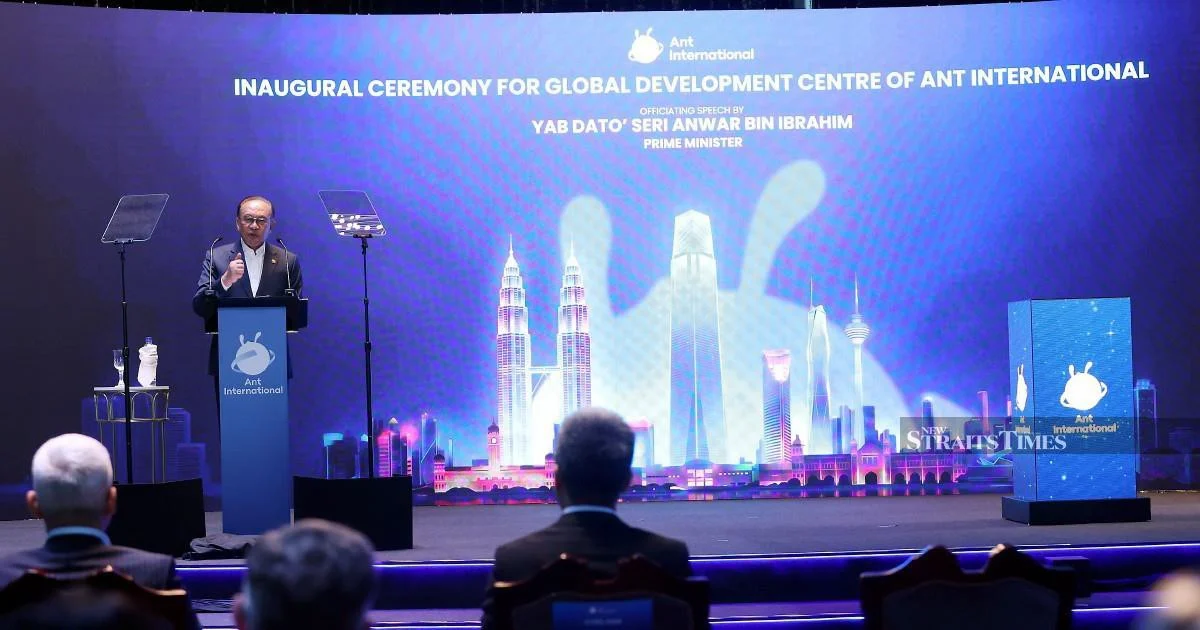
Prime Minister Datuk Seri Anwar Ibrahim has signalled that Malaysia's approach to regulating artificial intelligence will be grounded in an integrated framework rather than piecemeal regulation, with authorities putting the finishing touches on a dedicated AI Governance Bill intended to operate in tandem with established legal structures governing cybersecurity and personal data handling.
The positioning of the proposed legislation as complementary rather than standalone represents a strategic acknowledgment that AI oversight cannot function in isolation from Malaysia's existing digital governance architecture. The Cybersecurity Act, which has been central to protecting critical infrastructure and information systems, will now sit alongside the new AI framework, creating a layered approach to managing the risks and opportunities presented by rapidly advancing machine learning and automation technologies.
Data protection laws, particularly the Personal Data Protection Act, form the second pillar of this integrated system. As AI systems increasingly rely on vast datasets to function, the interplay between AI governance and data protection becomes critical. The government's emphasis on complementarity suggests it recognises that algorithmic decision-making, training data sourcing, and privacy rights must be addressed coherently rather than through conflicting regulatory pathways.
The timing of Malaysia's move reflects broader regional momentum. Governments across Southeast Asia are grappling with how to position themselves as competitive AI hubs while simultaneously protecting citizens and critical sectors from emerging technological risks. Singapore has already published AI governance frameworks, while Indonesia and Thailand are exploring their own regulatory approaches. Malaysia's comprehensive strategy could position it as a model for balanced regulation in the region, potentially influencing how other developing economies approach similar challenges.
The AI Governance Bill's eventual specifics remain undisclosed, but regional precedent and international best practices suggest the legislation may address algorithmic transparency, bias detection in AI systems, accountability mechanisms for AI-driven decisions affecting citizens, and security standards for AI deployment in sensitive sectors. These dimensions matter acutely in Malaysia, where AI applications span financial services, healthcare, government administration, and manufacturing—sectors where failures carry significant economic and social consequences.
Industry observers note that Malaysia's financial sector, in particular, faces mounting pressure to adopt AI responsibly. Banks and fintech companies already employ machine learning for credit scoring, fraud detection, and customer service. Without clear governance standards, Malaysia risks falling behind more regulated jurisdictions or, conversely, stifling legitimate innovation through overly restrictive rules. The integrated regulatory approach Anwar described suggests authorities are trying to thread this needle—enabling innovation while establishing guardrails.
The complementary nature of the Bill with existing laws also implies that enforcement will likely be distributed among multiple agencies rather than centralised under a single body. This multi-agency structure mirrors governance arrangements in countries like the United Kingdom and European Union member states, though it requires robust inter-agency coordination to avoid regulatory gaps or contradictory guidance. Malaysia's track record of inter-agency collaboration in cybersecurity, through organisations like the National Cyber Security Agency (NACSA), suggests mechanisms may already exist to support this approach.
For Malaysian businesses, particularly small and medium enterprises leveraging AI tools, clarity on compliance requirements will be essential. The integration of AI governance with existing cybersecurity and data protection frameworks could simplify compliance if authorities provide unified guidance, or complicate it if firms must navigate overlapping obligations. The government's obligation during the Bill's finalisation period includes consulting industry stakeholders to ensure regulations do not inadvertently stifle adoption of beneficial technologies.
Regional trade implications deserve attention as well. An AI Governance Bill aligned with international standards could strengthen Malaysia's position in trade negotiations and technology partnerships with major economies. Conversely, divergent standards from trading partners could create friction. The likelihood that Malaysia's framework will draw from established international norms—given the emphasis on complementarity with existing laws that often mirror global standards—suggests Malaysia is unlikely to pursue isolationist regulation.
The Bill's finalisation also signals government commitment to proactive governance in emerging technology. Rather than waiting for AI harms to manifest widely before acting, Malaysia is attempting to build preventative safeguards. This stance carries implications for how the nation manages other emerging technologies, from blockchain to biotechnology, setting a precedent for forward-looking regulation across sectors.
Anwar's remarks, while light on specifics, represent a significant commitment to Malaysia's digital infrastructure planning. As artificial intelligence becomes embedded in everything from supply chain management to law enforcement analytics, establishing governance frameworks becomes as foundational as building physical infrastructure. The finalisation of the AI Governance Bill should therefore be monitored closely by technology leaders, policymakers, and ordinary Malaysians alike, as its provisions will shape how AI develops and deploys across the economy for years to come.

