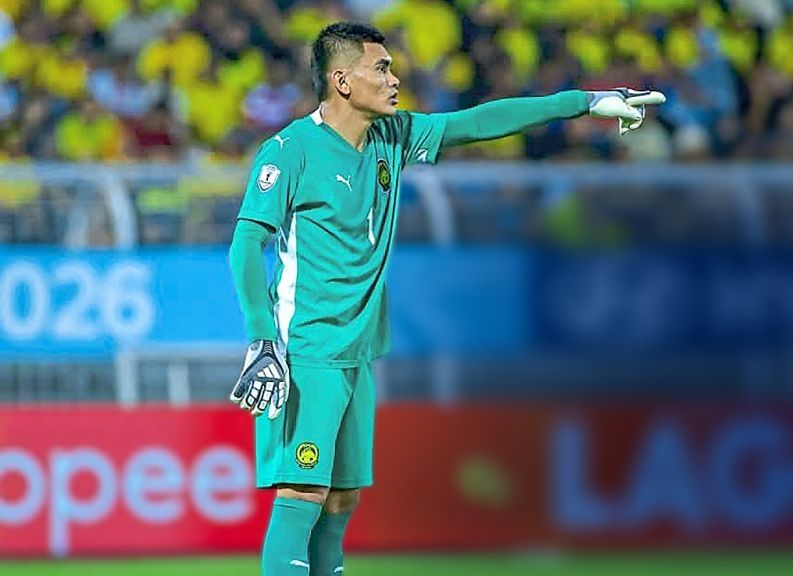
Malaysia's hopes of mounting a serious challenge in the Hyundai AFF Cup suffered a significant setback on Sunday when they capitulated to defending champions Vietnam 0-2 in the first leg of the semifinal at the Cheras Football Stadium. The commanding performance by the visitors has left interim coach Tan Cheng Hoe with considerable work ahead before the decisive second encounter in Hanoi, where Harimau Malaya must overturn the deficit against a side that has dominated regional football in recent seasons.
The match unfolded with Malaysia facing an early disruption when centreback Rodney Celvin Akwensivie was forced off the field due to injury in the 15th minute, forcing young replacement Aysar Hadi Sapri into an unexpected defensive responsibility. This personnel change appeared to unsettle the home team's rhythm, and Vietnam capitalized on the vulnerability by establishing territorial dominance through the opening period.
Malaysia did create genuine opportunities to take the lead during the first half, most notably in the 34th minute when they generated two clear-cut chances within three seconds. Leftback Faris Danish Asrul delivered a cutting low cross that captain Paulo Josue directed goalward, only for Vietnam goalkeeper Patrick Le Giang to produce a crucial save. The reprieve proved costly as midfielder Daryl Sham George received an immediate follow-up opportunity from yards out, but inexplicably skied his attempt over the crossbar and into the stands—a moment that epitomized Malaysia's clinical finishing woes.
Vietnam punished that wastefulness before the interval when wingback Truong Tien Anh sent a sumptuous cross toward the far post, where an unmarked Xuan Son had time and space to power home a headed finish. The goal reflected Malaysia's defensive frailties on the flank and suggested structural vulnerabilities that would prove difficult to address as the match progressed. That early breakthrough fundamentally altered the psychological complexion of the encounter, shifting momentum firmly toward the Vietnamese side.
The second half saw Malaysia adopt a more offensive approach, pushing forward to generate possession and create scoring opportunities while Vietnam operated more cautiously, relying on swift counterattacking transitions to trouble the home defense. This tactical adjustment produced moments of territorial pressure, but Tan Cheng Hoe's midfield additions—introducing winger Haqimi Azim Rosli and debutant Ibrahim Manusi to replace Mahamadou Sumareh and Syafiq Ahmad—failed to inject the creative spark necessary to break through Vietnam's organized rearguard.
A dramatic moment arrived in the 60th minute when referee Rustam Lutfullin initially signaled a red card for Vietnam goalkeeper Le Giang, adjudging him to have handled the ball outside his technical area. The decision would have fundamentally altered the match dynamics by forcing Vietnam to deploy an outfield player in goal. However, the video assistant referee intervention from the Uzbekistan official proved decisive, as the VAR review determined that Le Giang had not used his hands to clear the ball, leading to the overturning of the dismissal and the retention of Vietnam's full complement on the field.
The turning point that essentially concluded the contest came in the 86th minute when leftback Faris Danish Asrul inadvertently deflected the ball into his own net, doubling Vietnam's advantage and rendering any Malaysian comeback mathematically improbable within the remaining minutes. This own goal encapsulated the defensive lapses and misfortune that plagued Malaysia throughout the encounter, compounding the earlier missed opportunities that could have set a different narrative for the semifinal.
From a regional perspective, this result reinforces Vietnam's position as the dominant force in Southeast Asian football, with the defending champions demonstrating the composure and tactical discipline expected of a side accustomed to continental success. For Malaysia, the defeat raises concerning questions about the team's ability to compete against top-tier opposition and highlights the gap that persists between themselves and the region's elite despite recent investment in football development.
The second leg at the MyDinh Stadium in Hanoi presents Malaysia with an almost insurmountable challenge, requiring not merely victory but a margin substantial enough to overturn a two-goal deficit—a feat that remains technically possible but practically daunting against an increasingly confident Vietnamese side. Tan Cheng Hoe's tactical adjustments and selection decisions will come under scrutiny in the interim, with particular focus on addressing the defensive vulnerabilities that allowed Vietnam's attacking players such freedom. For Malaysian football followers accustomed to closer contests in regional competitions, this heavy semifinal loss serves as a sobering reminder of the work required to elevate the national team's performance to championship-contending standards.

