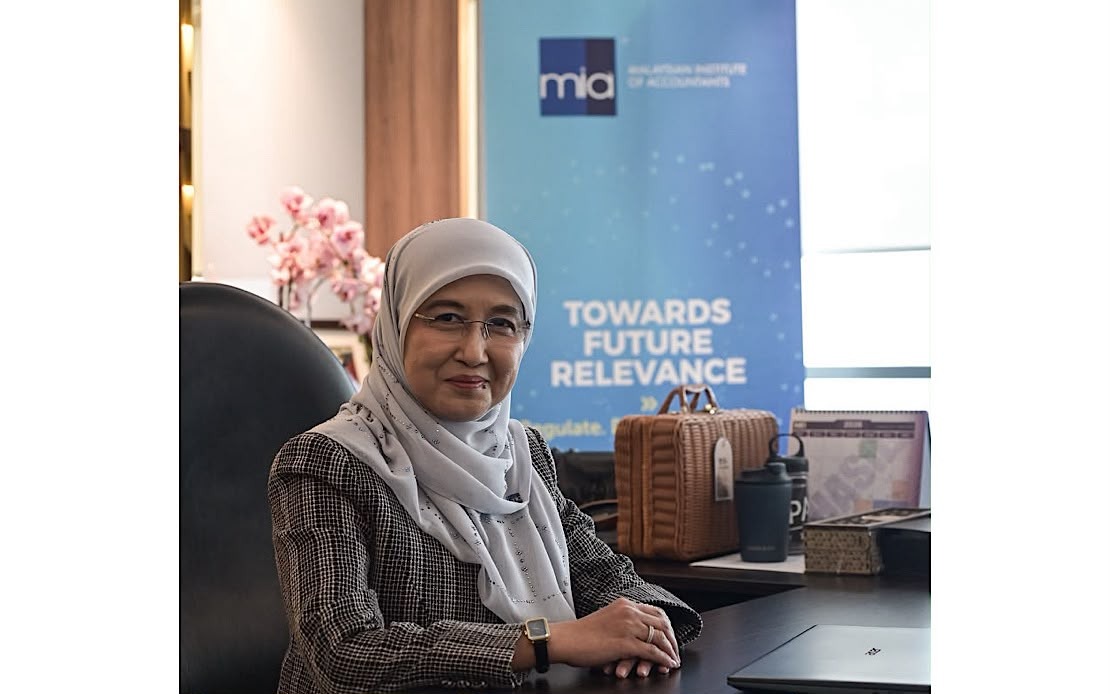
The Malaysian Institute of Accountants has stressed that the nation's accounting profession stands at a critical juncture where professional evolution and digital transformation are no longer optional but essential to Malaysia's sustained economic competitiveness. Speaking in Kuala Lumpur, MIA president Datuk Saniza Said—the institute's first woman president elected in December 2025—underscored that accountants have transcended their traditional bookkeeping roles to become strategic business advisers whose counsel shapes corporate governance and stakeholder confidence across all sectors of the economy.
The changing landscape reflects broader shifts in how organisations operate and create value. Modern accountancy professionals now navigate complex terrain spanning business advisory, strategic financial planning, risk assessment, and the safeguarding of stakeholder interests through rigorous professional scepticism and sound judgement. This expanded mandate demands that the profession remain anchored in foundational principles of ethics, transparency and accountability—qualities that distinguish accountants as custodians of public trust during an era marked by financial misconduct and increasingly sophisticated fraud schemes.
According to Saniza, building and maintaining stakeholder confidence in the accountancy profession represents a strategic imperative for Malaysia's broader economic interests. As international investors evaluate markets for financial stability and reliability, the independence and integrity of audit functions and financial disclosures serve as crucial signals of institutional strength. Malaysia's reputation as a trusted financial destination depends significantly on whether its accountancy professionals can credibly attest to the accuracy and completeness of financial information in an environment where misconduct has become more elaborate and harder to detect.
Simultaneously, the profession faces mounting pressure to demonstrate technological fluency and adaptability. MIA chief executive officer G. Shanmugam observed that artificial intelligence, data analytics, and automation technologies are reshaping the fundamental nature of accounting work. Rather than viewing these developments with apprehension, the profession must recognise that technological tools will progressively absorb routine, repetitive tasks—creating space for accountants to concentrate on analytical work, strategic interpretation of data, risk management and advisory functions that require human judgement and contextual understanding.
The distinction between tasks amenable to automation and those requiring professional expertise remains crucial to this narrative. Shanmugam illustrated this principle by noting that while artificial intelligence can effectively transform bookkeeping functions, the exercise of professional judgement—interpreting complex financial situations, anticipating risks, and guiding business strategy—remains fundamentally human work. This demarcation suggests that rather than eliminating accounting careers, technological change will fundamentally alter the composition and nature of work within the profession, shifting emphasis toward higher-value activities that leverage accountants' business knowledge and analytical capabilities.
The emerging accountant of the future will need to develop foresight capabilities that extend beyond historical financial reporting. Organisations now expect their financial and accounting leadership to offer forward-looking counsel, identifying emerging opportunities and threats while advising on strategic positioning and resource allocation. This anticipatory function requires accountants to master data analytics and predictive modelling techniques, enabling them to identify patterns and trends invisible in traditional financial statements. By developing these competencies, accountants can transition from retrospective evaluators of past performance to proactive strategic partners guiding organisational decisions.
Sustainability reporting and environmental accountability have emerged as additional dimensions of accountancy practice that will accelerate this professional evolution. The recent introduction of MIA's Sustainability Blueprint for the Accountancy Profession and accompanying Sustainability Roadmap acknowledges that environmental, social and governance considerations increasingly influence investment decisions, regulatory compliance, and stakeholder assessments of corporate performance. Accountants who can rigorously measure, analyse and assure sustainability information will occupy critical positions in organisational governance structures across Malaysia and the region.
Maintaining professional relevance amid these transformations requires sustained investment in continuous learning and capability development. With approximately 42,000 current members and annual membership growth between 1.5 and 2.0 per cent, MIA operates a substantial professional ecosystem requiring coordinated upskilling initiatives. The institute conducts roughly 1,000 Continuing Professional Development programmes annually, supplemented by conferences, digital learning platforms and professional networking opportunities designed to equip accountants with contemporary technical expertise and emerging subject matter competencies.
The accessibility of technology-driven solutions should paradoxically make accountancy more appealing to emerging talent entering the profession. Recent graduates entering firms no longer preoccupied with routine data entry and transaction processing can progress more rapidly into substantive analytical, managerial and advisory roles where their analytical training and business acumen generate immediate value. By eliminating tedious preliminary work, technological solutions enable younger professionals to engage with more intellectually demanding challenges earlier in their careers, potentially increasing professional satisfaction and retention rates across firms.
Critically, the profession's capacity to demonstrate that technological change creates rather than eliminates opportunities will shape its attractiveness to future practitioners. Industry scepticism about whether automation threatens accounting employment persists, yet evidence suggests that accounting work is becoming more engaging, dynamic and strategy-focused. As mundane transaction processing shifts to machine-based systems, the demand for accountants capable of extracting business insight from data, identifying strategic implications, and advising on organisational direction should intensify. This transformation positions accountancy not as a profession under technological siege but as one being fundamentally reconceived around higher-order professional activities.
MIA's vision—articulated by both Saniza and Shanmugam—reflects ambitions for Malaysia's accountancy profession to become globally competitive whilst maintaining the ethical foundations and professional integrity that distinguish accounting as a trusted profession. This requires simultaneous commitment to innovation adoption and core value preservation, technological literacy paired with professional scepticism, and forward-looking strategic orientation grounded in transparent accountability. Whether the profession successfully navigates these dual imperatives will significantly influence Malaysia's ability to maintain competitive positioning in regional financial markets and investor confidence in the nation's institutional infrastructure.

