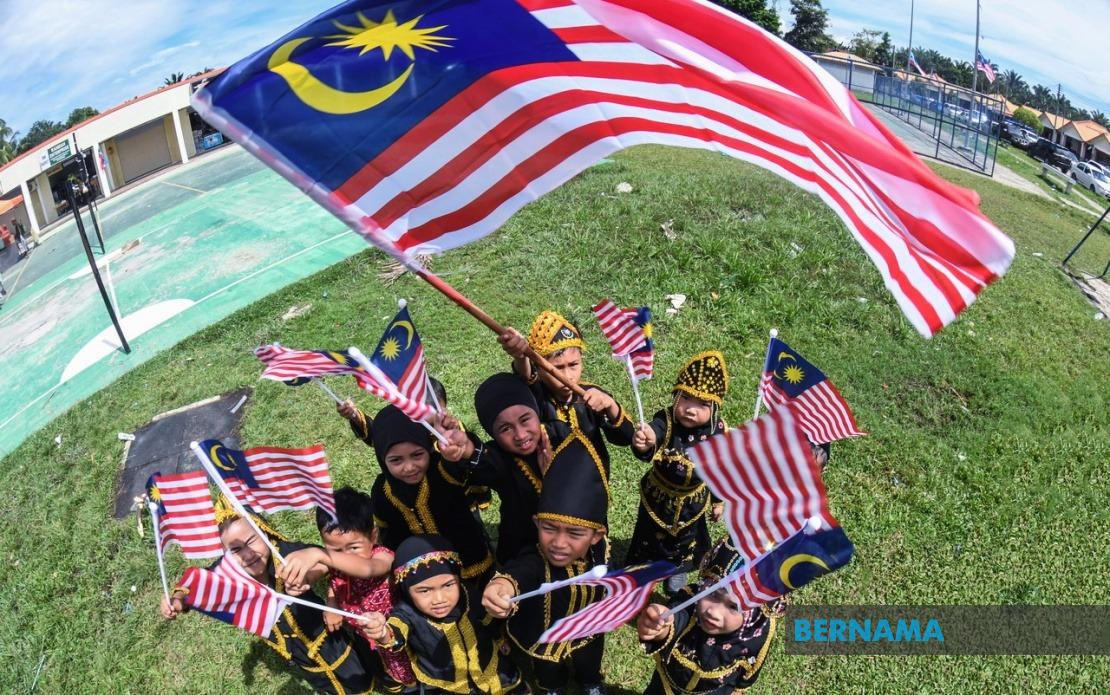
The official launch of Malaysia's National Month and Jalur Gemilang 2026 campaign will take place this Sunday at the Ministry of Health Training Institute Sultan Azlan Shah in Tanjung Rambutan, Ipoh, with Prime Minister Datuk Seri Anwar Ibrahim presiding over what organisers describe as a modest yet deeply patriotic ceremony. The shift towards an indoor, scaled-down format marks a deliberate departure from the large-scale public spectacles held in previous years, signalling a recalibration of how Malaysia approaches its most significant national celebrations in an era of economic and geopolitical uncertainty.
Muhammad Najmi Mustapha, director of the Information Department's Communications and Community Development Division, outlined the strategic reasoning behind this year's adjusted approach during an interview with NasionalFM. Rather than the expansive outdoor gatherings that characterised the 2024 ceremony in Cyberjaya and the 2025 event in Muar, Johor, planners have opted for a more contained gathering that acknowledges contemporary pressures without diminishing the patriotic essence of the occasion. This recalibration reflects government sensitivity to the complex global landscape, including energy supply disruptions and the escalating military conflicts affecting West Asia, which indirectly influence regional economies and public sentiment.
The ceremony will commence at 10 am and be transmitted live through multiple national media channels, ensuring broad accessibility across the Malaysian population. Radio Televisyen Malaysia and the Malaysian National News Agency will carry the event, while simultaneous streaming through Facebook Live on the Merdeka360 portal, the Ministry of Communications channel, and the Information Department's social media accounts will extend reach to younger demographics increasingly engaged through digital platforms. This multi-channel distribution strategy demonstrates the government's commitment to maintaining the visibility and accessibility of national celebrations despite the physical constraints of the event venue.
Beyond the launch ceremony itself, organisers emphasise that the occasion serves as a springboard for nationwide programming and community activities throughout the National Month period. The ceremony does not represent the sum of celebrations but rather their formal commencement, with the expectation that communities, schools, businesses, and government agencies will subsequently organise their own commemorative events and patriotic displays. The Merdeka360 portal and the Information Department's social media channels will provide regular updates documenting these distributed activities, creating a composite national narrative of participation that stretches far beyond the Ipoh event.
Central to this year's campaign is the continuation and expansion of the '1 Rumah 1 Jalur Gemilang' initiative, which encourages Malaysian households to display the national flag as a visible expression of civic pride. The programme, which was first introduced several years ago, has evolved significantly to encompass nine distinct clusters rather than the original seven. Beyond the traditional engagement categories of education, higher education, health, security, community, industry, and government agencies, organisers have now incorporated houses of worship and sports organisations, reflecting a more inclusive vision of national patriotism that extends across religious communities and athletic institutions.
This expansion acknowledges the reality that patriotic expression functions differently across Malaysian society's diverse segments. By explicitly inviting houses of worship and sports bodies to participate in flag-flying initiatives, the government recognises that religious institutions and athletic clubs occupy central positions in community life and can serve as influential focal points for grassroots patriotic mobilisation. For residents in predominantly Muslim areas, the inclusion of mosques and Islamic centres; for Buddhist, Hindu, and Christian communities, the participation of temples, gurdwaras, and churches; and for sports enthusiasts, the involvement of clubs and athletic associations creates multiple accessible entry points for individuals to demonstrate national belonging.
The government has also leveraged social media to democratise patriotic expression, urging Malaysians to display the Jalur Gemilang as profile pictures and share content related to National Month celebrations. Four specific hashtags have been designated for this coordinated digital campaign: #HKHM2026, #MalaysiaMADANI, #KesejahteraanDinikmati, and #Merdeka360. This social media strategy reflects recognition that contemporary patriotism increasingly operates in digital spaces where individuals curate and share their national identity to online audiences. By providing clear hashtags and thematic frameworks, the campaign simplifies participation for social media users while simultaneously aggregating dispersed expressions of patriotism into searchable, visible collections.
This year's celebrations operate under the overarching theme 'Malaysia MADANI: Kesejahteraan Dinikmati', announced earlier by Communications Minister Datuk Seri Fahmi Fadzil. The MADANI framework, which has emerged as the government's signature development philosophy, emphasises prosperity, justice, and well-being distributed equitably across the population. By intertwining National Month celebrations with MADANI messaging, the government positions patriotic observance not as abstract flag-waving but as commitment to concrete developmental outcomes and societal improvement. The theme communicates that national pride derives from tangible improvements in citizens' living standards, economic opportunities, and quality of life rather than from ceremonial gestures alone.
The Malaysia MADANI logo remains designated as the official visual identity for these celebrations through 2026, providing consistent branding across the multi-year commemoration period. This continuity in visual symbolism, combined with the thematic emphasis on shared prosperity, creates a coherent narrative connecting patriotic expression to the government's broader development agenda. For Malaysian businesses, NGOs, and community organisations, the consistent branding framework enables easier integration of National Month messaging into their existing communications and promotional activities throughout the year.
The primary National Day celebration itself will proceed to Dataran Putrajaya on August 31, where organisers have again opted for what they term a 'modest yet vibrant' scale of observance. This language suggests a deliberate middle path between minimalism and pageantry, balancing fiscal responsibility and environmental consciousness against the need to maintain celebratory momentum and public enthusiasm. For Malaysia, where National Day represents the singular most important civic occasion, the calibration of scale and spectacle carries symbolic weight extending beyond the immediate event.
For Malaysian organisations and residents, the 2026 National Month campaign presents clearer opportunities for participation than in previous years through the expanded clustering framework and explicit social media guidance. Businesses seeking to demonstrate corporate patriotism and community investment can now readily identify relevant cluster categories and engage through established networks. Schools and educational institutions benefit from explicit inclusion in the campaign structure, while sports clubs and religious organisations receive formal invitation to participate in flag-flying initiatives. The provision of specific hashtags and the emphasis on multi-channel broadcasting ensure that geographically dispersed communities can access the launch ceremony and contribute to the national conversation simultaneously.
The strategic emphasis on digital engagement and distributed community participation, rather than concentrating patriotic expression in a single massive gathering, reflects evolving understanding of how contemporary nations maintain civic cohesion and national identity across increasingly diverse, digitally-connected populations. By enabling simultaneous, distributed participation through social media while maintaining a visible ceremonial centre broadcast nationally, organisers attempt to preserve the formal gravitas of state occasions while distributing patriotic opportunity broadly across the Malaysian population. This approach acknowledges resource constraints and global economic pressures without sacrificing the emotional resonance and public visibility that national celebrations provide.

