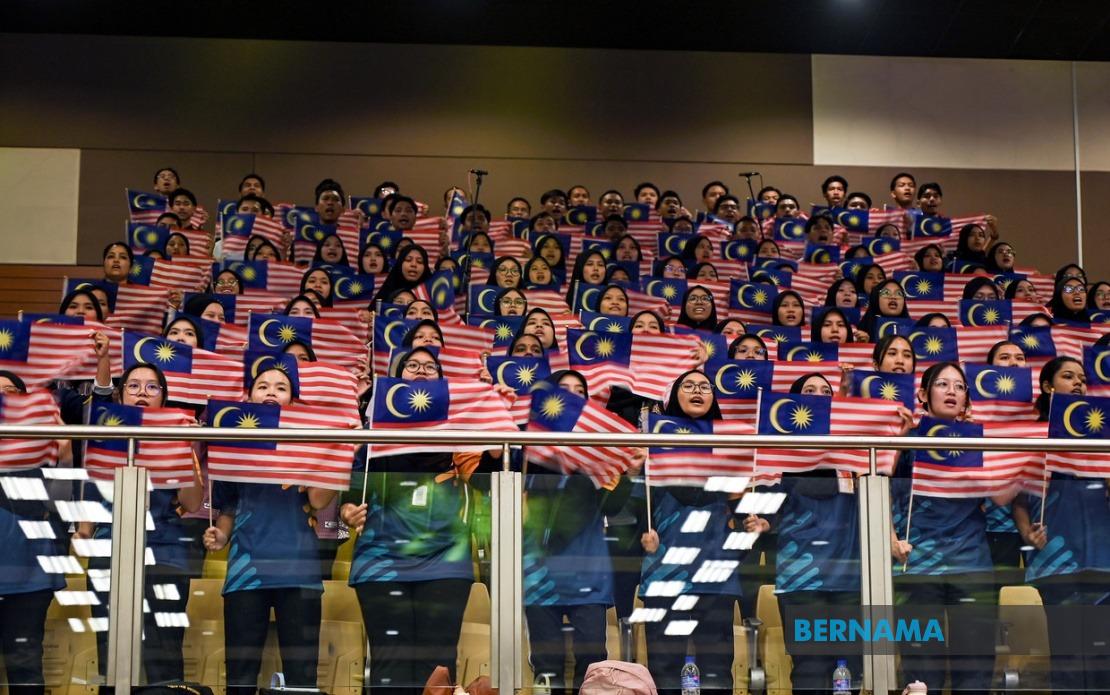
Ipoh's Sultan Azlan Shah Health Ministry Training Institute will host a pivotal national celebration this Sunday as Malaysia gears up for its 2026 National Month and Malaysia Day observances, with preparations now substantially complete according to the Information Department. The launch ceremony, formally known as HKHM2026, represents a deliberate shift towards inclusive patriotism, balancing ceremonial significance with accessibility for the broader Malaysian public who will follow proceedings through digital channels rather than attending in person.
Faizal Adanan, deputy director of the Information Department's Communication Services and Community Development Division, characterised the event's approach during a site inspection in Ipoh, emphasising that organisers have prioritised meaningful community participation over grandeur. The ceremony at Dewan Sri Perdana, a venue accommodating 3,000 attendees, will deliberately draw participants from diverse racial, religious and social backgrounds to crystallise the unifying principles underpinning Malaysia's founding. This reflects an evolving philosophy in how national commemorations are staged in Malaysia, where restraint and representation increasingly define success rather than scale or spectacle alone.
The centrepiece of Sunday's proceedings will be Prime Minister Datuk Seri Anwar Ibrahim's official launch, positioning the nation's political leadership at the forefront of the patriotic messaging. His participation signals governmental commitment to the occasion, though the modest venue size underscores an intentional departure from elaborate state ceremonies that characterised earlier decades of national observances. This calibrated approach mirrors broader governmental efforts to project inclusivity and accessibility, particularly significant given Malaysian society's evolving expectations regarding how public institutions engage with citizens.
A notable highlight involves the Merdeka Patriotic Run, anticipated to draw approximately 2,000 participants in a symbolic gesture linking physical activity to nationalist sentiment. Communications Ministry secretary-general Datuk Abdul Halim Hamzah will flag off the run, demonstrating cross-ministry coordination in delivering the broader celebration. Such initiatives reflect how Malaysian policymakers increasingly employ participatory activities to foster national identity beyond traditional ceremonial frameworks, recognising that tangible community involvement generates deeper resonance than passive observation.
Among the ceremony's artistic elements is a patriotic choir performance by ILKKM SAS trainees, a group that previously garnered viral social media attention for their renditions of nationalist compositions. Their participation bridges institutional and popular spheres, lending contemporary appeal to traditional patriotic expression. The programme will also include the formal Jalur Gemilang flag-raising ceremony conducted by security forces, marking the restoration of this practice after a two-year interruption that had effectively suspended a ceremonial cornerstone of Malaysia's national observances.
The launch of HKHM2026's official theme song by a local artist will anchor the cultural component of Sunday's event, potentially generating commercial momentum for the year-long campaign. This strategic deployment of music extends the celebration's reach beyond government circles into popular culture, where nationalist sentiment can take root more organically among younger demographics increasingly shaped by social media exposure. The decision to commission a contemporary artist reflects understanding that patriotic messaging requires modern vehicles to maintain relevance across generational divides.
Participating government agencies will mount exhibitions throughout the venue, offering tangible demonstrations of institutional contributions to national development and consolidation. These displays serve dual functions: educating attendees about specific programmes whilst visibly demonstrating state apparatus coordination around shared patriotic objectives. For Malaysian citizens, such exhibitions provide rare opportunities to directly engage with government agencies in celebratory rather than transactional contexts, potentially reshaping perceptions of state-citizen relationships.
Recognising that venue restrictions will necessarily limit physical attendance, organisers have prioritised comprehensive digital dissemination to extend the ceremony's reach throughout Malaysia and across the broader Southeast Asian region. Live broadcasts will commence at 10 am Sunday across Radio Televisyen Malaysia, Bernama, the Communications Ministry, the Information Department, and Merdeka360 platforms, ensuring that Malaysians regardless of geographic location can participate in real time. This technological accessibility represents a significant evolution in how national ceremonies function, transforming what would traditionally be local events into genuinely nationwide experiences.
The 2026 National Day celebration will subsequently shift to Dataran Putrajaya on August 31, maintaining the modest yet vibrant approach established during the launch phase. This geographical distribution—with launch festivities in Ipoh and main celebrations in the federal capital—reflects efforts to decentralise national observances and affirm that patriotic sentiment extends beyond Kuala Lumpur's conventional power centres. For provincial Malaysians, such arrangements acknowledge and validate regional participation in constructing national identity.
Organisational thoroughness evident in Faizal's inspection remarks, including final practice sessions and full rehearsals, demonstrates that modest scale need not compromise execution quality or emotional impact. Malaysian planners appear to have internalised lessons from previous national events, recognising that meticulous attention to detail and inclusive representation ultimately generate more authentic patriotic resonance than ostentatious displays. This philosophical reorientation carries implications beyond 2026, potentially reshaping how Malaysia stages future national ceremonies and how policymakers conceptualise the relationship between governmental pageantry and citizen engagement.
The emphasis on societal togetherness and patriotic spirit across racial and religious lines positions HKHM2026 as implicitly responsive to contemporary Malaysian conversations surrounding national cohesion and shared identity. By deliberately platforming diverse participants and broadcasting proceedings widely, organisers signal commitment to inclusive nationalism that transcends historical divisions. For Southeast Asian observers monitoring Malaysia's management of national identity amid plural societies, this approach offers instructive precedent in balancing ceremonial tradition with inclusive modernity.

