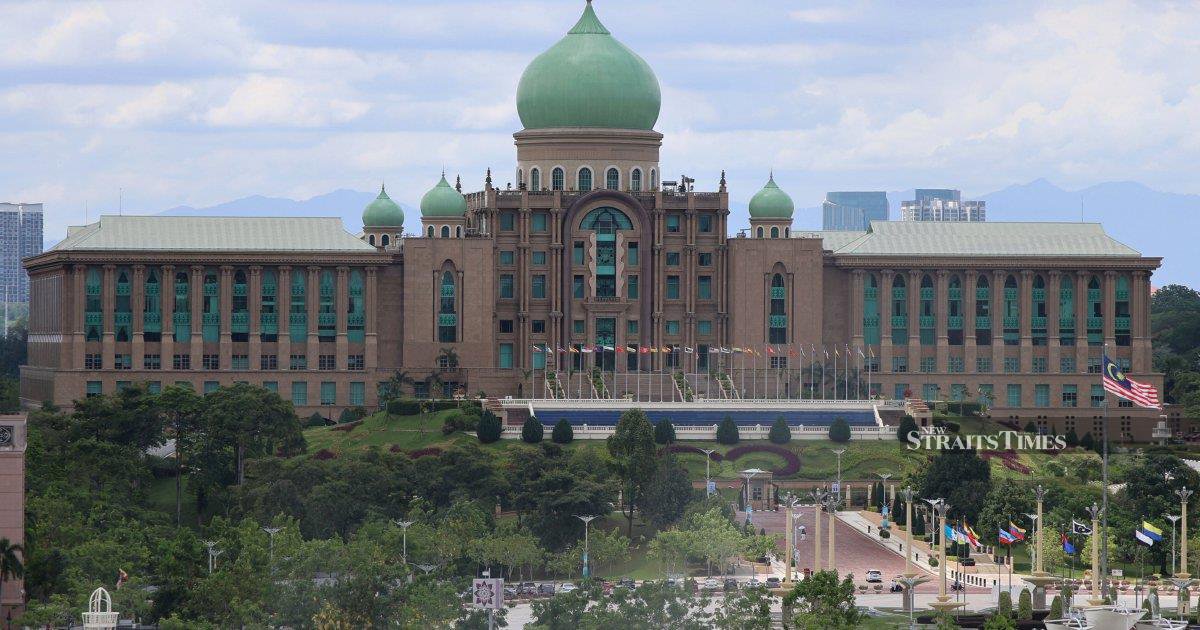
Prime Minister Datuk Seri Anwar Ibrahim unveiled Malaysia's 13th Five-Year Plan to parliament on July 31st, placing regional stability and security concerns at the heart of the nation's 2026-2030 development agenda. The emphasis reflects mounting awareness that Malaysia's economic ambitions cannot be realised in isolation from the complex web of competing interests shaping Southeast Asia's strategic landscape. By anchoring the plan to security considerations, the government signals its recognition that growth trajectories depend fundamentally on maintaining regional equilibrium amid external pressures.
The timing of this announcement underscores Malaysia's position as a middle power navigating increasingly fractious great-power competition. Situated along crucial trade routes and surrounded by nations with divergent strategic partnerships, Malaysia faces mounting pressure to calibrate its foreign policy with precision. The integration of security concerns into economic planning demonstrates a shift towards viewing development not merely as domestic policy but as an extension of geopolitical strategy. This holistic approach acknowledges that infrastructure projects, trade arrangements, and investment flows cannot proceed unchanged when regional tensions threaten stability.
Southeast Asia itself has emerged as a focal point of strategic contestation, with major powers intensifying their efforts to secure influence across the region. For Malaysia, this dynamic creates both opportunities and hazards. The country's prosperity depends on maintaining open sea lanes, attracting foreign investment, and preserving access to regional markets. Yet these very interests place Malaysia at the intersection of competing visions for regional order. By emphasising the security dimension within the 13th Plan, Anwar's administration signals its determination to protect Malaysia's strategic autonomy and economic interests against attempts by external actors to subordinate regional outcomes to their own agendas.
Regional security encompasses multiple dimensions beyond traditional military concerns. Maritime security remains paramount given Malaysia's extensive coastline and its role in the South China Sea transit routes. Energy security and supply chain resilience have also assumed critical importance, particularly as global economic disruptions have revealed vulnerabilities in Malaysia's reliance on specific trading partners or raw material sources. The government's incorporation of these themes into the development plan suggests a comprehensive reassessment of how Malaysia can insulate itself against external shocks while remaining integrated into the global economy. This balancing act requires sophisticated policy coordination across ministries and agencies.
The 13th Plan's emphasis on regional security reflects lessons drawn from recent years of mounting strategic competition. The United States and China have intensified their rivalry across multiple domains, from military posturing to economic competition and technological dominance. This superpower rivalry has created pressure on countries like Malaysia to choose sides, yet such binary choices threaten the strategic flexibility that smaller nations require to optimise their interests. By framing security as a regional rather than bilateral concern, Malaysia can position itself as supporting an architecture that constrains hegemonic behaviour while protecting smaller states' agency. This approach resonates with Southeast Asian preferences for stability through institutional arrangements rather than power imbalance.
Defence spending and military modernisation represent one facet of the security challenge embedded in the development plan. However, the strategic balancing required extends far beyond hardware acquisitions. Malaysia must cultivate diplomatic relationships across multiple partners, strengthen multilateral institutions, and develop capacity to manage disputes through agreed mechanisms. The Association of Southeast Asian Nations provides a framework through which Malaysia can work with neighbours to establish rules constraining unilateral behaviour. Yet ASEAN's consensus-based decision-making has struggled under pressure from members with conflicting strategic alignments, highlighting the fragility of regional arrangements when external powers compete aggressively.
Economic statecraft offers another avenue through which Malaysia can advance its security interests. By diversifying trading relationships and investment sources, the country reduces vulnerability to economic coercion from any single partner. Regional integration initiatives that deepen interconnectedness among Southeast Asian economies create mutual interests in stability that transcend bilateral disputes. The development plan's integration of security concerns likely encompasses initiatives to strengthen intra-regional trade, develop alternative supply chains, and build economic institutions that can function effectively even during periods of great-power tension. Such measures provide insurance against scenarios where geopolitical competition intensifies further.
Technological sovereignty has emerged as a crucial security dimension that the government cannot ignore. Control over critical technologies and digital infrastructure now shapes national power in ways comparable to military capability. The development plan's security framework likely encompasses efforts to build local expertise in semiconductors, artificial intelligence, and other strategic technologies. This represents a shift from Malaysia's traditional approach of importing technology from advanced economies. Developing indigenous capabilities requires investment in education, research facilities, and industrial policy—elements that must be coordinated across the five-year planning horizon to achieve meaningful progress.
Malaysia's role in regional institutions and forums has also acquired heightened significance. Whether through ASEAN, the East Asia Summit, or bilateral partnerships, Malaysia can contribute to consensus-building on principles that protect regional interests from external domination. The country's soft power, built on its multicultural society and moderate Islamic identity, positions it as a potential bridge-builder across different regional camps. Leveraging this diplomatic position requires conscious strategy and resource allocation—dimensions that the 13th Plan likely addresses by identifying key partnerships and collaborative initiatives that advance Malaysian interests while contributing to broader regional stability.
Implementation of these strategic priorities faces institutional and resource constraints that will test the government's capacity to translate ambitions into outcomes. Coordinating between defence, foreign affairs, trade, and economic ministries requires sustained attention and clear authority structures. Resource allocation between immediate security concerns and longer-term development investments involves difficult trade-offs. Regional initiatives demand sustained diplomatic effort and willingness to compromise on specific issues to maintain broader partnerships. These challenges suggest that the 13th Plan's security-focused framework represents not a definitive blueprint but rather an evolving approach that will require constant adjustment as circumstances change.
The articulation of security as central to Malaysia's development agenda reflects mature statecraft from a government cognisant of the constraints shaping the region's future. Rather than viewing security and development as competing priorities, the administration has integrated them into a unified strategic vision. This approach acknowledges reality: Malaysia cannot achieve sustained prosperity in an unstable region, nor can it guarantee stability without the economic resources and institutional capacity that development provides. By anchoring the 13th Plan to these principles, Malaysia signals its intent to remain a proactive stakeholder in Southeast Asia's future rather than a passive observer of great-power competition.

